Withdrawal before quitting: Tolerance, PAWS & brain recovery
Disclaimer: The information in this article is for educational and self-optimization purposes only and does not substitute for professional medical advice. If you are experiencing severe, life-threatening withdrawal symptoms, seizures, or active suicidal thoughts, seek emergency medical attention immediately.
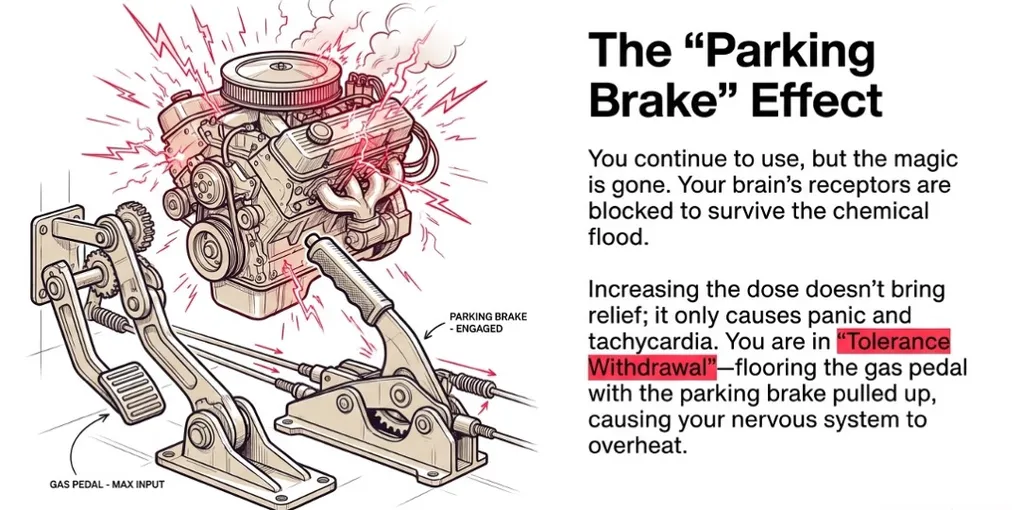
Imagine driving a car with the parking brake pulled all the way up. You floor the gas pedal. The engine roars, smoke billows from under the hood, and the entire vehicle vibrates violently—but you barely move an inch.
If you press the gas pedal any harder, the engine will blow up. If you let go of the gas pedal, the car slams to an immediate stop.
You are trapped in a smoking, shaking car that is going nowhere, burning through gallons of expensive gas every single minute.
This is exactly what it feels like to experience one of the most terrifying, misunderstood phenomena in addiction science: Post-Acute Withdrawal Syndrome (PAWS) that starts BEFORE you even quit.
Most people know what PAWS is after quitting: you stop drinking, vaping, or taking pills, survive the acute detox, but months later you are still tormented by brain fog, insomnia, anhedonia, and random panic attacks.
But what happens when those exact same heavy symptoms hit you while you are still actively using? Why does your usual dose no longer bring an ounce of relaxation, while trying to increase it only gives you heart palpitations and terror?
Let’s break down this neurochemical dead end using real-life American scenarios.
The illusion of “free credit”: What is “tolerance withdrawal”?
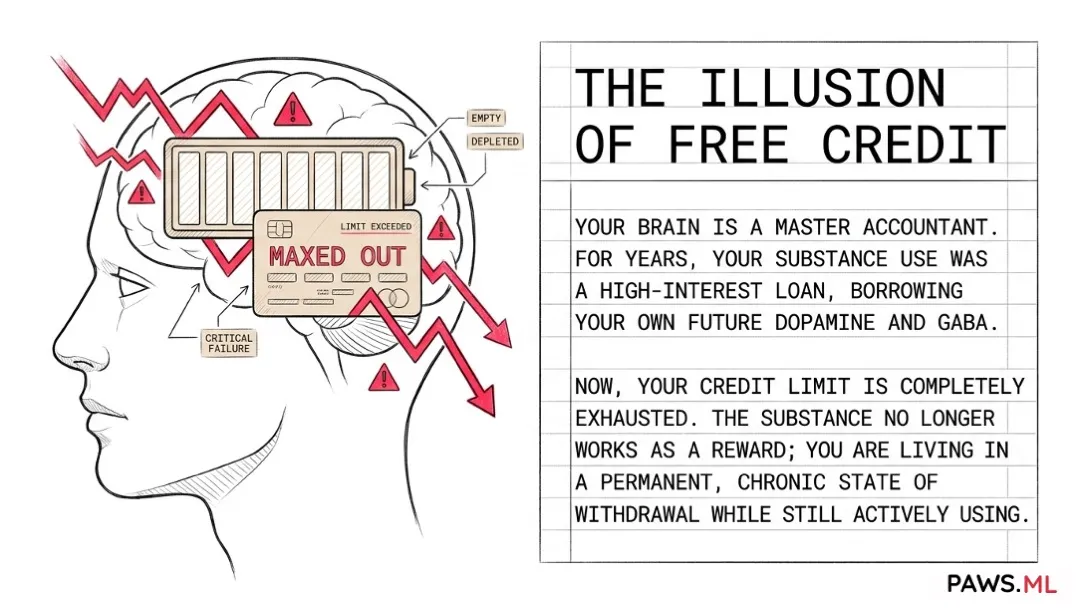
Our brain is a master accountant. When you drink a glass of wine after a long workday, hit a vape, or take a prescription sedative, you aren’t creating pleasure out of thin air. You are borrowing your own future dopamine and GABA on credit.
In the beginning, the “dopamine credit card” works great. You pay a tiny interest rate (a mild hangover or a bit of morning grogginess) in exchange for an ocean of relaxation or focus.
But if you swipe that card every single day, you eventually reach your credit limit:
- Your brain’s natural supply of “happy chemicals” is completely bankrupt.
- The interest payments have become astronomical.
- The core problem: Your brain physically shuts its “receiving windows” (receptors) to protect itself from the constant chemical flood.
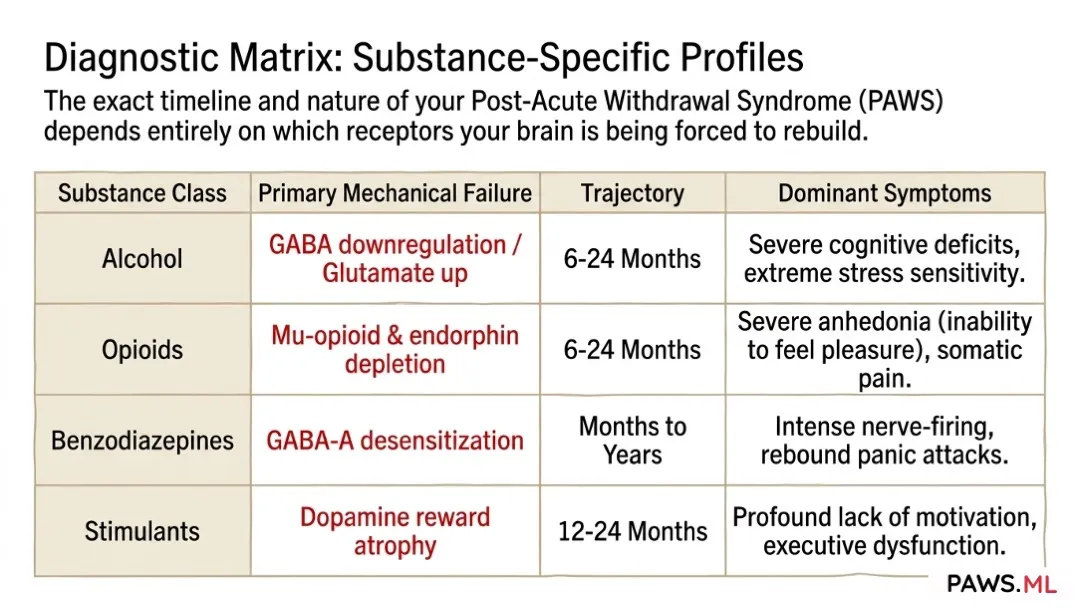
In medicine, this state is known as Tolerance Withdrawal or Interdose Withdrawal. Your central nervous system has adapted so heavily that your normal dose no longer triggers a reward response. Instead, you need that dose just to temporarily suppress a horrific, underlying biological panic.
You keep using, but biologically, you are living in a state of permanent, chronic withdrawal.
How “pre-paws” looks in real life (3 typical scenarios)
You don’t need a medical degree to recognize this state. It happens quietly in homes and offices across the country every day:
Scenario 1: The vaper’s trap: 0% pleasure, 100% panic
The Story: Mark has been vaping high-nicotine pods for three years. It used to give him a sharp mental buzz and a sense of calm.
The Neurochemical Shift: Today, Mark hits his vape, but he feels zero pleasure. Instead of focus, his head feels heavy, his heart races, and an uncomfortable “internal buzzing” vibrates through his chest.
The Dead End: He can’t double his intake—vaping more makes him nauseous and dizzy. But if he goes 30 minutes without a hit, a wave of crippling health anxiety washes over him. Mark is vaping every half hour not to feel good, but to prevent a full-blown panic attack. He is stuck in a permanent “Nicotine PAWS” while actively using.
Scenario 2: The “relaxing evening glass of wine” that triggers 3 A.M. Terror
The Story: Sarah relied on two glasses of Pinot Noir every night to unwind from her demanding corporate job.
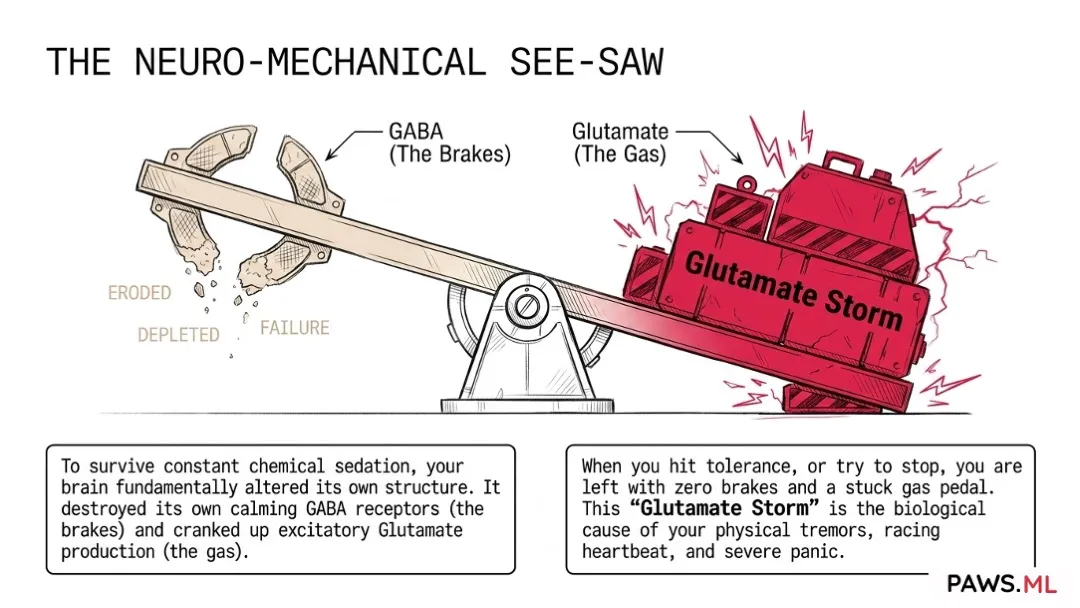
The Neurochemical Shift: Years later, Sarah drinks her evening wine, but the warm, giggly relaxation never arrives. Instead, an hour later, she experiences a severe Glutamate Storm: her face flushes, her heart pounds, and she wakes up at 3 A.M. drenched in cold sweat, terrified she is having a heart attack (cardiophobia).
The Dead End: She can’t drink more—her stomach and liver can’t handle it. But stopping feels terrifying. Alcohol is still in her system, yet her nervous system is actively undergoing post-acute withdrawal.
Scenario 3: The prescription pill trap (Xanax or klonopin)
The Story: David takes his Klonopin or Xanax strictly as prescribed by his doctor for sleep and anxiety.
The Neurochemical Shift: Suddenly, David starts waking up every morning in a state of sheer horror, shaking internally, plagued by a thick brain fog. His doctor tells him, “Your original anxiety is just getting worse; let’s increase the dose.”
The Dead End: In reality, David’s GABA receptors (the brain’s brakes) have heavily downregulated. His daily dose no longer calms him; it merely prevents a physical seizure. He is in constant interdose withdrawal despite taking his medication religiously.
The neuroscience of the dead end: Why you can’t just “double the dose”
You might ask yourself: “If I feel bad, why don’t I just drink or use twice as much?”
The answer lies in a hard biological reality: your physical body has a toxicity ceiling.
Your liver, heart, and cardiovascular system cannot tolerate a massive increase in the substance without entering acute, life-threatening toxicity.
Meanwhile, your brain receptors have shut their blinds. They don’t care how much chemical is floating in your blood; they physically cannot process it.
This creates an agonizing stalemate: the substance has 0% ability left to help you, but 100% power left to harm you. It no longer acts as a lubricant for your mind; it acts purely as a neurotoxin that maintains chronic neuroinflammation.
You are trapped in a state where you experience all the horrors of PAWS (insomnia, severe fatigue, anhedonia, internal tremors, brain fog) while continuing to poison your body every single day.
How to escape the biological dead end
If you recognize yourself or a loved one in these scenarios, there are two crucial truths you need to understand:
-
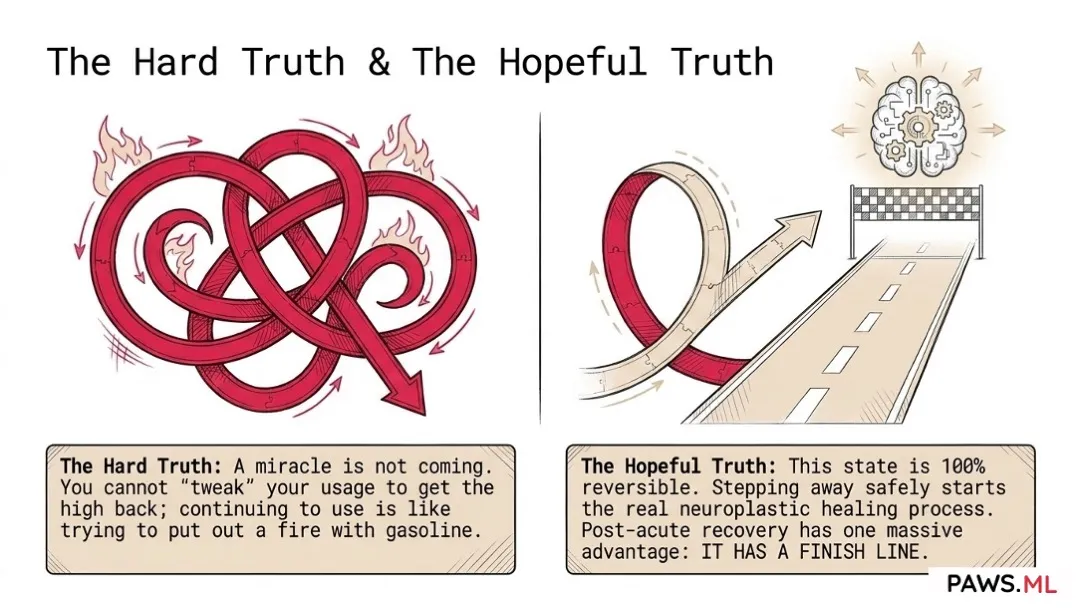
The Hard Truth: A miracle is not coming. You cannot “tweak” your usage to get the magic back. Your brain’s locks are broken. Continuing to use in this state is like trying to put out a fire with gasoline. You will only deepen your dopamine and GABA deficit, damaging your heart and nervous system further.
-
The Hopeful Truth:
 This state is 100% reversible. Your brain is not permanently broken; it is screaming for a reboot. Given time and the right biological conditions, your brain can and will grow new receptors (neuroplasticity).
When you make the decision to safely step away from the substance (via a proper taper or supervised detox), your “permanent pre-PAWS” transitions into true, curative post-acute recovery.
And true post-acute recovery has one massive advantage over the trap you are in right now: IT HAS A FINISH LINE.
Pre-PAWS while using can last for years, slowly destroying your life and career.
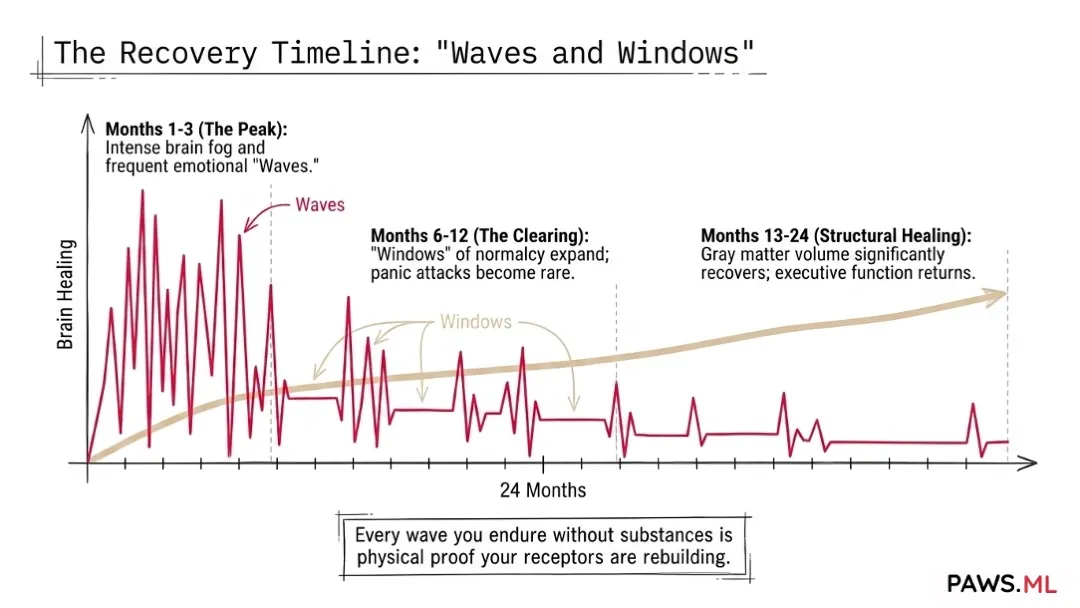
Post-PAWS in sobriety is a process of temporary “growing pains.” Every wave of anxiety or brain fog you endure without the substance is physical proof that your receptors are actively rebuilding.
Making the transition safe with PAWS.ML
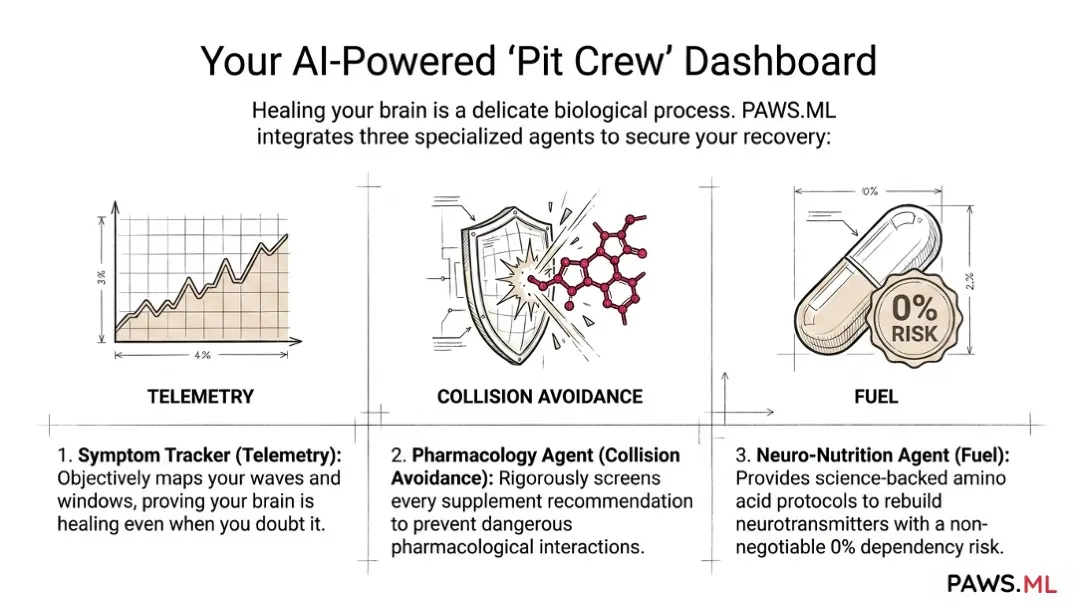
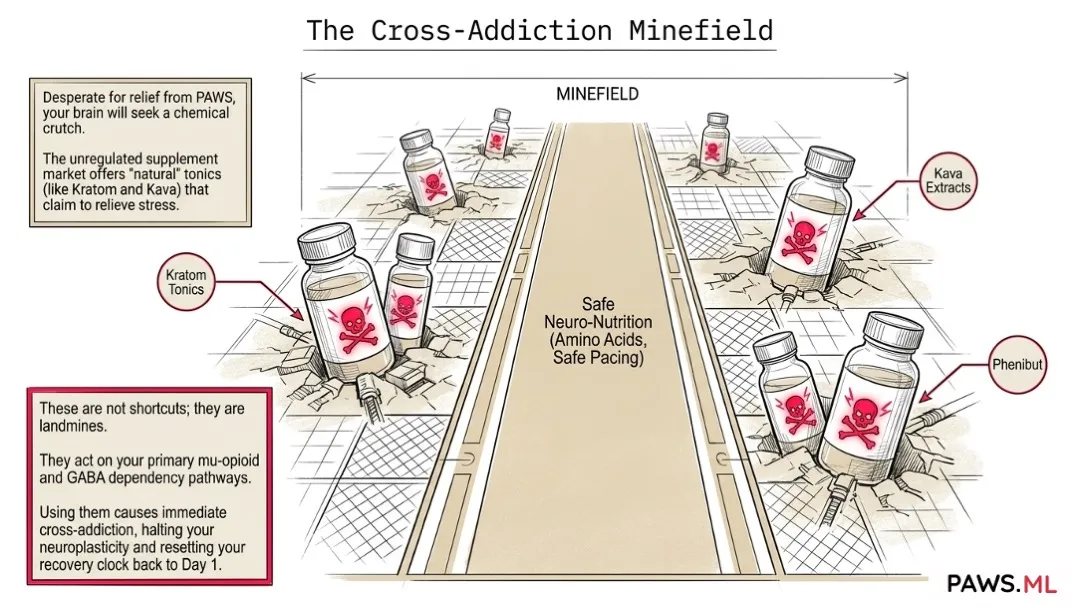
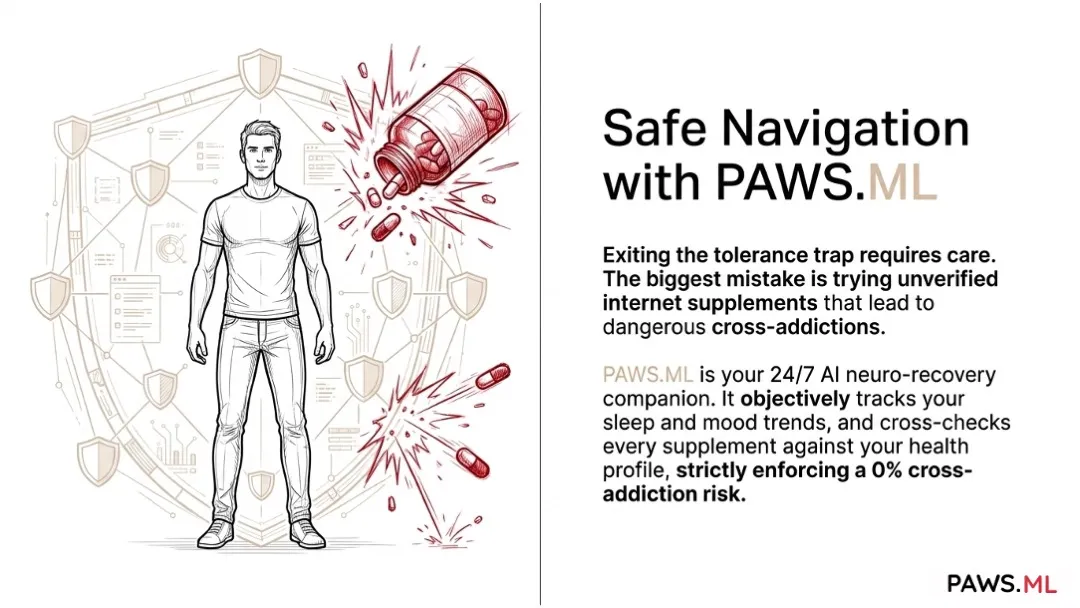
Exiting the “tolerance trap” requires care. A nervous system that has been running on over-drive is hyper-sensitive. The biggest mistake people make at this stage is trying to “fix” their brain by taking unverified internet supplements, mixing medications, or turning to new substances—leading directly to dangerous drug interactions or cross-addiction.
That is why we built PAWS.ML.
PAWS.ML is an advanced, multi-agent AI system designed to act as your private, 24/7 neuro-recovery companion:
- Objective Symptom & Trend Tracking: It maps your daily shifts in energy, sleep, and mood, providing clear data that proves your brain is healing—even when your anxious mind tells you otherwise.
- Pharmacology Safety Agent: Before you try any supplement or wellness hack you read about online, our AI cross-checks it against your health profile and active prescriptions, enforcing a non-negotiable 0% cross-addiction risk.
- 24/7 Evidence-Based Reassurance: Available at 3:00 A.M. to explain the exact neurobiology behind your symptoms, keeping you calm, grounded, and safe through every wave of recovery.
Stop pressing the gas pedal in a car with broken brakes. Give your brain the safe, intelligent, data-driven support it needs to truly heal.
If you are currently experiencing the challenges of Prolonged withdrawal syndrome, return to our main page to explore how our AI recovery assistant can help stabilize your neurochemistry.