Understanding post-acute withdrawal syndrome (PAWS)
Table of contents
- 1. Quick Definition (Featured Snippet)
- 2. Working Definition and Clinical Presentation
- 3. History of the Term and Concept Evolution
- 4. Synonyms and Terminological Confusion
- 5. Why PAWS is Not in the DSM-5
- 6. Syndrome vs. Symptom Cluster: The Academic Debate
- 7. ICD-10 and ICD-11 Diagnostic Codes: Classification Challenges
- 8. The Current State of Science (2020–2025)
- 9. What This Means for the Patient: Navigating the Healthcare System
- 10. FAQ: Frequently Asked Questions About Post-Acute Withdrawal Syndrome (PAWS)
- 11. References and Further Reading
1. Quick definition (featured snippet)
What is post-acute withdrawal syndrome (PAWS)?
Post-Acute Withdrawal Syndrome (PAWS)—historically also referred to as Post-Acute Withdrawal Syndrome (PAWS) or chronic withdrawal—is a complex constellation of persistent psychological, emotional, and cognitive symptoms. These symptoms continue to evolve, recur, or even first appear well after the acute phase of substance or medication withdrawal has subsided.
Unlike acute withdrawal, which is primarily physical and relatively brief, PAWS is characterized by:
- Extended Duration: Symptoms can persist for months, and in some cases, years.
- Fluctuating Severity: Symptoms often appear in wave-like patterns, intensifying during periods of stress and then temporarily subsiding.
- Neurochemical Adjustment: The syndrome reflects the brain’s slow and gradual process of restoring neurochemical balance after prolonged substance use.
Who coined the term?
While the concept of prolonged recovery is widely recognized in modern addiction medicine, its terminology has evolved over several decades:
- The Early Pioneers (1950s–1970s): The academic and clinical foundation for this phenomenon was laid early on. Canadian psychiatrist Marvin Wellman documented “late withdrawal symptoms” as early as 1954. Later, in 1970, researcher B. M. Segal published detailed observations on “prolonged abstinence syndromes.”
- The Popularization of “PAWS” (1980s): The specific acronym PAWS (Post-Acute Withdrawal Syndrome) was introduced and popularized in the 1980s by addiction clinicians and researchers Terence Gorski and Merlene Miller. It was developed as a core component of their highly influential relapse prevention model.
Is post-acute withdrawal syndrome (PAWS) officially recognized?
The medical consensus regarding PAWS balances clinical recognition with formal diagnostic classifications:
- Clinical Endorsement: The phenomenon of extended withdrawal is widely acknowledged and clinically managed by leading global health authorities, including the Substance Abuse and Mental Health Services Administration (SAMHSA) and the American Society of Addiction Medicine (ASAM).
- Diagnostic Classifications: Neither PAWS nor PAWS is currently listed as a standalone, distinct clinical diagnosis in the Diagnostic and Statistical Manual of Mental Disorders (DSM-5-TR) or the International Classification of Diseases (ICD-11). Instead, these symptoms are typically categorized under substance-induced disorders or prolonged withdrawal subcategories.
- Terminology Preference: Within modern academic research and professional medical settings, the term Post-Acute Withdrawal Syndrome (PAWS) is heavily preferred over the older, more colloquial term “PAWS.”
2. Working definition and clinical presentation
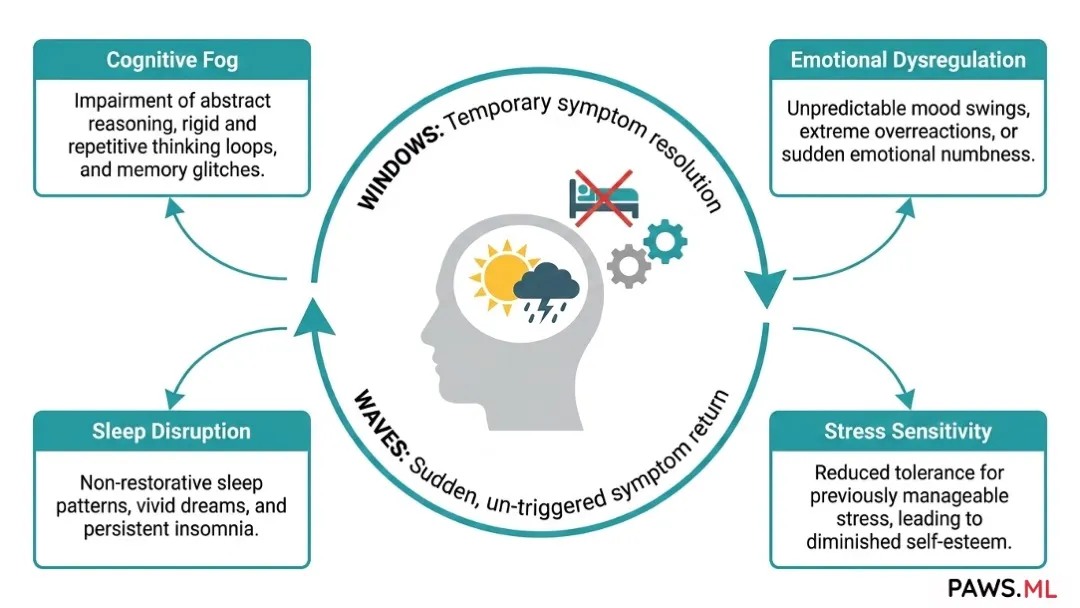
The working definition of Post-Acute Withdrawal Syndrome (PAWS) characterizes it as a complex of affective, cognitive, and psychovegetative disturbances that persist, evolve, or emerge for the first time after the physical symptoms of the acute withdrawal phase have been fully resolved.
Core clinical presentation: What PAWS includes
The clinical presentation of PAWS is primarily comprised of psychological and neurological symptoms. These typically include:
- Anhedonia: The inability to experience pleasure.
- Chronic fatigue: Persistent, profound lack of energy.
- Dysphoria: A general state of unease, dissatisfaction, or anxiety.
- Heightened anxiety: Increased nervousness, tension, or panic.
- Sleep disturbances: Insomnia, disrupted sleep patterns, and highly vivid or disturbing dreams.
- Cognitive deficits: Often described by patients as “brain fog,” resulting in concentration difficulties and memory problems.
- Emotional lability: Rapid, exaggerated, and unpredictable mood swings.
- Episodic cravings: Periodic, intense urges to use the substance.
Key Characteristic: The Non-Linear, Wave-Like Course One of the defining features of PAWS is its fluctuating trajectory. Rather than improving in a steady, linear fashion, symptoms alternate between periods of exacerbation (often referred to as “waves”) and temporary relief or baseline improvement (known as “windows”).
Exclusion criteria: What PAWS is not
It is equally important to understand what PAWS does not encompass. It does not include acute, life-threatening somatic manifestations.
Specifically, PAWS excludes:
- Severe tremors
- Delirium tremens (DTs)
- Generalized seizures
- Acute tachycardia
- Profuse vomiting
Furthermore, in a strict clinical sense, PAWS is not simply the re-emergence of a pre-existing primary psychiatric disorder (such as Generalized Anxiety Disorder) that the patient had prior to substance use.
Note: In clinical practice, distinguishing true Post-Acute Withdrawal Syndrome from a relapse or recurrence of an underlying, co-occurring mental health condition remains exceptionally challenging.
Acute withdrawal vs. Post-acute withdrawal syndrome
The distinction between acute withdrawal and Post-Acute Withdrawal Syndrome (PAWS) lies in their underlying pathophysiology, duration, and clinical manifestation.
- Acute Withdrawal: Lasts from several days to a few weeks. It represents an acute physiological shock to the body—primarily marked by central nervous system hyperexcitability—in response to the sudden cessation of a chemical substance.
- Protracted Withdrawal (PAWS): Lasts for months, and in some cases, years. It is the result of gradual neuroadaptation—a prolonged process during which the brain attempts to restore receptor sensitivity and rebalance neurotransmitter systems (such as dopamine, GABA, and glutamate) that were altered by chronic substance use.
Terminology and synonyms
Due to the lack of a single standardized definition in international diagnostic manuals, a wide range of terms has historically emerged across clinical, scientific, and patient communities to describe the phenomenon of prolonged discomfort following substance cessation.
| Term | Usage Context / Audience |
|---|---|
| Post-acute withdrawal syndrome (PAWS) | Widely accepted term in clinical addiction medicine, rehabilitation, and recovery coaching. |
| Post-acute withdrawal syndrome (PAWS) | Academic publications, scientific literature, and clinical research trials. |
| Protracted abstinence (syndrome) | Primarily used in opioid dependency research. |
| Persistent post-withdrawal disorder | Modern classification of antidepressant discontinuation syndromes (as per J. Chouinard). |
| Chronic withdrawal | Toxicology; describes long-term neuroreceptor adaptation. |
| Extended withdrawal | Practical psychotherapy, patient-facing psychoeducational manuals. |
| Late withdrawal | Historical psychiatric publications (e.g., early works by M. Wellman in the 1950s). |
| Long-term withdrawal | Peer support groups (AA/NA) and subjective patient recovery narratives. |
| Persistent postuse symptoms | Neuropsychological descriptions of cognitive deficits following stimulant cessation. |
| Postuse syndrome | Clinical pharmacy and pharmacology reviews. |
| Sobriety-based symptoms | T. Gorski’s CENAPS model (focused on relapse prevention). |
| Subacute withdrawal | American Society of Addiction Medicine (ASAM) clinical guidelines. |
| Prolonged withdrawal syndrome | Experimental medicine and preclinical animal models. |
| Persistent withdrawal | Evidence-based psychiatry and comparative pharmacological studies. |
| Post-abstinence syndrome (PAS) | Standard diagnostic and therapeutic term in Eastern European and Russian addiction medicine. |
| Prolonged abstinence | Formal medical documentation and forensic psychiatric evaluations (regulatory/ministerial standards in certain Eastern European jurisdictions). |
| ”Dry withdrawal” (“Sukhaia lomka”) | Slang term within recovery subcultures; informal peer-to-peer therapy. |
3. History of the term and concept evolution
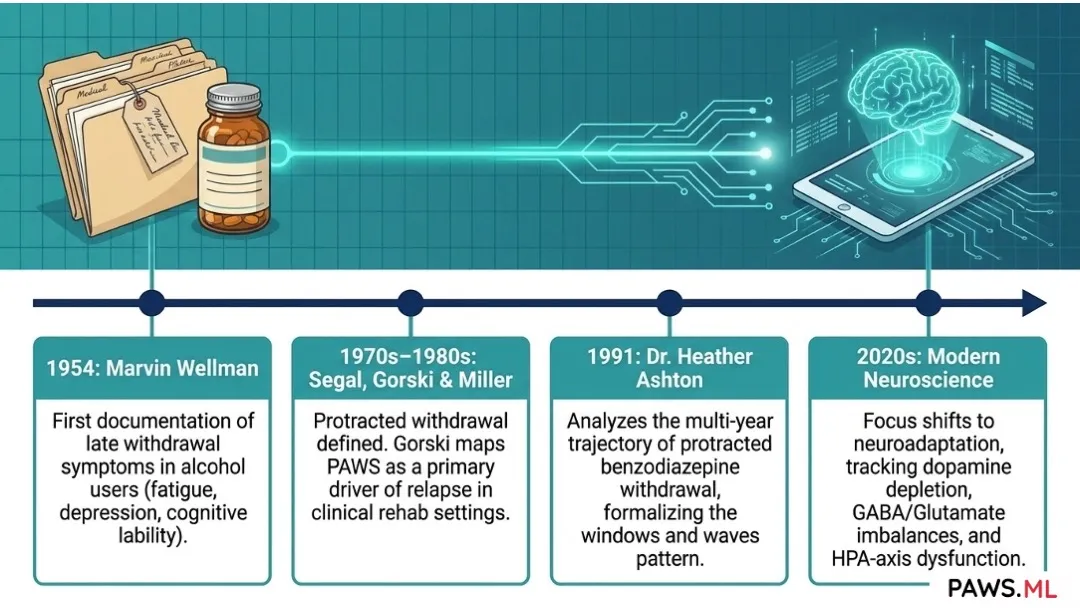
The evolution of how we understand protracted withdrawal has been far from linear. Historically, this development progressed along two parallel, rarely intersecting tracks:
- Practical addiction rehabilitation: Where the concept of Post-Acute Withdrawal Syndrome (PAWS) became a cornerstone of relapse prevention.
- Academic psychiatry: Where the framework faced deep skepticism and demands for rigorous neurobiological validation.
Early clinical observations (1950s–1970s)
For decades, the prevailing belief was that once a substance was fully cleared from the body and acute withdrawal symptoms subsided, a patient was fully recovered.
The first to challenge this assumption was Canadian psychiatrist Marvin Wellman. In October 1954, writing in the Canadian Medical Association Journal, Wellman described what he termed “late withdrawal symptoms” in patients recovering from alcohol use disorder.
He observed that even during periods of sustained sobriety, patients experienced:
- Intense irritability
- Persistent depression
- Chronic fatigue
- Severe insomnia
These symptoms often mimicked the physical sensations of intoxication itself.
Later, in 1970, B. M. Segal and his colleagues formally introduced the term “protracted withdrawal syndrome” (PAWS) into academic literature to describe this persistent emotional and autonomic instability.
The birth of the PAWS framework: The gorski and miller era (1980s)
The framework for what we now call Post-Acute Withdrawal Syndrome (PAWS) was popularized in the 1980s by Terence Gorski and Merlene Miller. In their seminal works, Counseling for Relapse Prevention (1982) and the groundbreaking manual Staying Sober: A Guide for Relapse Prevention (1986), they conceptualized these issues as “sobriety-based symptoms.”
Gorski and Miller identified six primary symptom clusters (including cognitive impairment, memory problems, and emotional overreaction) and outlined 37 distinct warning signs of relapse.
A Critical Caveat: While Gorski and Miller were brilliant addiction counseling clinicians, they were not neuroscientists. Their model was built entirely on empirical observations of patients in residential treatment centers.
Gorski hypothesized that 75% to 95% of recovering individuals suffer from physical brain damage caused by alcohol or drugs, which he believed was the root cause of PAWS.
Today, this view faces significant scientific criticism for its biological reductionism. Contemporary neuroscience shows that most PAWS symptoms are functional and reversible (neuroadaptive) rather than structural (organic) in nature. Nonetheless, their model revolutionized clinical addiction treatment by providing patients with a validating, easy-to-understand explanation for why they felt so poorly during early sobriety.
Benzodiazepines and iatrogenic dependence (1991)
In 1991, the concept of protracted withdrawal gained significant academic credibility through the work of British psychopharmacologist Heather Ashton.
In her landmark paper, “Post-Acute Withdrawal Syndromes from Benzodiazepines” (published in the Journal of Substance Abuse Treatment), she detailed the long-term consequences of benzodiazepine cessation. Ashton introduced the classic concept of “windows and waves”—the fluctuating recovery pattern where patients alternate between periods of near-normal functioning (windows) and sudden symptomatic flare-ups (waves).
Ashton estimated that PAWS develops in approximately 10% to 15% of individuals who use benzodiazepines long-term, even when taken at prescribed therapeutic doses.
Nosological skepticism: The conflict with the DSM (1993)
As the PAWS concept gained traction in community recovery circles, academic psychiatry grew skeptical. In May 1993, Sally Satel and her colleagues published a critical paper in the American Journal of Psychiatry titled, “Should Protracted Drug Withdrawal Be Included in DSM-IV?”
The authors argued that:
- PAWS symptoms lack nosological specificity (they are too broad and mimic other conditions).
- The symptoms are often simply manifestations of underlying, untreated psychiatric disorders (such as major depressive disorder or generalized anxiety) that were previously masked by substance use.
This critique laid the groundwork for excluding PAWS as a standalone diagnosis in official psychiatric diagnostic manuals.
Institutional recognition (2010–2020)
Despite its absence from formal diagnostic manuals, clinical reality forced healthcare organizations to address the phenomenon:
- July 2010: The Substance Abuse and Mental Health Services Administration (SAMHSA) issued an official clinical advisory, “Protracted Withdrawal”. This document officially recognized the syndrome and standardized its definition for clinicians, though it declined to establish rigid diagnostic timelines due to a lack of large-scale randomized controlled trials.
- 2013: The DSM-5 was published. PAWS was again excluded as a standalone diagnosis. This was largely due to diagnostic coding rules, which dictate that if symptoms persist for more than one month following acute substance cessation, they must be classified under a primary psychiatric disorder rather than withdrawal.
- 2020: The American Society of Addiction Medicine (ASAM) released clinical guidelines officially introducing the term “subacute withdrawal” for alcohol use, defining it as symptoms persisting past the 30-day mark.
The modern era: Antidepressants and evidence-based medicine (2015–2025)
In recent years, the scientific focus has expanded from illicit drugs and alcohol to prescribed psychotropic medications.
In 2015, Carl Chouinard and Virginie-Anne Chouinard proposed a new classification for SSRI and SNRI withdrawal, coining the term “persistent post-withdrawal disorder” to describe symptoms lasting longer than 6 weeks.
By 2024–2025, the clinical legitimacy of this phenomenon was solidified by two milestone publications:
- The Maudsley Deprescribing Guidelines (2024): This text revolutionized how clinicians approach psychiatric drug taper plans. It mandated the use of “hyperbolic tapering” (gradually reducing doses in progressively smaller increments) specifically to prevent severe PAWS.
- Epidemiology and Psychiatric Sciences Review (January 2025): A global systematic review confirmed that antidepressant-induced PAWS is a highly pressing clinical issue. It highlighted massive symptom duration variability (ranging from 1.5 to 166 months), while noting that high-quality, randomized evidence for treatment protocols remains scarce.
Timeline of the evolution of the PAWS concept (1954–2025)
| Year | Key Milestones & Authors | Contribution to the Concept | Level of Evidence |
|---|---|---|---|
| 1954 | M. Wellman (CMAJ) | First clinical description of “late withdrawal symptoms” from alcohol. | Clinical observation |
| 1970 | B. M. Segal et al. | Introduction of the academic term “protracted withdrawal syndrome.” | Clinical concept |
| 1986 | T. Gorski & M. Miller (Staying Sober) | Popularized the concept of sobriety-based symptoms; defined 6 symptom clusters and relapse warning signs. | Empirical model / Disputed |
| 1991 | H. Ashton (J Subst Abuse Treat) | Documented protracted withdrawal from benzodiazepines (the “windows and waves” phenomenon). | Clinical study |
| 1993 | S. Satel et al. (Am J Psychiatry) | Skeptical analysis of PAWS; argued against its inclusion in the DSM-IV. | Scientific critique |
| 2010 | SAMHSA (Advisory) | Official US recognition of the phenomenon; standardized clinical definitions and synonyms. | Clinical advisory |
| 2013 | DSM-5 (APA) | Excluded PAWS as a standalone diagnosis, deferring to primary psychiatric disorders. | Nosological standard |
| 2015 | G. Chouinard et al. (Psychother Psychosom) | Introduced “persistent post-withdrawal disorder” for SSRI/SNRI discontinuation. | New classification |
| 2020 | ASAM (Guidelines) | Formally recognized “subacute withdrawal” from alcohol (>30 days) in clinical protocols. | Clinical guidelines |
| 2024 | M. Horowitz, D. Taylor (Maudsley) | Published deprescribing standards to minimize the severity of iatrogenic PAWS. | Gold standard |
| 2025 | Zernig & Kummer (Epidem & Psych Sci) | Meta-narrative review confirming symptom profiles alongside a critical shortage of RCTs. | Systematic review |
4. Synonyms and terminological confusion
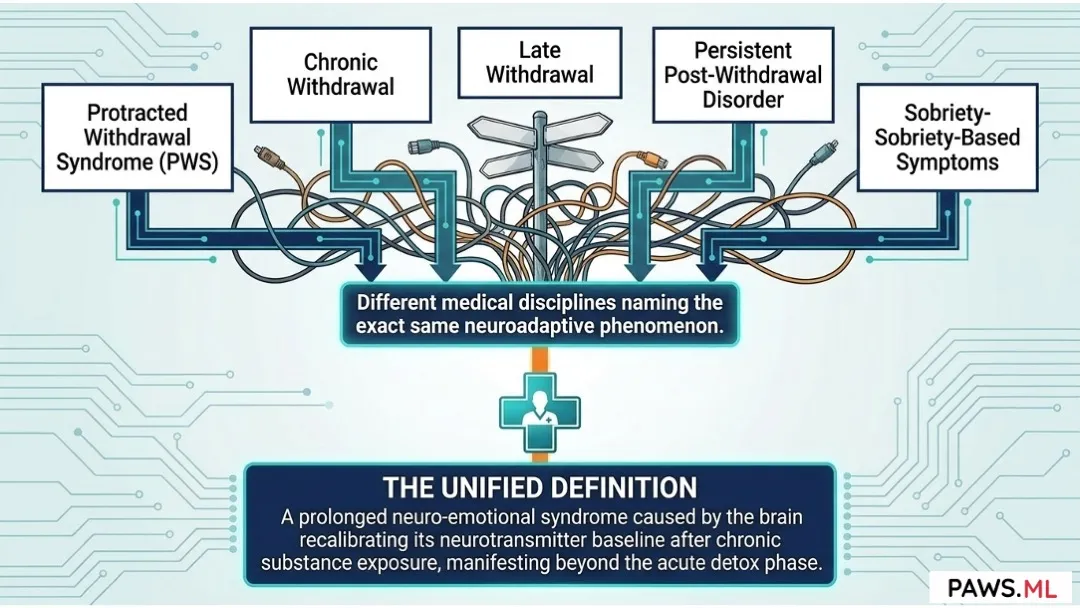
Because official diagnostic manuals—such as the ICD-10, ICD-11, and DSM-5—lack a rigid nosological classification for post-withdrawal states, an extensive and fragmented web of synonyms has historically emerged across scientific literature, clinical practice, and patient recovery communities.
It is crucial to understand that these terms are not exact synonyms. Instead, they reflect different pathophysiological models, substance classes, or subcultural contexts.
The table below systematizes the primary descriptors used to define this phenomenon:
| Term | Target Audience / Field of Application | Context and Meaning |
|---|---|---|
| Post-acute withdrawal syndrome (PAWS) | Addiction medicine, rehabilitation programs (e.g., Gorski’s CENAPS model, SAMHSA) | A non-specific complex of affective and cognitive impairments that elevates the risk of relapse following acute detoxification. |
| Post-acute withdrawal syndrome (PAWS) | Academic research, clinical trials (e.g., B.M. Segal, H. Ashton) | Somatovegetative and psychopathological disturbances that objectively persist beyond the acute detoxification phase. |
| Persistent post-withdrawal disorder | Modern psychopharmacology (Chouinard’s classification) | Used in assessing risks of tapering or deprescribing antidepressants and antipsychotics; characterized by new or intensified symptoms lasting longer than 6 weeks. |
| Protracted abstinence syndrome | Opioid addiction research | Persistent autonomic nervous system dysfunction following the cessation of opioid receptor agonists. |
| Subacute withdrawal | Clinical guidelines (e.g., ASAM 2020) | Clinical triage and management; mild-to-moderate symptoms (such as anxiety and insomnia) persisting for more than 30 days post-acute phase. |
| Persistent postuse symptoms | Neuropsychological mapping | Persistent deficits in executive functioning and impulse control following stimulant abuse. |
| Sobriety-based symptoms | Clinical counseling and recovery coaching (Gorski model) | Symptoms that emerge or intensify as the duration of sobriety increases. |
| Prolonged abstinence / PAS | Eastern European and post-Soviet addiction psychiatry | The stabilization period of physiological functions following the cessation of chronic intoxication. |
| ”Dry withdrawal” (or “dry drunk” symptoms) | Peer support groups, recovery subcultures | A subjective, undulating worsening of well-being that mimics acute withdrawal symptoms without an actual relapse. |
Key takeaway: Defining terminological boundaries
A rigorous review of clinical literature demands a strict separation of these concepts. The most critical conceptual takeaway is that:
Post-Acute Withdrawal Syndrome (PAWS) [academic/clinical] $\neq$ PAWS [rehab industry] $\neq$ Persistent Post-Withdrawal Disorder [Chouinard’s model]
- Post-Acute Withdrawal Syndrome (PAWS) focuses on objective physiological and neuroendocrine shifts. These changes can be clinically measured or laboratory-verified after the acute detoxification phase has concluded.
- PAWS (Post-Acute Withdrawal Syndrome), which is deeply rooted in addiction rehabilitation programs, is largely an empirical concept. It highlights the patient’s subjective psychological distress (“sobriety-based symptoms”) and behavioral risks of relapse, rather than focusing on hard neurobiological markers.
- Persistent post-withdrawal disorder describes highly specific iatrogenic (treatment-induced) consequences of discontinuing psychotropic medications (such as SSRIs). This paradigm emphasizes that withdrawal symptoms can occasionally be irreversible or even more severe than the primary psychiatric condition for which the medication was originally prescribed.
Conflating these distinct terms within clinical practice routinely leads to misdiagnosis and highly ineffective treatment strategies.
5. Why PAWS is not in the DSM-5
Despite the widespread recognition of protracted withdrawal within clinical addiction medicine, rehabilitation programs, and official guidelines from federal agencies like the Substance Abuse and Mental Health Services Administration (SAMHSA), Post-Acute Withdrawal Syndrome (PAWS) is not classified as a standalone diagnosis or a specific disorder in the Diagnostic and Statistical Manual of Mental Disorders, Fifth Edition (DSM-5).
Key Takeaway: While healthcare providers and recovery experts widely acknowledge the reality of PAWS, it currently lacks a formal, independent diagnostic code in the standard psychiatric manual.
This omission is by no means an accidental oversight. Instead, the American Psychiatric Association (APA) workgroup’s decision to exclude protracted withdrawal from the diagnostic manual is the result of an ongoing academic debate and hinges on three fundamental reasons:
Lack of nosological specificity and diagnostic validity
Academic skepticism regarding Post-Acute Withdrawal Syndrome (PAWS) was clearly articulated as early as the preparatory stages of the DSM-IV.
In May 1993, a research group led by Sally Satel, MD (co-authored by T. Kosten, M. Schuckit, and M. Fishman), published a pivotal critical article in the American Journal of Psychiatry:
“Should Protracted Drug Withdrawal Be Included in DSM-IV?”
The researchers argued against its inclusion, highlighting several critical diagnostic concerns:
- Lack of Pathognomonic Features: The vast majority of clinical manifestations attributed to PAWS—including dysphoria, anhedonia, insomnia, and anxiety—completely lack specific, pathognomonic markers that would uniquely link them to post-acute withdrawal.
- The “Masking” Effect of Co-occurring Disorders: Critics pointed out that what is frequently diagnosed as PAWS is often actually a primary, independent psychiatric disorder (such as major depressive disorder or generalized anxiety disorder). These conditions typically predate the onset of substance use and were merely “masked” by active chemical dependency.
Clinical Implications:
Formally including PAWS in the DSM could lead to the misattribution of these symptoms. This diagnostic error risks depriving patients of the targeted, evidence-based psychiatric treatment required to address their primary mental health disorders.
The “one-month rule” conflict: The temporal criterion
The second critical barrier to official recognition is structural and methodological. The diagnostic framework of the DSM-5 maintains a strict boundary between two distinct categories:
- Primary psychiatric disorders (independent mental health conditions)
- Substance-induced disorders
According to the core guidelines of this classification system, for symptoms to be considered a direct consequence of acute substance withdrawal, they must resolve within one month after the cessation of the substance.
If cognitive, emotional, or behavioral disturbances persist for more than four weeks (or slightly longer in rare clinical exceptions) after acute detoxification is complete, the DSM-5 guidelines dictate a different diagnostic path.
The DSM-5 Diagnostic Mandate: Any symptoms persisting beyond the 30-day mark must be evaluated and diagnosed as an independent, primary psychiatric disorder rather than a continuation of withdrawal.
The concept of Post-Acute Withdrawal Syndrome (PAWS)—which assumes symptoms can last for several months or even years—directly contradicts this fundamental rule. Integrating PAWS into the current framework would blur the strict boundaries required for accurate differential diagnosis, complicating clinical assessments.
Lack of scientific consensus and methodological flaws
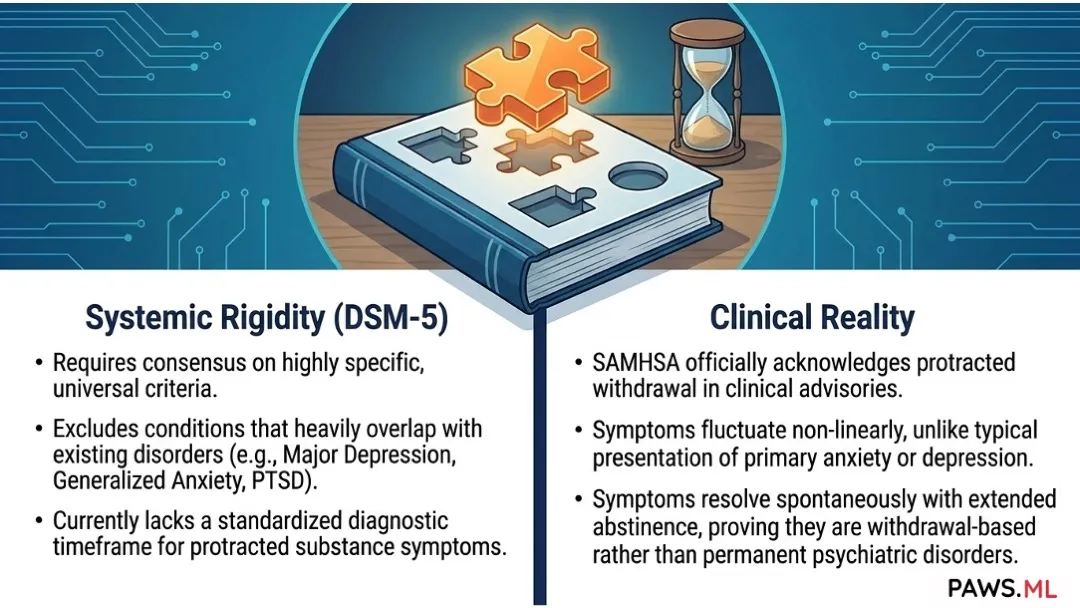
The third major barrier preventing formal recognition is the overall quality of the existing evidence base. Clinical experts have repeatedly highlighted that the majority of research studies on Post-Acute Withdrawal Syndrome (PAWS) suffer from significant methodological limitations.
Some of the most critical flaws identified in current literature include:
- Small and highly heterogeneous sample sizes: Studies often look at small, diverse patient groups, making it difficult to generalize the findings.
- A distinct lack of control groups: Without control groups, it is nearly impossible to isolate the specific cause of the lingering symptoms.
- Over-reliance on subjective patient self-reports: Much of the existing data relies heavily on patient recall and subjective descriptions rather than objective, standardized clinical measurements.
Furthermore, medical science currently lacks reliable, objective biomarkers that can definitively differentiate neuroadaptive changes from typical psychological stress reactions—such as the natural anxiety, depression, and stress associated with adapting to a sober lifestyle. Because the clinical terminology and diagnostic criteria remain highly ambiguous, establishing a rigid, standardized diagnostic framework for PAWS has proven impossible. Consequently, the DSM committee was unable to reach a scientific consensus.
Key takeaway: Why the exclusion of PAWS is not a denial of patient suffering
The decision to exclude Post-Acute Withdrawal Syndrome (PAWS) from the DSM-5 does not mean that the medical and scientific communities dismiss the very real clinical suffering that patients experience during recovery.
The Clinical Reality: Modern medicine fully acknowledges that neuroadaptation and the restoration of neurotransmitter balance following prolonged substance use are complex, long-term processes that require a significant amount of time.
However, from a nosological (disease classification) perspective, the prevailing clinical approach is to address these post-acute challenges not as a single, catch-all “syndrome,” but rather through the specific lens of distinct, treatable cognitive, affective, or behavioral impairments.
6. Syndrome vs. Symptom cluster: The academic debate
In modern addiction medicine and psychopharmacology, an intense debate continues regarding the exact nosological nature of persistent withdrawal. The core question is this: does Post-Acute Withdrawal Syndrome (PAWS) represent a distinct, pathophysiologically unified medical syndrome, or is it merely an umbrella term describing a heterogeneous symptom cluster driven by diverse, unrelated causes?
Historically, this debate arose because the concept was first popularized by practicing clinicians (such as Terence Gorski), who viewed PAWS as a unified consequence of chronic brain injury. Meanwhile, academic researchers demanded rigorous neurobiological evidence to prove the clinical specificity of the phenomenon. Today, both sides present compelling arguments, reflecting the complex nature of diagnosing protracted withdrawal states.
Arguments supporting a unified “syndrome”
- Neurobiological Homogeneity: Patients exhibit maladaptive changes in the central nervous system (CNS) that are common across various classes of psychoactive substances. These include receptor downregulation, glutamate system hyperactivity, dopamine pathway depletion, and hypothalamic-pituitary-adrenal (HPA) axis dysregulation. This shared neurochemical disruption establishes a common physiological basis for the disorder.
- A Unique Clinical Course: PAWS features a highly specific, fluctuating pattern often described as “windows and waves”—an alternation between periods of relative normalcy and acute symptom flare-ups. This wave-like trajectory is atypical for the classic course of primary affective psychiatric disorders.
- Toxicogenic and Iatrogenic Origins: Modern researchers (such as Guy Chouinard and Mark Horowitz) categorize persistent withdrawal disorders as a direct consequence of substance-induced neurotoxicity or long-term pharmaceutical interference with receptor networks.
- Direct Link to Relapse Risk: The severity of protracted withdrawal symptoms serves as a potent, independent predictor of relapse. From a clinical standpoint, this relationship demands that PAWS be recognized and targeted as a distinct therapeutic objective.
- Institutional Endorsement: The concept is officially recognized in major clinical guidelines—such as those published by the Substance Abuse and Mental Health Services Administration (SAMHSA) and the American Society of Addiction Medicine (ASAM)—as a legitimate clinical phenomenon requiring specialized medical management.
Arguments supporting a “symptom cluster”
- Lack of Clinical Specificity: The core symptoms—such as anxiety, anhedonia, insomnia, and dysphoria—are highly non-specific. They overlap significantly with the diagnostic criteria for primary depressive, anxiety, or somatoform disorders.
- Unmasking Underlying Pathology: Critics like Sally Satel and other clinical researchers emphasize that cessation of drug or alcohol use often “unmasks” pre-existing psychiatric conditions. These are frequently disorders that patients had previously attempted to self-medicate with addictive substances.
- The Impact of Psychosocial Stress: Symptoms can often be explained as an acute stress response to adapting to sober life. Deprived of their accustomed chemical coping mechanism, patients face overwhelming daily stressors, leading to emotional and physical exhaustion that is easily misidentified as a neurobiological syndrome.
- Methodological Limitations: Evidence supporting a unified syndrome is frequently drawn from subjective patient self-reports. Many of these clinical observations lack control groups or validated, objective biomarkers.
- Nosological Discrepancies: Due to the poorly defined diagnostic criteria, the phenomenon is not currently recognized as a standalone diagnosis in major classification systems like the DSM-5 or ICD-11.
The bottom line: The phenomenon is real, regardless of classification
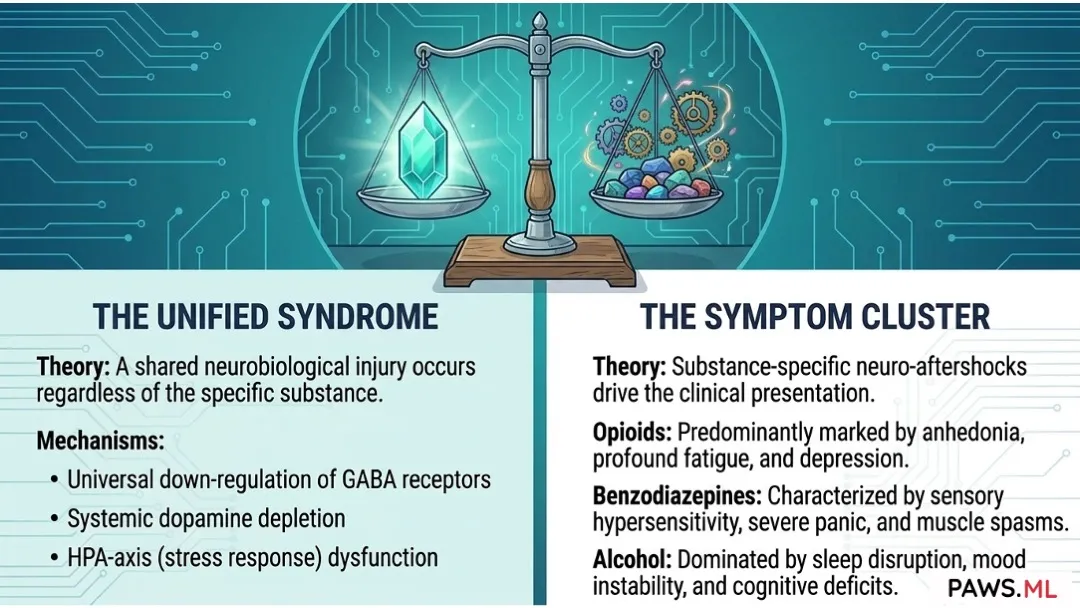
Striking a balance between these two paradigms, modern evidence-based medicine adopts a highly pragmatic stance. Whether this condition is eventually classified as a unified medical syndrome with its own diagnostic code, or remains defined as a complex symptom cluster—encompassing neuroadaptation, stress, and comorbid pathologies—the clinical reality of the phenomenon is indisputable.
Patients genuinely experience prolonged, debilitating distress, cognitive deficits, and emotional pain for months following acute detoxification. Systematic reviews (most notably the analysis by Bahji et al., 2022) confirm that there is credible evidence pointing to a physiological basis for protracted withdrawal symptoms. As highlighted in recent scientific literature, these symptoms are real, severe, and can persist without any irreversible structural brain damage, serving instead as a manifestation of neural network dysregulation.
Clinical Takeaway
Academic debates over terminology must not stand in the way of clinical recognition, the validation of patient suffering, or the development of targeted, evidence-based treatment protocols for Post-Acute Withdrawal Syndrome (PAWS).
7. ICD-10 and ICD-11 diagnostic codes: Classification challenges
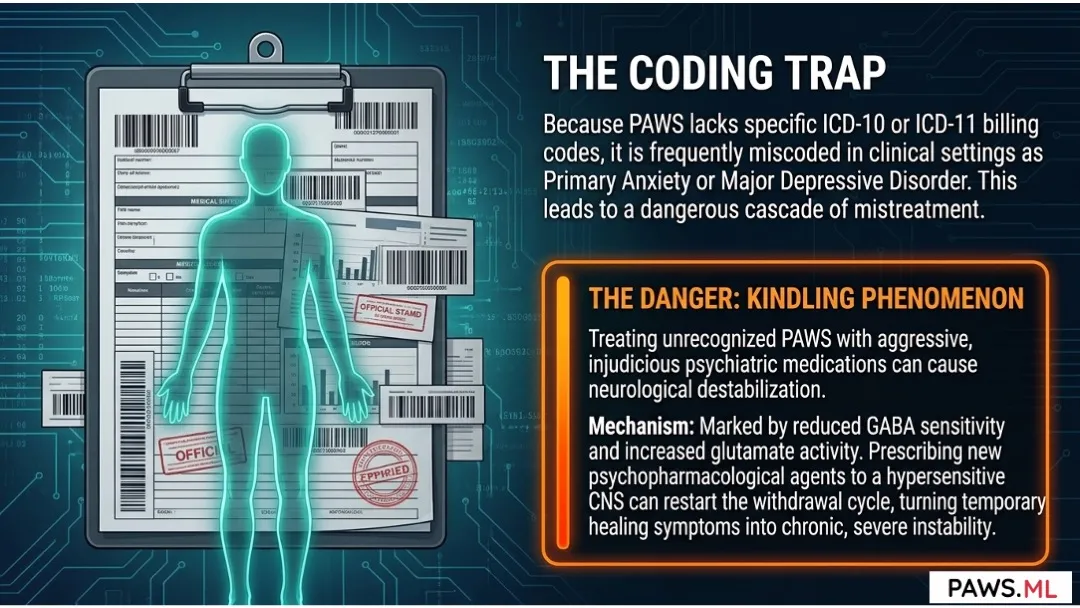
Because Post-Acute Withdrawal Syndrome (PAWS) is not recognized as a standalone clinical entity, it lacks its own specific diagnostic code in both the International Classification of Diseases, 10th Revision (ICD-10) and the current ICD-11.
In everyday clinical practice, healthcare providers and addiction specialists are forced to classify PAWS symptoms using general categories designed for acute withdrawal states or associated residual disorders.
Withdrawal syndrome diagnostic codes by substance class
| Substance Class | ICD-10 Code | ICD-11 Code |
|---|---|---|
| Alcohol | F10.3 | 6C40.4 (Alcohol withdrawal) |
| Opioids | F11.3 | 6C43.4 (Opioid withdrawal) |
| Cannabinoids | F12.3 | 6C41.4 (Cannabis withdrawal) |
| Sedatives and Hypnotics (including Benzodiazepines) | F13.3 | 6C4A.4 (Sedative, hypnotic or anxiolytic withdrawal) |
| Cocaine | F14.3 | 6C45.4 (Cocaine withdrawal) |
| Other Stimulants (including Amphetamines) | F15.3 | 6C46.4 (Stimulant withdrawal) |
| Polysubstance & Other Substances | F19.3 | 6C4Z (Disorders due to substance use, unspecified) |
Note: In the ICD-10 classification, the F1x.3 category is utilized as a general designation for acute withdrawal states. In the newer ICD-11, the block spanning 6C40 to 6C4Z covers the broader spectrum of disorders directly attributable to psychoactive substance use.
The limitations of diagnostic coding
The primary methodological challenge is that the codes listed above formally and clinically apply only to the acute phase of withdrawal. This acute phase is a temporary physiological response to substance cessation or dose reduction, typically resolving within a few days to a couple of weeks.
Neither ICD-10 nor ICD-11 provides a distinct diagnostic code for “protracted,” “subacute,” or “post-acute” withdrawal that persists for months or even years.
When cognitive, affective, or autonomic disturbances persist over the long term, using acute withdrawal codes (F1x.3 / 6C4x.4) becomes clinically inaccurate. In these scenarios, psychiatrists and addiction medicine specialists are often forced to adopt one of two diagnostic workarounds:
- Using residual codes: Classifying symptoms under residual and late-onset psychotic or affective disorders (such as F1x.7 in ICD-10).
- Diagnosing secondary conditions: Treating these manifestations as independent, primary psychiatric disorders—such as Major Depressive Disorder (MDD), Generalized Anxiety Disorder (GAD), or somatoform autonomic dysfunctions.
The consequences of misclassification
This forced diagnostic substitution has serious real-world consequences:
- Skewed Medical Statistics: The true clinical prevalence and epidemiological impact of Post-Acute Withdrawal Syndrome remain completely hidden within global health databases.
- Inappropriate Pharmacological Treatment: Because the underlying neuroadaptive and toxicological nature of the patient’s condition is ignored, they are often prescribed inappropriate psychotropic medications.
- The Risk of Kindling: Introducing certain new neuroactive drugs can inadvertently trigger the kindling effect, worsening the patient’s long-term neurological stability and severely complicating their recovery journey.
8. The current state of science (2020–2025)
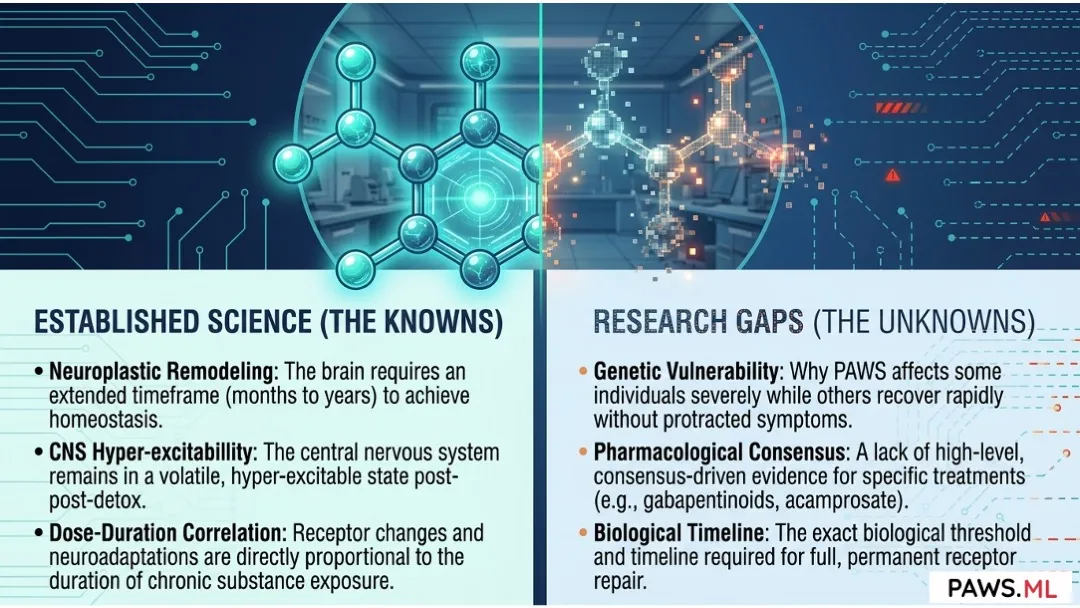
Between 2020 and 2025, the scientific approach to understanding Post-Acute Withdrawal Syndrome (PAWS) underwent a profound paradigm shift. Historically, this phenomenon was studied almost exclusively within the context of alcohol and illicit drug rehabilitation. Today, however, clinical attention has significantly shifted toward iatrogenic (medication-induced) withdrawal syndromes stemming from prescribed psychotropic medications, such as antidepressants and benzodiazepines.
Despite a rising volume of publications, the academic and medical communities acknowledge that massive knowledge gaps still exist.
Key Finding from 2025 Clinical Literature: A landmark 2025 systematic meta-narrative review by Zernig & Kummer focusing on antidepressant-induced PAWS analyzed over 1,200 sources. The authors concluded that the high-quality evidence base remains critically limited.
Currently, the majority of available data relies on retrospective cohort studies and patient self-reports on peer-support forums. Rigorous randomized controlled trials (RCTs) addressing this condition are still virtually non-existent.
Positions of leading global health organizations (2020–2025)
- American Society of Addiction Medicine (ASAM): In its clinical guidelines, ASAM officially integrated the concept of “subacute withdrawal” for alcohol. This term encompasses moderate, lingering symptoms—such as anxiety, insomnia, and irritability—that persist for more than 30 days following acute detoxification.
- The Maudsley Deprescribing Guidelines (UK, 2024): Widely considered the gold standard for tapering psychotropic medications, this clinical guide revolutionized the field by formally recognizing the severity of iatrogenic PAWS. The guidelines mandate a strict “hyperbolic tapering” protocol (down to micro-doses) to minimize the risk of developing persistent withdrawal symptoms.
- Eastern European and Regional Guidelines (2023–2025): Clinical protocols in these regions utilize the term “post-abstinence disorders.” Treatment is integrated directly into the medical and social rehabilitation phases. Recommended protocols combine structured psychotherapeutic support with metabolic correctors and mood stabilizers (normothymics) as clinically indicated.
Scientific status of various PAWS dimensions (as of 2025)
| Dimension of PAWS | Status in Evidence-Based Medicine | Level of Evidence |
|---|---|---|
| Clinical Severity of Distress | Confirmed. Patients experience objective, severe distress (including chronic insomnia, anhedonia, and cognitive deficits) that can persist for months. | High |
| Neuroadaptational Basis | Confirmed. Symptoms are driven by receptor down-regulation, imbalances in the GABA/glutamate systems, dopamine depletion, and hypothalamic-pituitary-adrenal (HPA) axis stress reactivity. | High |
| Irreversible Brain Damage | Refuted / Marginalized. Early hypotheses (e.g., Terence Gorski’s model suggesting PAWS is caused by permanent structural brain damage in most individuals with substance use disorders) are not supported by modern MRI/fMRI imaging. The symptoms are functional and neuroplastic (reversible) in nature. | Low (Refuted) |
| Targeted Pharmacotherapy | Hypothetical. The efficacy of universal pharmacological treatments for PAWS (such as gabapentinoids or standard antidepressants) has not been proven in large-scale RCTs. Management remains strictly symptomatic. | Limited |
| Standardized Recovery Timelines | Unknown. The duration of the syndrome varies drastically—ranging from 2 to 166 months—depending on the substance, genetics, and history of use. There is currently no clinical consensus on duration. | None |
Key research gaps and future outlook
The primary challenge facing clinical research over the coming years is the total absence of validated biomarkers (such as specific quantitative EEG patterns or distinct biochemical blood markers). Finding these biomarkers is crucial to:
- Objectively diagnosing PAWS.
- Accurately differentiating PAWS from the recurrence or exacerbation of a primary psychiatric condition (e.g., major depressive disorder or generalized anxiety disorder).
Additionally, clinical medicine urgently requires the development and validation of standardized clinical scales designed specifically to assess the severity of protracted withdrawal states.
9. What this means for the patient: Navigating the healthcare system
For anyone experiencing long-term distress after detoxing from addictive substances or tapering off psychiatric medications, the academic debates surrounding diagnostic manuals can feel entirely detached from reality.
The most critical takeaway that contemporary evidence-based medicine offers patients is this:
Even if the clinical community continues to debate its formal classification, the phenomenon of protracted withdrawal is absolutely real, measurable, and physiologically driven.
The debilitating insomnia, cognitive dysfunction (often described as “brain fog”), anhedonia, and intense emotional instability you may be experiencing are not signs of a weak will, a moral failing, or permanent cognitive decline. Instead, they represent a painful but predictable process of neuroadaptation as your central nervous system works to restore neurochemical equilibrium.
The challenge of patient-provider communication
Because Post-Acute Withdrawal Syndrome (PAWS) is not formally recognized as a standalone diagnosis in major diagnostic manuals like the DSM-5 or ICD-11, patients who report these symptoms to conventional psychiatrists or neurologists often face skepticism, dismissal, or misunderstanding.
This diagnostic gap creates a significant clinical risk of misdiagnosis:
- Misinterpreting Symptoms: Physicians frequently mistake the symptoms of protracted withdrawal for the onset or relapse of an underlying generalized anxiety disorder or major depressive episode.
- Inappropriate Prescribing: This misinterpretation often leads to the introduction of new psychiatric medications to treat the “relapse.”
- The Kindling Effect: Introducing new psychoactive substances can further destabilize an already fragile and hypersensitive central nervous system, potentially triggering a severe “kindling” effect that worsens long-term outcomes.
How to effectively communicate with your healthcare provider
To secure appropriate medical support and avoid the risks of overmedication, patients are advised to adapt how they describe their symptoms to align with conventional clinical frameworks:
Clinical terminology and medical authority
Transitioning from layman terms to professional descriptors
When discussing recovery and substance use disorders, maintaining a highly professional, clinical tone is essential for establishing medical credibility and improving search engine authority.
While informal recovery communities and online forums frequently use the colloquial acronym “PAWS” (Post-Acute Withdrawal Syndrome), clinical literature and evidence-based SEO guidelines demand more rigorous, scientifically validated descriptors.
To ensure clinical accuracy, it is highly recommended to use the preferred medical term:
- Post-Acute Withdrawal Syndrome (PAWS)
Depending on the specific clinical context, you may also utilize closely related medical descriptors such as:
- Protracted withdrawal
- Subacute withdrawal
Using Post-Acute Withdrawal Syndrome (PAWS) instead of informal terminology helps distinguish high-quality, evidence-based medical content from casual rehabilitation marketing.
Leveraging authoritative medical guidelines
To further substantiate your content and build trust with both readers and search engine algorithms, always align your terminology with established medical authorities.
When discussing the clinical validity of Post-Acute Withdrawal Syndrome (PAWS), you can directly reference official diagnostic and treatment protocols from leading national organizations:
Key Clinical References for PAWS:
- SAMHSA Guidelines: The Substance Abuse and Mental Health Services Administration formally recognizes these prolonged states in its Treatment Improvement Protocols (TIPs).
- ASAM Clinical Protocols: The American Society of Addiction Medicine provides established guidelines and criteria for managing subacute and protracted withdrawal phases.
Understanding the dynamics of iatrogenic withdrawal
When severe, long-lasting symptoms are triggered by the discontinuation of prescribed medications—specifically antidepressants, benzodiazepines, or gabapentinoids—the clinical presentation of Post-Acute Withdrawal Syndrome (PAWS) requires a highly specialized approach.
To safely navigate this process, clinical practice often relies on established global guidelines:
The Maudsley Deprescribing Guidelines This resource is widely considered the gold standard for safely tapering psychiatric medications. It provides evidence-based, step-by-step protocols designed to minimize the risk of severe, long-term withdrawal symptoms.
When documenting or researching these prolonged iatrogenic effects, clinicians and researchers typically refer to specific medical terminology:
- Post-Acute Withdrawal Syndrome (PAWS): The preferred, comprehensive term for enduring, post-acute symptoms that persist long after acute withdrawal has resolved.
- Persistent Post-Withdrawal Disorder: A term introduced by researcher Guy Chouinard to specifically describe the long-term, sometimes severe neurological adaptations that remain after discontinuing psychiatric substances.
3. Focus on the timeline
Rather than pressing your healthcare provider to immediately confirm a specific diagnosis of Post-Acute Withdrawal Syndrome (PAWS), focus your discussion entirely on the objective facts.
To help your doctor make an accurate assessment, clearly establish the chronological link between your symptoms and your recovery process. Be prepared to highlight exactly how your symptoms:
- First appeared only after you completely stopped using the substance.
- Changed in nature or shifted over time post-cessation.
- Sharply intensified or spiked in severity specifically after you discontinued use.
Clinical Tip: Presenting a clear, dated timeline of your symptoms helps your physician rule out other co-occurring conditions and objectively evaluate the physiological impact of PAWS on your nervous system.
4. Keeping a symptom diary
Provide your healthcare provider with a detailed daily symptom log that clearly illustrates the characteristic “windows and waves” pattern of your recovery.
This non-linear progression is defined by:
- Windows: Periods of relative normalcy where symptoms subside, offering a glimpse of your baseline self.
- Waves: Sudden, unexplained flare-ups of intense physical or psychological distress.
Clinical Significance: Presenting this distinct cyclical pattern is crucial for your physician. It helps an experienced clinician differentiate the neuroreceptor changes associated with Post-Acute Withdrawal Syndrome (PAWS) from classic endogenous depression, ensuring you receive an accurate diagnosis and the correct treatment plan.
10. FAQ: Frequently asked questions about post-acute withdrawal syndrome (PAWS)
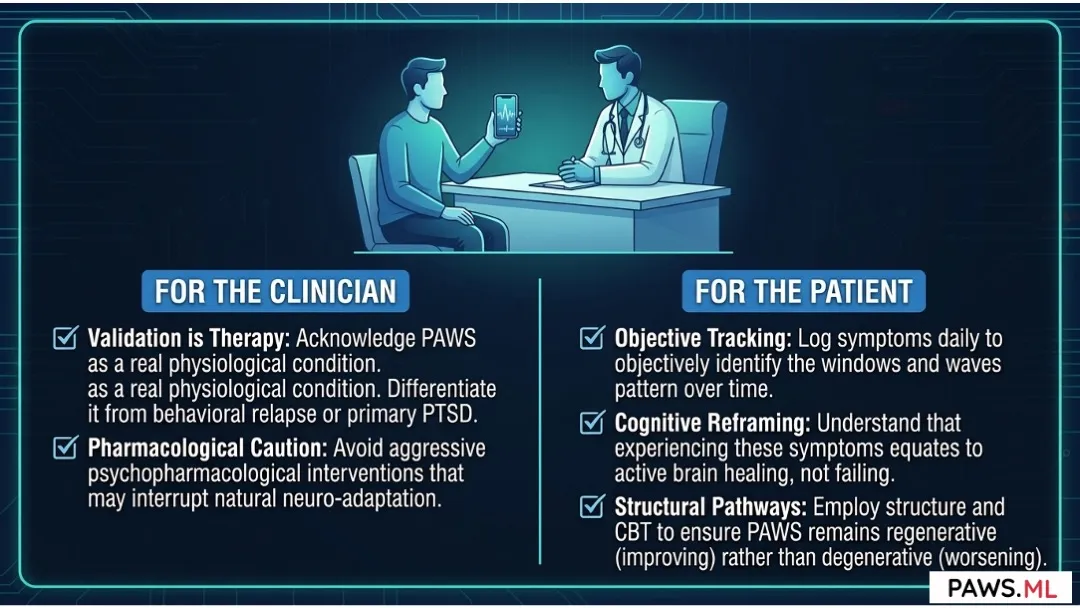
Below are evidence-based answers to the most frequently asked questions about Post-Acute Withdrawal Syndrome (PAWS), compiled from the perspective of modern clinical science.
What is post-acute withdrawal syndrome (PAWS)?
Post-Acute Withdrawal Syndrome (PAWS) is a complex of prolonged psychological, emotional, and autonomic symptoms that persist, evolve, or emerge after the acute withdrawal phase has resolved.
The clinical presentation typically includes:
- Dysphoria and mood instability
- Sleep disturbances (such as insomnia and vivid dreams)
- Cognitive deficits (often described as “brain fog” or difficulty concentrating)
- Intense cravings for the substance
Who coined the term?
The acronym “PAWS” (historically referring to Post-Acute Withdrawal Syndrome) was popularized in the 1980s by clinical practitioners Terence Gorski and Merlene Miller. However, the phenomenon of prolonged withdrawal has a long history in academic literature:
- In 1954, Canadian psychiatrist Marvin Wellman published early descriptions of long-term recovery symptoms.
- In 1970, researcher Boris Segal actively documented chronic, long-term withdrawal states in psychiatric and addiction literature.
Is PAWS recognized in the DSM-5?
No. The American Psychiatric Association (APA) workgroup did not include the syndrome in the Diagnostic and Statistical Manual of Mental Disorders, Fifth Edition (DSM-5).
Why is it excluded? The main reason is a structural conflict with the manual’s diagnostic hierarchy. The DSM-5 requires symptoms persisting for longer than one month to be diagnosed as independent, primary psychiatric disorders (such as Major Depressive Disorder or Generalized Anxiety Disorder) rather than as ongoing withdrawal effects.
Does PAWS have a code in the ICD-10 or ICD-11?
There is no specific diagnostic code for protracted withdrawal.
In clinical settings, physicians are often forced to categorize this condition using general withdrawal state codes:
- F10.3 in the ICD-10
- 6C40.4 in the ICD-11
This approach is methodologically imperfect, as these codes were originally designed to classify the acute phase of withdrawal rather than its long-term, protracted sequelae.
Is PAWS a distinct syndrome or a cluster of symptoms?
This remains a subject of ongoing academic debate.
Current Scientific Consensus: Most modern researchers view PAWS as an umbrella term describing a heterogeneous symptom cluster. This cluster is driven by a combination of neuroadaptations (brain changes) and chronic psychological stress.
Regardless of how it is classified taxonomically, clinicians universally agree that the suffering experienced by patients is real and clinically significant.
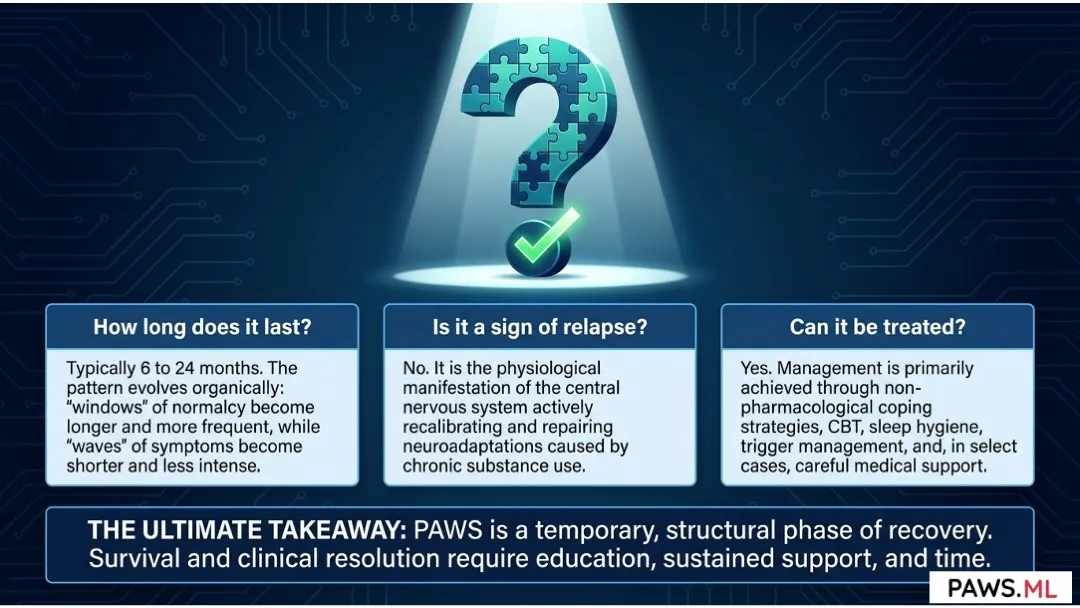
Will i have PAWS forever?
No. PAWS is a fully reversible condition.
The central nervous system requires time—typically ranging from several months to two years—to restore neuroreceptor balance and homeostatic baseline.
A hallmark of recovery is the “windows and waves” pattern:
- “Windows”: Periods of relative normalcy, clarity, and well-being. These gradually become longer and more frequent.
- “Waves”: Temporary flare-ups of withdrawal symptoms. Over time, these episodes become shorter, less intense, and further apart.
Is PAWS caused by permanent brain damage?
No. Early clinical theories (specifically those proposed by Gorski in the 1980s) suggesting that most individuals with substance use disorders suffer from irreversible organic brain damage have been thoroughly debunked by modern neuroscience.
The disruptions seen in PAWS are functional and neuroplastic rather than structural. The brain retains a remarkable capacity to adapt, heal, and remodel its receptor pathways over time.
Does antidepressant discontinuation cause the same PAWS?
While the underlying mechanism—slow receptor readjustment—is highly similar, modern psychopharmacology classifies antidepressant discontinuation differently.
When tapering off SSRIs, SNRIs, and other antidepressants, the preferred medical term is Persistent Post-Withdrawal Disorder (PPWD). This terminology highlights the iatrogenic (medication-induced) nature of the condition, separating it from recreational substance withdrawal.
How is post-acute withdrawal syndrome treated?
There is no “magic pill” or universal drug with a high level of clinical evidence to cure PAWS. Treatment is strictly symptomatic and highly individualized.
- Pharmacological Support: Physicians may occasionally prescribe mood stabilizers or gabapentinoids on a short-term, off-label basis to manage acute distress.
- The Gold Standard: Non-pharmacological interventions remain the cornerstone of recovery:
- Cognitive Behavioral Therapy (CBT) to develop robust coping mechanisms
- Strict sleep hygiene protocols
- Stress-reduction techniques (mindfulness, moderate exercise)
- Robust social and peer support
Innovative Resources: To track symptoms and access cutting-edge data on recovery patterns, utilizing modern digital health tools like PAWS ML (PAWS Machine Learning/modeling tools) represents one of the latest advancements in personalized patient education and tracking.
Recommended reading for further study
For patients, families, and healthcare providers seeking a deeper, evidence-based understanding of PAWS, the following resources are highly recommended:
- SAMHSA Treatment Improvement Protocol (TIP 49): “Protracted Withdrawal” (2010) — an excellent, comprehensive foundational guide.
- ASAM (American Society of Addiction Medicine) Clinical Guidelines (2020) — for evidence-based addiction treatment protocols.
- The Maudsley Deprescribing Guidelines (2024) — the definitive clinical protocol for safely tapering and discontinuing psychotropic medications, particularly useful for managing antidepressant and benzodiazepine withdrawal.
11. References and further reading
The evidence base for this article is grounded in current peer-reviewed scientific literature, systematic reviews, and clinical consensus guidelines. For ease of reference, the sources have been organized into thematic categories.
Terminology Note: While historical research and certain community resources refer to this condition as Post-Acute Withdrawal Syndrome (PAWS), modern clinical practice and scientific literature increasingly favor the more precise term Post-Acute Withdrawal Syndrome (PAWS).
Original research and historical publications
- Wellman M. (1954). The late withdrawal symptoms of alcoholic addiction. Canadian Medical Association Journal, 70(5), 526–529. [PMC: 1825317]
- Gorski T. T., Miller M. (1986). Staying Sober: A Guide for Relapse Prevention. Independence Press / Herald House. [ISBN: 978-0830904594]
- Ashton H. (1991). Post-Acute Withdrawal Syndromes from Benzodiazepines. Journal of Substance Abuse Treatment, 8(1-2), 19–28. [DOI: 10.1016/0740-5472(91)90023-4]
- Chouinard G., Chouinard V. A. (2015). New Classification of Selective Serotonin Reuptake Inhibitor Withdrawal. Psychotherapy and Psychosomatics, 84(2), 63–71. [DOI: 10.1159/000371865]
Systematic reviews and meta-analyses
- Bahji A., Crockford D., El-Guebaly N. (2022). Neurobiology and Symptomatology of Post-Acute Alcohol Withdrawal: A Mixed-Studies Systematic Review. Journal of Studies on Alcohol and Drugs, 83(4), 461–469. [DOI: 10.15288/jsad.2022.83.461]
- Cosci F., Chouinard G. (2020). Acute and Persistent Withdrawal Syndromes Following Discontinuation of Psychotropic Medications. Psychotherapy and Psychosomatics, 89(5), 283–306. [DOI: 10.1159/000506868]
- Zernig G., Kummer K. K. (2025). Post-acute withdrawal syndrome (PAWS) after stopping antidepressants: a systematic review with meta-narrative synthesis. Epidemiology and Psychiatric Sciences, 34, e29. [PMC: 12090023]
- Alsheikh M. Y. (2021). Post-Acute Withdrawal Syndrome: The Major Cause of Relapse among Psychoactive Substances Addicted Users. Archives of Pharmacy Practice, 12(4), 91–97. [DOI: 10.51847/iOICfUjpnm]
Clinical guidelines and recommendations
- Substance Abuse and Mental Health Services Administration (SAMHSA). (2010). Protracted Withdrawal. Substance Abuse Treatment Advisory, 9(1). [HHS Publication No. SMA 10-4554]
- Horowitz M., Taylor D. M. (2024). The Maudsley Deprescribing Guidelines: Antidepressants, Benzodiazepines, Gabapentinoids and Z-drugs. Wiley-Blackwell, 592 p. [ISBN: 978-1119822981]
- American Society of Addiction Medicine (ASAM). (2020). The ASAM Clinical Practice Guideline on Alcohol Withdrawal Management. Journal of Addiction Medicine, 14(3S Suppl 1). [DOI: 10.1097/ADM.0000000000000668]
Academic critique and nosological standards
- Satel S. L., Kosten T. R., Schuckit M. A., Fischman M. W. (1993). Should protracted withdrawal from drugs be included in the DSM-IV? American Journal of Psychiatry, 150(5), 695–704. [DOI: 10.1176/ajp.150.5.695]
- American Psychiatric Association (APA). (2013). Diagnostic and Statistical Manual of Mental Disorders, Fifth Edition (DSM-5).
- Grover C., Sturgill D., Goldman L. (2023). Post-acute Withdrawal Syndrome. Journal of Addiction Medicine, 17(2), 219–221. [DOI: 10.1097/ADM.0000000000001047]
Patient resources and self-help guides
- Ashton H. (2002). Benzodiazepines: How They Work and How to Withdraw (The Ashton Manual). benzo.org.uk.
- A foundational clinical guide on safely tapering benzodiazepines and managing long-term recovery.
- American Addiction Centers. (Updated 2025). Post-Acute Withdrawal Syndrome (PAWS): What Is PAWS?
- A comprehensive reference detailing symptom timelines and active coping strategies for Post-Acute Withdrawal Syndrome (PAWS).
- Hazelden Betty Ford Foundation. (2025). Post-Acute Withdrawal Syndrome (PAWS): What You’re Feeling, Why It Happens, and How to Move Forward.
- Patient education material and clinical insight from a leading addiction treatment and rehabilitation provider.
- SurvivingAntidepressants.org (Active since 2011).
- The world’s largest peer-support network and database for patients navigating severe Post-Acute Withdrawal Syndrome (PAWS) during psychotropic medication tapering and deprescribing.
If you are currently experiencing the challenges of Prolonged withdrawal syndrome, return to our main page to explore how our AI recovery assistant can help stabilize your neurochemistry.