Heart palpitations 1 month after quitting alcohol: Causes & relief
Heart racing weeks after quitting alcohol? Why you’re not having a heart attack
Disclaimer: The information in this article is for educational purposes only and does not substitute for professional medical advice. If your chest pain is severe, radiating to your arm or jaw, or accompanied by shortness of breath, call 911 or go to the Emergency Room immediately.
You have been sober for a month or two. The physical detox is over, and you were hoping to finally get some peaceful rest. But as you lay down to sleep, it happens again: your heart starts racing out of nowhere. Or worse, you feel a massive thud in your chest, like your heart just skipped a beat.
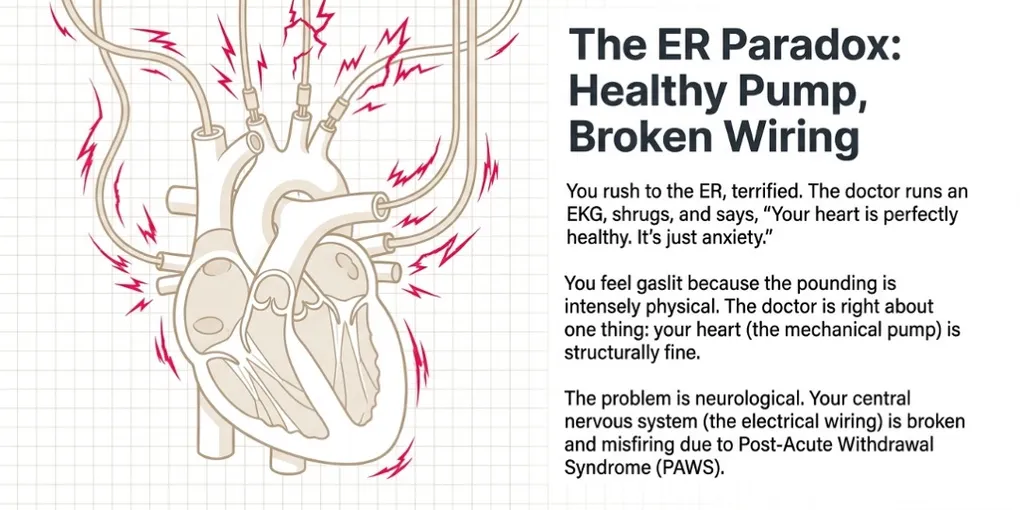
You sit up in bed, terrified, convinced that years of drinking have finally caught up with you. You might have even rushed to the Emergency Room in the middle of the night, only to have the doctor run an EKG, shrug, and say, “Your heart is perfectly healthy. It’s just anxiety.”
You leave the hospital feeling angry and confused because the pain and the pounding feel intensely physical. You are not crazy. Experiencing heart palpitations 1 month after quitting alcohol is a terrifying, yet incredibly common symptom of Post-Acute Withdrawal Syndrome (PAWS).
Let’s break down the neuroscience of why your heart is beating fast after quitting alcohol, why your doctor says you are fine, and how to safely calm your nervous system down.
The medical gaslighting: Why your heart is healthy but still pounding
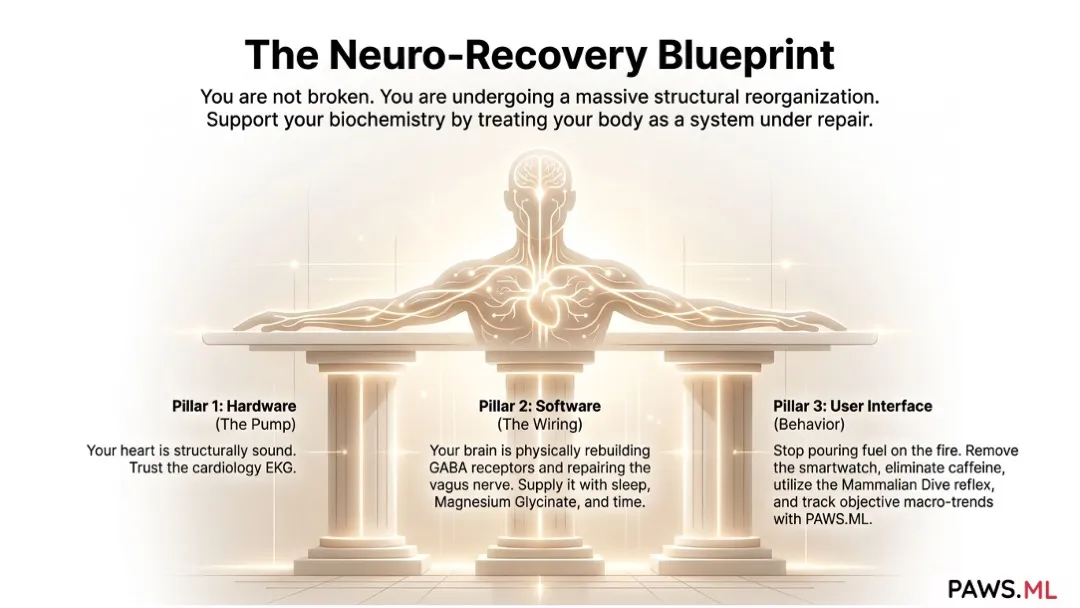
When you go to a cardiologist or the ER, they are looking at the structural health of your heart. Think of your heart as a water pump. The doctor checks the valves, the muscle tissue, and the blood flow. Because you survived detox, the “pump” itself is actually fine.
What the EKG does not show is the health of the “electrical wiring” that controls the pump.
Your central nervous system (CNS) is currently broken. You are experiencing CNS Hypersensitivity. Your brain is misfiring signals to your body, telling your heart to beat as if you are being chased by a bear, even when you are just sitting on the couch. The symptom is physical, but the root cause is neurological.
The neuroscience: Why does alcohol PAWS cause heart palpitations?
To understand alcohol withdrawal heart anxiety, you have to look at how alcohol altered your brain chemistry over the years.
1. The glutamate storm
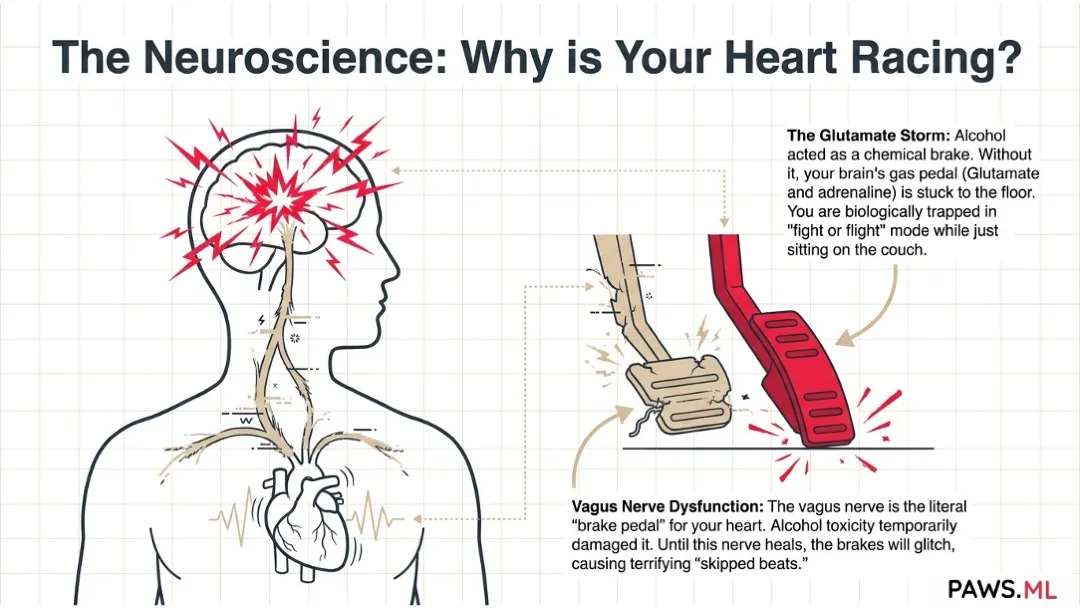
Alcohol is a depressant that artificially boosted GABA (your brain’s calming chemical). To keep you awake under all that sedation, your brain started pumping out massive amounts of Glutamate and adrenaline (stress chemicals). When you stopped drinking, the alcohol was removed, but the excess Glutamate remained. Your brain is currently flooded with adrenaline. Your heart rate is elevated because your body is biologically stuck in “fight or flight” mode.
2. Vagus nerve dysfunction
The vagus nerve is the longest nerve in your body, and it acts as the literal “brake pedal” for your heart rate. Chronic alcohol abuse is highly toxic to nerves and can cause mild alcoholic neuropathy, temporarily damaging this nerve. During early sobriety, your vagus nerve is misfiring. Because the “brake pedal” is glitching, your heart will occasionally speed up or produce ectopic beats (the feeling that your heart skips a beat PAWS symptom). Vagus nerve alcohol recovery takes time, and until it heals, your heart rate will be erratic.
The danger of treating heart palpitations with “internet advice”
When you are terrified that your heart is going to stop, you will do anything to fix it. If you browse health anxiety forums, you will see people recommending massive doses of Potassium, exotic herbal sedatives (like Ashwagandha), or heavy doses of Magnesium to calm the heart.
When it comes to your heart, playing guessing games is incredibly dangerous. Taking excess potassium without bloodwork can cause actual life-threatening arrhythmias. Furthermore, if your doctor has already prescribed you Beta-blockers, SSRI antidepressants, or blood pressure medication, mixing them with internet supplements can lead to severe, potentially fatal drug interactions.
Your healing nervous system needs strict, medical safety. That is why we built PAWS.ML — your secure, AI-driven neuro-recovery companion:
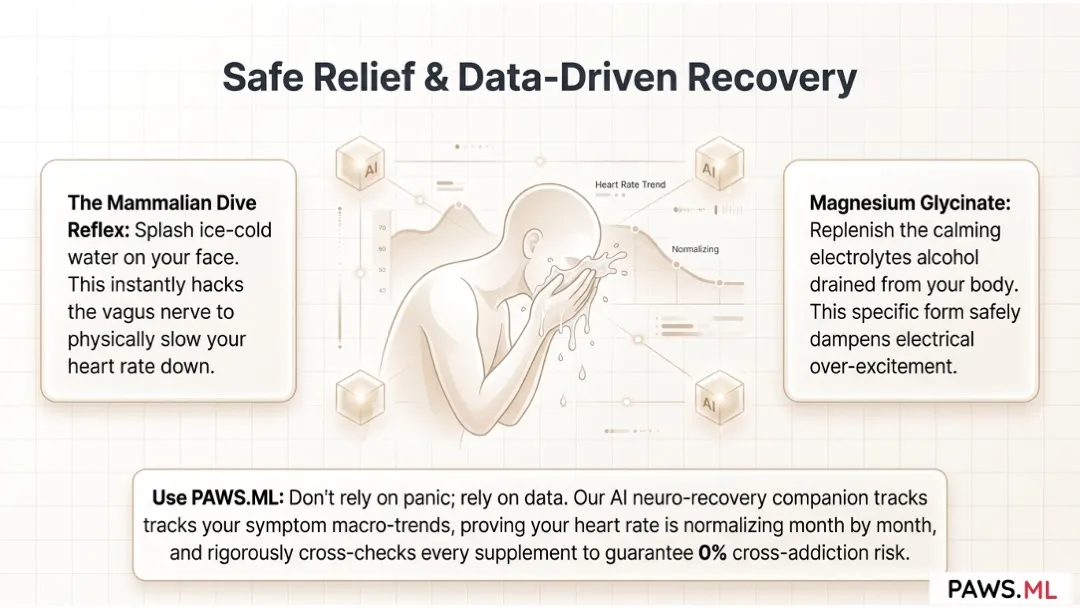
- 📉 Symptom & Anxiety Tracker: During PAWS, people develop severe health anxiety quitting alcohol, checking their pulse every 5 minutes. Our AI shifts your focus from your pulse to your macro-recovery trends (your “Waves and Windows”), objectively proving that your nervous system is calming down month by month.
- 🛡️ Pharmacology Safety Agent: Before you take any supplement you bought online, our AI rigorously cross-checks it against your current prescriptions to prevent dangerous drug interactions.
- 💊 Safe Neuro-Nutrition: Recommends precise, safe electrolytes (like specific forms of magnesium) with an ironclad guarantee: 0% cross-addiction risk.
- 💬 AI Coordinator: An empathetic digital companion. When a wave of heart palpitations hits at 2 A.M., the AI reminds you of the biological cause (the glutamate storm) and guides you through somatic calming protocols.
Don’t risk your cardiovascular health on blind biohacking. Let an intelligent, medically secure AI agent guide your recovery.
👉 Track your PAWS symptoms and get a safe recovery plan with PAWS.ML)
The timeline: How long do heart palpitations last after quitting drinking?
If you are suffering right now, the only thing you want to know is: how long do heart palpitations last after quitting drinking?
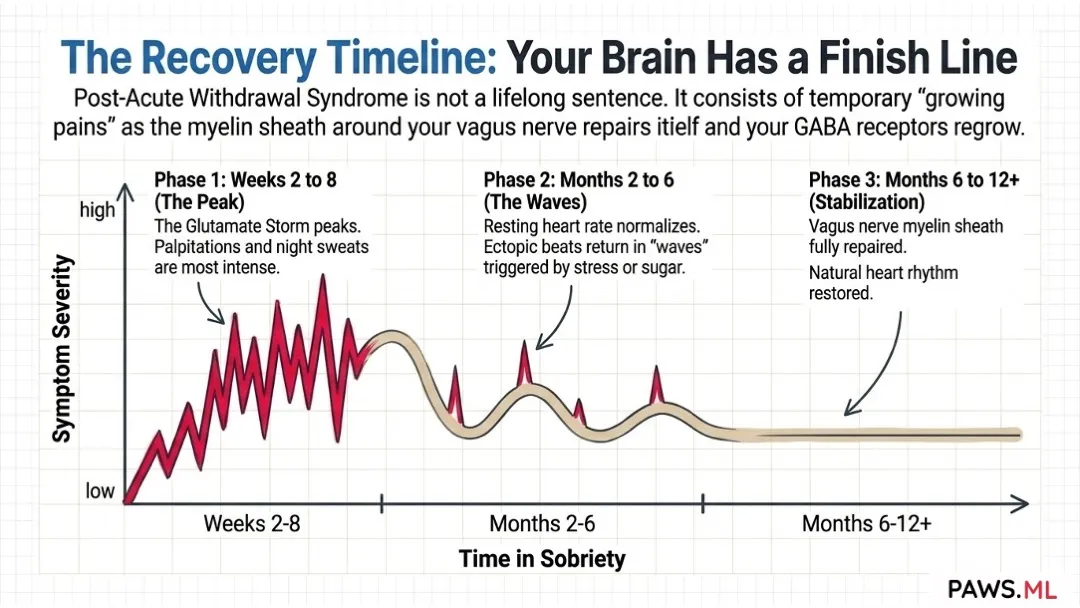
While everyone’s timeline is unique, the healing of the vagus nerve generally follows this pattern:
- Weeks 2 to 8 (The Peak): This is when palpitations, night sweats, and skipped beats are at their worst. Your brain is dealing with the maximum peak of the Glutamate Storm.
- Months 2 to 6 (The Waves): Your resting heart rate will begin to normalize. However, the palpitations will return in “Waves.” They are usually triggered by poor sleep, eating too much sugar, or sudden emotional stress.
- Months 6 to 12+ (Stabilization): The myelin sheath (the protective coating) around your vagus nerve repairs itself. Your GABA receptors regrow, allowing your brain to apply the “brakes” to your heart naturally. The palpitations fade away completely.
4 safe, science-backed ways to calm a pounding heart
While you wait for your neurochemistry to balance out, use these safe, non-addictive methods to manually slow your heart rate down:
1. Hack your vagus nerve (the mammalian dive reflex)
You can force your vagus nerve to apply the brakes. If your heart is racing, go to the bathroom and splash ice-cold water on your face, or hold a bag of frozen peas to the back of your neck. This triggers the “mammalian dive reflex,” a biological response that instantly and physically slows your heart rate down.
2. Magnesium glycinate (the safe electrolyte)
Alcohol severely depletes your body’s magnesium reserves, which is critical for muscle and heart relaxation. Supplementing with a gentle, highly absorbable form like Magnesium Glycinate can help calm the nervous system without upsetting your stomach. (Always have your doctor or PAWS.ML check for interactions with your other meds).
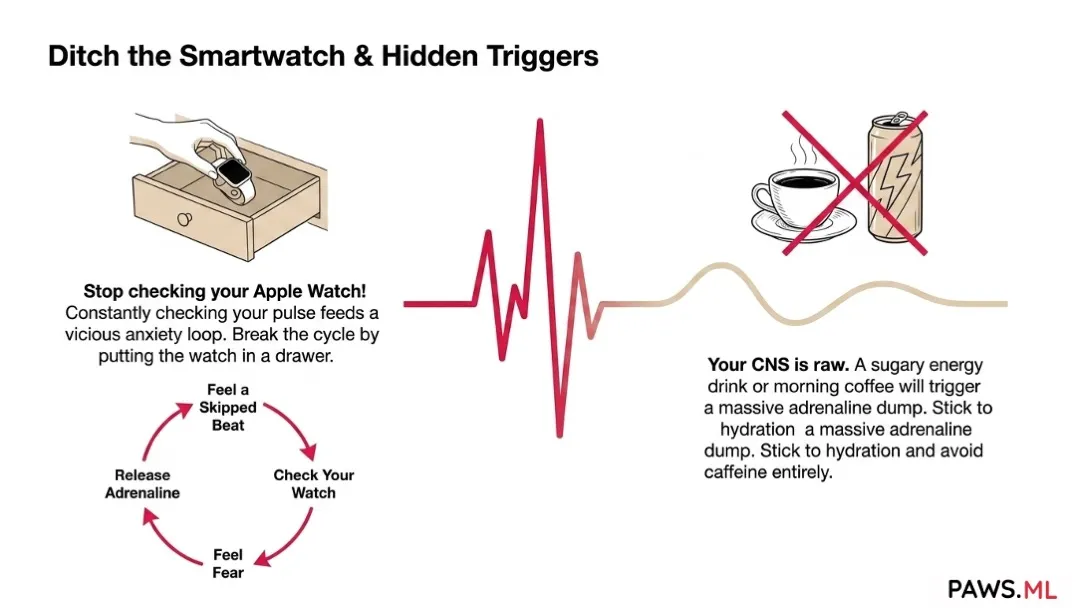
3. Ditch the smartwatch (stop pulse checking)
This is a crucial psychological hack. If you wear an Apple Watch or Fitbit and constantly check your heart rate, take it off. Checking your pulse feeds a vicious anxiety loop: You feel a skipped beat -> you check your watch -> you feel fear -> your brain releases adrenaline -> your heart beats faster -> you feel more fear. Break the cycle by putting the watch in a drawer for a few months.
4. The caffeine and sugar trap
Your CNS is hypersensitive. A cup of coffee or a sugary energy drink that you used to handle easily will now trigger a massive adrenaline dump. Eliminate caffeine and refined sugars until your PAWS symptoms stabilize.
Red flags: PAWS anxiety vs. A real cardiac event
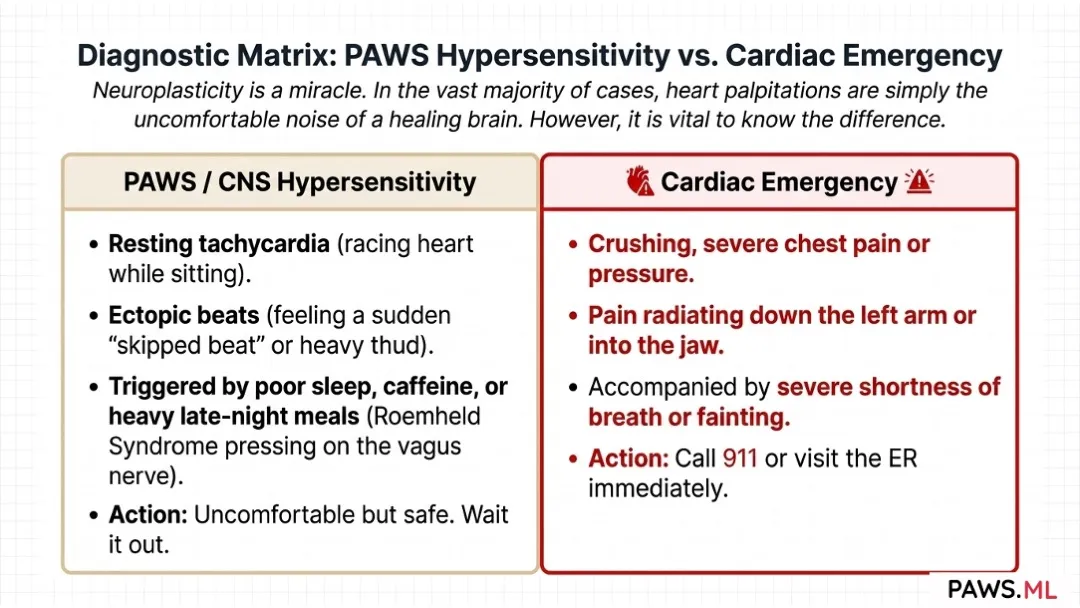
Neuroplasticity is a miracle, and in the vast majority of cases, these palpitations are simply the uncomfortable noise of your brain healing. However, because we are talking about the heart, it is vital to know the difference between anxiety and a medical emergency.
⚠️ Seek Emergency Medical Care (Call 911) If:
- You experience crushing, heavy pain in the center of your chest (like an elephant sitting on you).
- The pain radiates down your left arm, up into your jaw, or into your back.
- The palpitations are accompanied by sudden, severe shortness of breath, dizziness, or fainting.
If you have been cleared by a cardiologist and are just dealing with the terrifying flutter of a healing nervous system, remember: you are safe. Your body is rewiring itself for a healthier, alcohol-free life. Trust the process, track your progress safely, and give your nerves the time they need to heal.
If you are currently experiencing the challenges of Post-withdrawal syndrome, return to our main page to explore how our AI recovery assistant can help stabilize your neurochemistry.