Coping with PAWS: 7 strategies for post-acute withdrawal relief
Coping with post-acute withdrawal syndrome (PAWS): Strategies that actually work
You are likely reading this because you are exhausted. You’ve been searching online for “how to deal with PAWS symptoms,” but the advice you are finding feels empty. When you are suffering from a pounding heart, crippling insomnia, or a deep, dark apathy, being told to “practice mindfulness,” “think positive,” or “find a new hobby” can feel like an insult.
When you are in the middle of Post-Acute Withdrawal Syndrome (PAWS), generic advice doesn’t just fail—sometimes, it actually makes things worse.
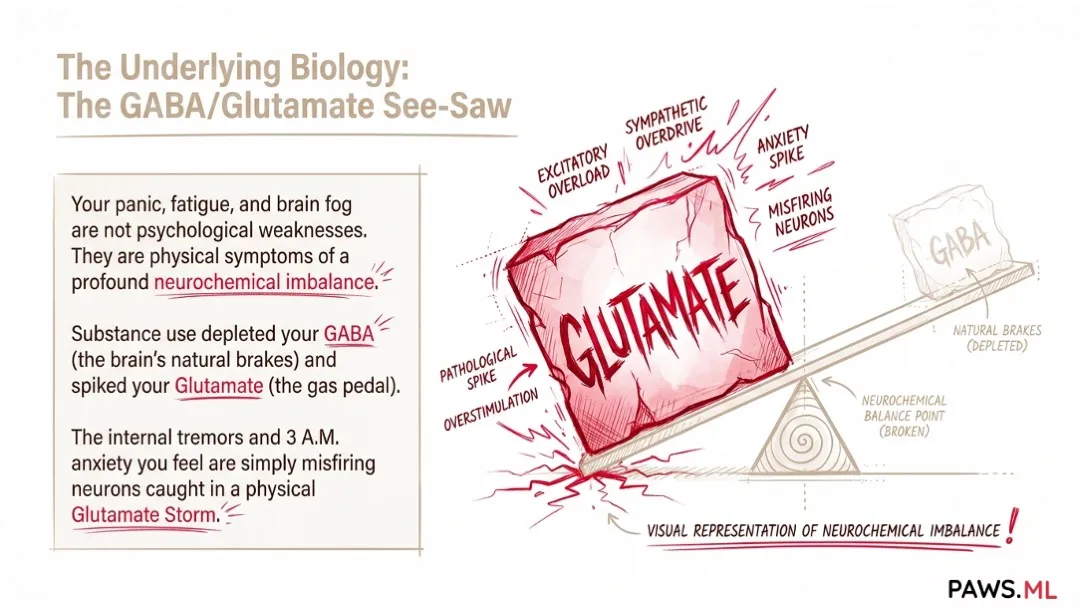
That is because PAWS is not a psychological weakness or a flaw in your character. It is a profound neurochemical malfunction. Your brain’s receptors are damaged and highly unstable. To survive this period, you don’t need motivational quotes; you need physiological tactics designed to calm a severely overactive nervous system.
Let’s look at what actually helps with post-acute withdrawal, and how to find relief without risking your recovery.
Why generic advice backfires during PAWS
Right now, you are suffering from Central Nervous System (CNS) Hypersensitivity. Because your brain lacks its natural calming chemicals (like GABA), it interprets almost everything as a threat.
If a fitness blog tells you to “sweat it out with a high-intensity cardio workout,” doing so will likely cause a massive spike in cortisol (the stress hormone), which can trigger a severe panic attack.
If a forum tells you to “just force yourself to go out and have fun,” you will likely end up mentally burnt out and deeply depressed, because your dopamine system is currently too depleted to process “fun.”
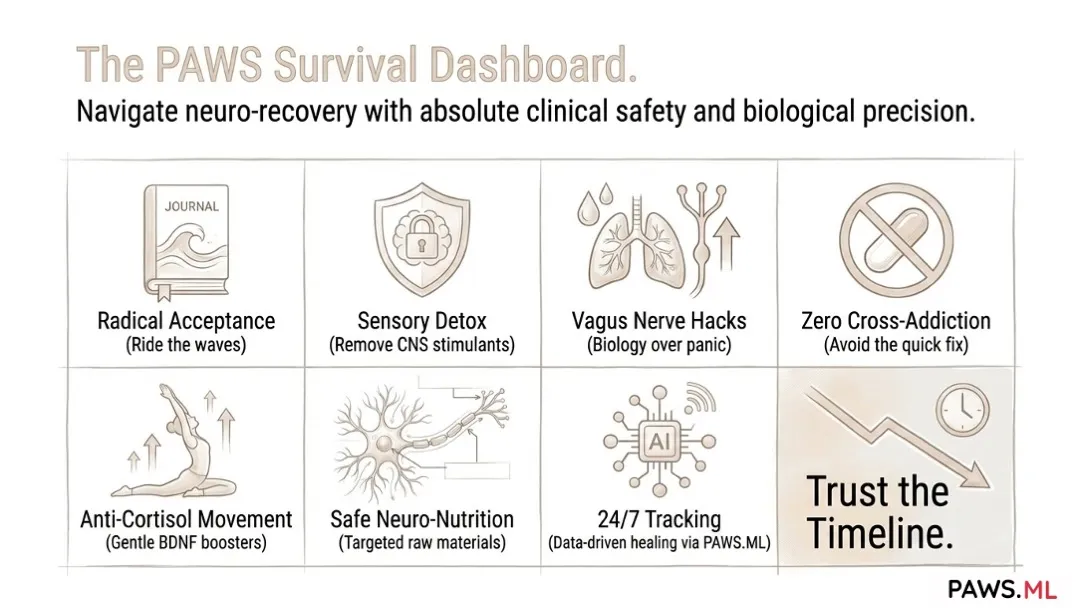
To cope effectively, you must treat your brain like a recovering patient. Here are 7 science-backed strategies that respect your biology.
7 science-backed strategies for coping with PAWS
Strategy 1: Radical acceptance of “waves” (mental coping)
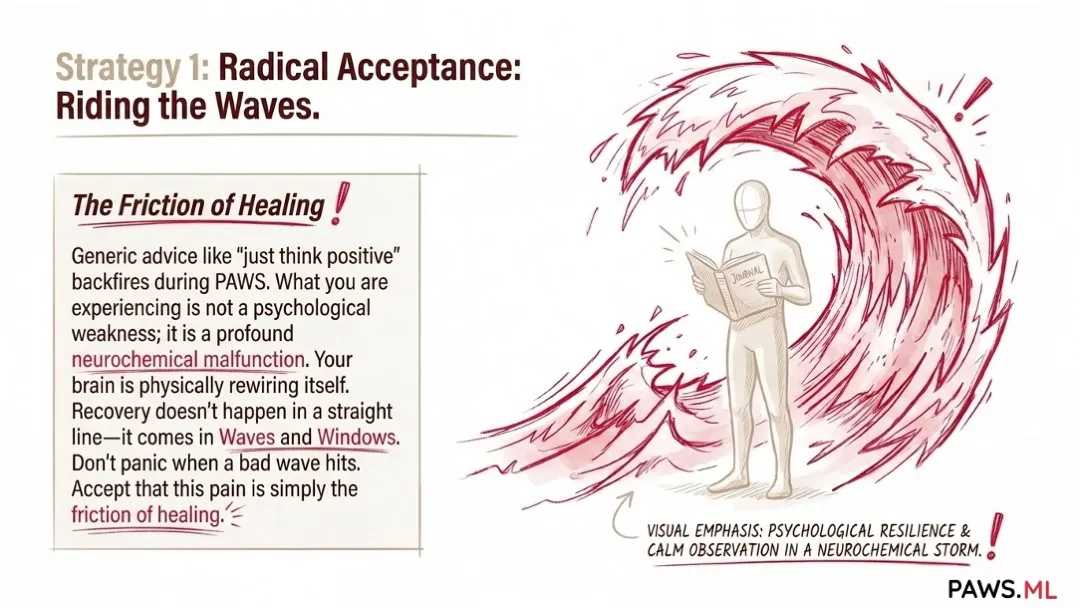
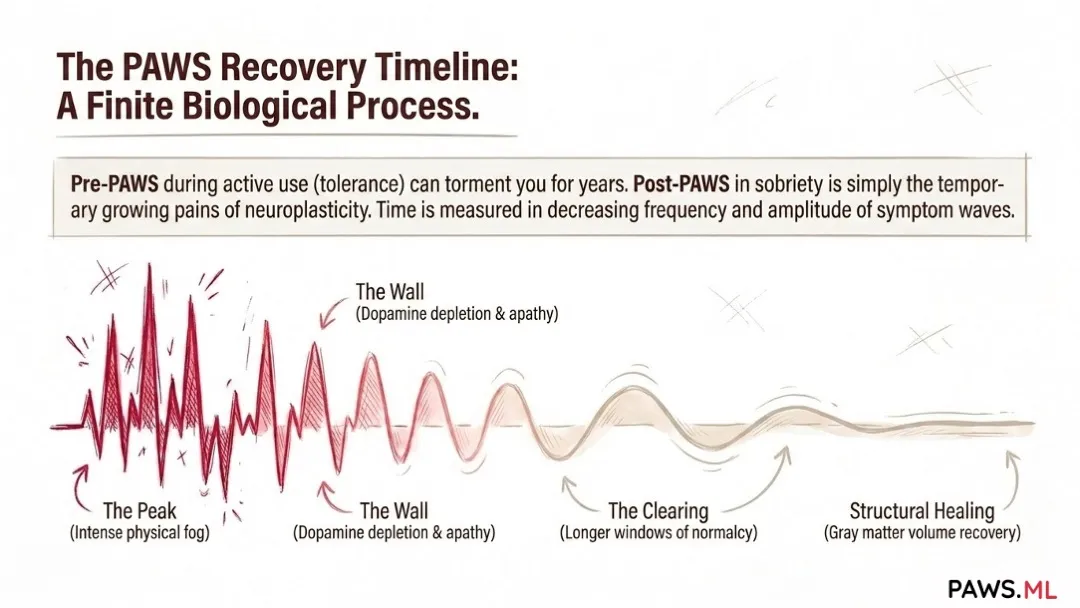
Recovery is not a straight line; it happens in “Waves and Windows” (return of symptoms and feeling normal). When a Wave hits, your brain will panic and tell you, “I’m going crazy, I’m back to square one.” What to do: Stop fighting it. Radical acceptance means saying, “My brain is actively rewiring right now, and this pain is the friction of healing.” Keep a symptom log. Reading your own journal entries from a “Window” is the best proof that your brain is capable of feeling good.
Strategy 2: The anti-stimulation shield (sensory detox)
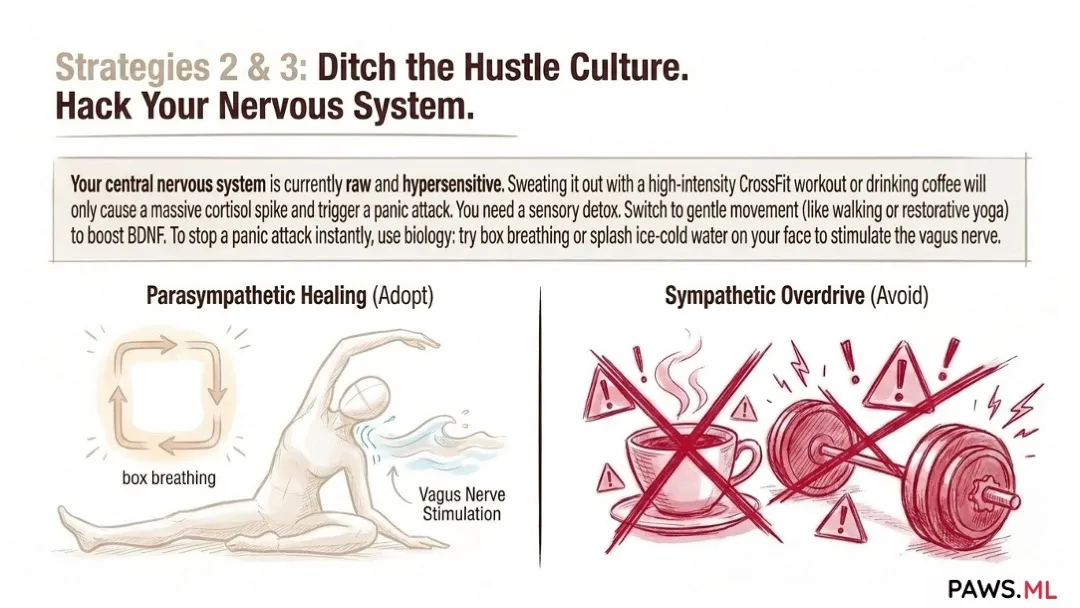 Because your nervous system has no brakes, you must manually remove stimulants from your environment.
What to do: Cut out caffeine completely—it mimics the “fight or flight” response and acts as a direct trigger for PAWS anxiety. Reduce refined sugars, and put a hard limit on “doomscrolling” negative news, especially at night.
Because your nervous system has no brakes, you must manually remove stimulants from your environment.
What to do: Cut out caffeine completely—it mimics the “fight or flight” response and acts as a direct trigger for PAWS anxiety. Reduce refined sugars, and put a hard limit on “doomscrolling” negative news, especially at night.
Strategy 3: Hacking the vagus nerve for panic relief
When PAWS anxiety turns into a full-blown panic attack, logic disappears. You cannot “think” your way out of it; you must use biology. What to do:
- Box Breathing: Inhale for 4 seconds, hold for 4, exhale for 4, hold for 4. This forces the nervous system to shift out of panic mode.
- The Mammalian Dive Reflex: Splash ice-cold water on your face or hold an ice pack to the back of your neck. This instantly stimulates the vagus nerve, rapidly dropping your heart rate.
Strategy 4: Glymphatic sleep & dark therapy
 Insomnia is torture, but sleep is the only time your brain’s glymphatic system turns on to literally wash away neurotoxins and repair synapses.
What to do: Avoid prescription Z-drugs (like Ambien), which block deep, restorative REM sleep. Instead, use “Dark Therapy” (zero blue screens 2 hours before bed) and take warm baths with Epsom salts. The magnesium sulfate absorbs through the skin and acts as a profound muscle relaxant.
Insomnia is torture, but sleep is the only time your brain’s glymphatic system turns on to literally wash away neurotoxins and repair synapses.
What to do: Avoid prescription Z-drugs (like Ambien), which block deep, restorative REM sleep. Instead, use “Dark Therapy” (zero blue screens 2 hours before bed) and take warm baths with Epsom salts. The magnesium sulfate absorbs through the skin and acts as a profound muscle relaxant.
Strategy 5: Anti-cortisol movement
Do not punish your body with heavy weights or CrossFit during the early months of PAWS. What to do: Switch to restorative yoga, stretching, and brisk walking. Light aerobic movement triggers the release of BDNF (Brain-Derived Neurotrophic Factor)—a protein that acts like fertilizer for new neurons—without exhausting your adrenal glands.
Strategy 6: Safe neuro-nutrition
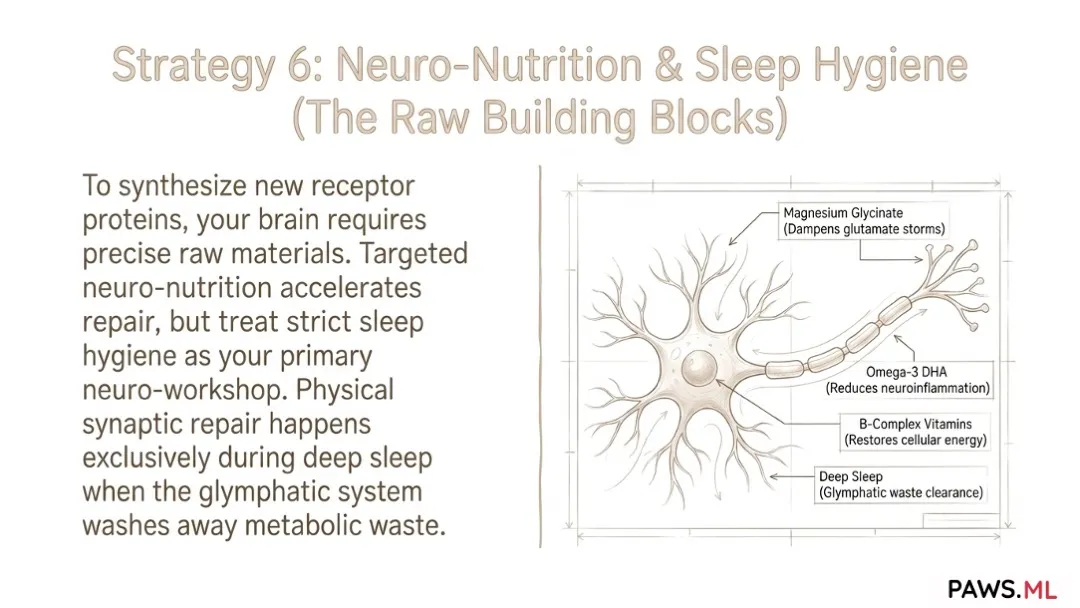 Your exhausted brain needs raw building blocks to heal.
What to do: Targeted use of Omega-3s (DHA/EPA) can reduce neuroinflammation, while specific forms of Magnesium can help block excess glutamate. Crucial rule: Only use supplements that have zero potential for dependency.
Your exhausted brain needs raw building blocks to heal.
What to do: Targeted use of Omega-3s (DHA/EPA) can reduce neuroinflammation, while specific forms of Magnesium can help block excess glutamate. Crucial rule: Only use supplements that have zero potential for dependency.
Strategy 7: Breaking toxic isolation
PAWS makes you want to lock yourself in a dark room and avoid the world. But total isolation starves your brain of oxytocin and serotonin. What to do: You don’t need to go to loud parties, but safe, low-stress social contact—like a walk with an understanding friend or chatting in a supportive online recovery group—is vital for rebooting your brain’s chemistry.
Why these strategies are just the beginning (and how to personalize them)
The 7 strategies above are a powerful first line of defense. But when it comes to executing them safely in your daily life, the details matter immensely:
- You know you need Magnesium, but which type? (Magnesium Glycinate calms the brain, while Magnesium Malate provides energy and might accidentally trigger anxiety).
- Can you take a natural amino acid like 5-HTP to help with depression if your doctor also prescribed an SSRI? (Warning: Doing this can cause a potentially fatal Serotonin Syndrome).
- What do you do when your coping strategy for insomnia in Month 3 stops working and turns into extreme lethargy in Month 6?
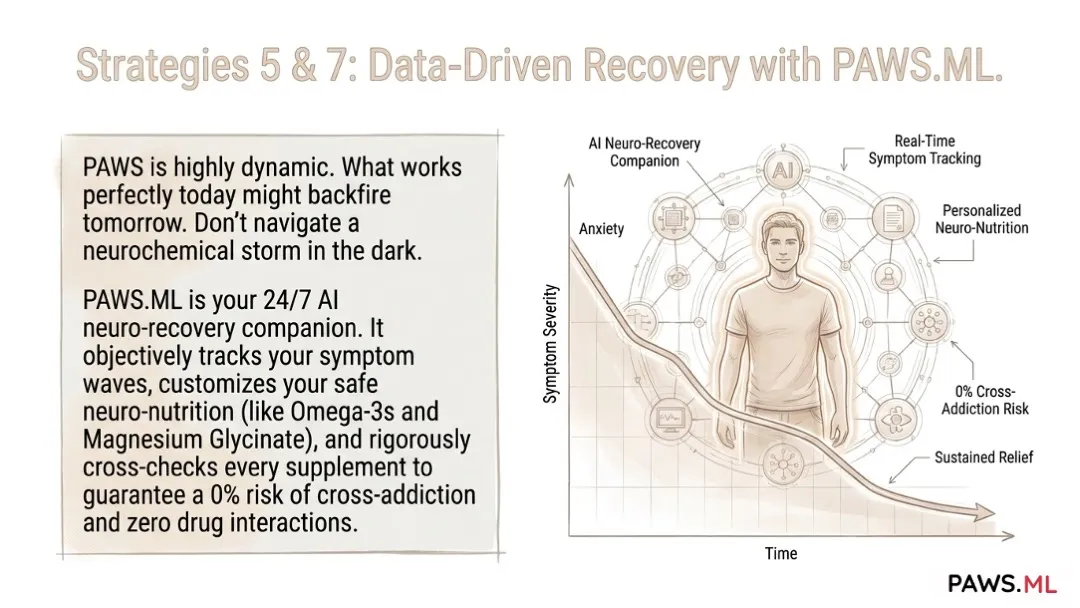
PAWS is highly dynamic. What works perfectly today might backfire tomorrow. Relying on blind trial-and-error or anonymous Reddit advice can be incredibly dangerous, especially if you are currently taking prescription medications.
That’s why we created PAWS.ML — a continuous, AI-driven neuro-recovery companion tailored to your exact biology:
- 📉 Dynamic Symptom Analyzer: Tracks your “Waves” and tells you exactly when to shift your coping strategy (e.g., switching from anxiety management to dopamine support).
- 🛡️ Pharmacology Agent: Strictly cross-checks every recommendation against your current medications to prevent dangerous drug interactions.
- 💊 Safe Supplements Agent: Recommends precise micronutrients with an absolute guarantee: 0% risk of cross-addiction.
- 💬 AI Coordinator: Talks to you with empathy, remembers your unique history, and adapts your survival plan in real-time as your symptoms evolve.
Don’t navigate a neurochemical storm in the dark. Let an intelligent, secure AI companion guide your healing.
👉 Get your personalized, safe PAWS coping plan with PAWS.ML)
The fatal coping mistake: Cross-addiction
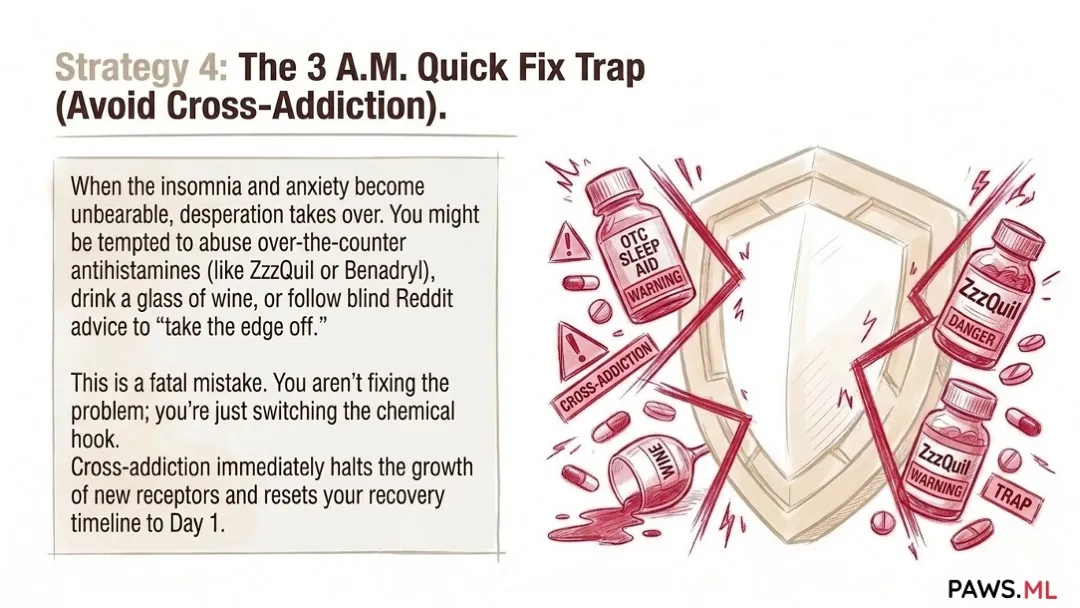
When the tremors, anxiety, and insomnia become unbearable, your brain will look for a shortcut. You might read on a forum that taking Kratom, Phenibut, or drinking a glass of wine will “take the edge off.” You might be tempted to abuse over-the-counter antihistamines (like Benadryl or ZzzQuil) just to knock yourself out for the night.
This is the trap of cross addiction in PAWS. Because your brain lacks its own neurotransmitters, it is desperately seeking a chemical crutch. If you give in, you are not fixing the problem; you are simply moving your addiction to a new substance.
Doing this immediately halts the growth of your new receptors and resets your recovery timeline back to Day 1. Use physiological coping skills, breathe through the panic, but do not introduce new psychoactive substances into your healing brain.
Red flags: When self-care isn’t enough
The brain’s neuroplasticity is incredibly powerful, and PAWS is a temporary state. AI monitoring and at-home coping strategies are highly effective for managing this long-term condition.
⚠️ Medical Safety Warning: However, these tools do not replace emergency medical care. If your symptoms escalate into an acute crisis, such as:
- Total insomnia lasting more than 72 hours (which carries a high risk of drug-induced psychosis);
- Severe seizures or convulsions;
- Hallucinations, delirium, or severe paranoia;
- Active, intrusive suicidal thoughts with an intent to act;
Do not wait. Call 911, your local emergency number, or go to the nearest Emergency Room immediately. Your physical safety always comes first.
If you are currently experiencing the challenges of Post-acute withdrawal syndrome (PAWS), return to our main page to explore how our AI recovery assistant can help stabilize your neurochemistry.