PAWS recovery: Symptoms, timeline & how to heal the brain
PAWS recovery: Why you still feel awful after detox (and how to actually heal)
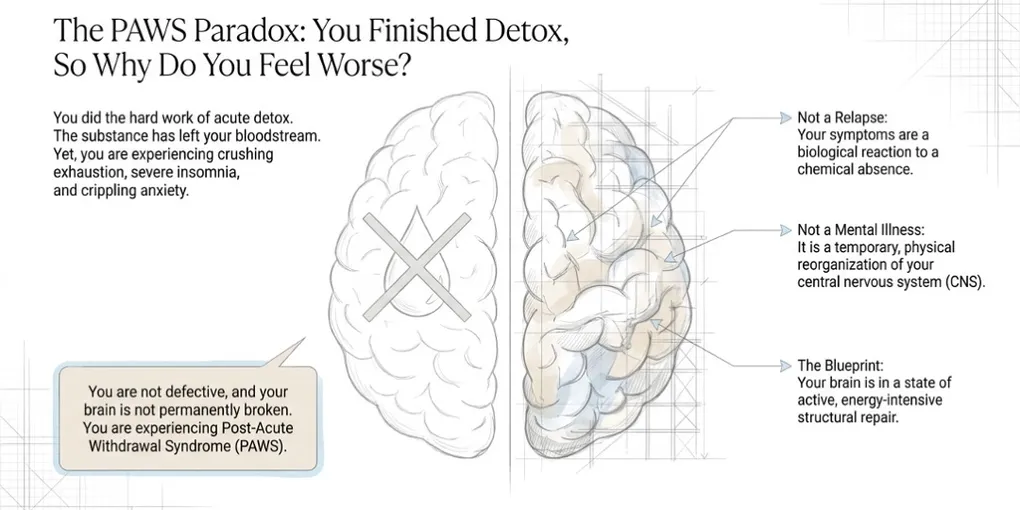
You did the hardest part. You went through the grueling days of acute detox, the toxins are finally out of your system, and your family expects you to be happy and “back to normal.”
But reality paints a much darker picture. Instead of feeling energized, you are experiencing crushing exhaustion, a thick “brain fog,” crippling anxiety, or severe insomnia. Many people in this stage begin to panic, thinking: “Is this my new normal? Did I permanently damage my brain? Am I going crazy?”
Please take a deep breath. You are not going crazy, and your brain is not permanently broken. What you are experiencing is a highly documented, physiological healing phase known as Post-Acute Withdrawal Syndrome (PAWS).
Relying on sheer willpower or generic advice like “just stay positive” won’t work right now because PAWS is not a psychological weakness—it is a profound neurochemical imbalance. Let’s break down exactly what is happening in your brain, what your recovery timeline looks like, and how to safely navigate this challenging process.
The neurobiology of PAWS: What is happening in your brain?
To understand how to heal, you must first understand the damage. Prolonged substance use (whether it’s alcohol, benzodiazepines, antidepressants, or stimulants) acts like a chemical sledgehammer on your brain’s delicate ecosystem.
Here are the two main biological reasons you feel so awful right now:
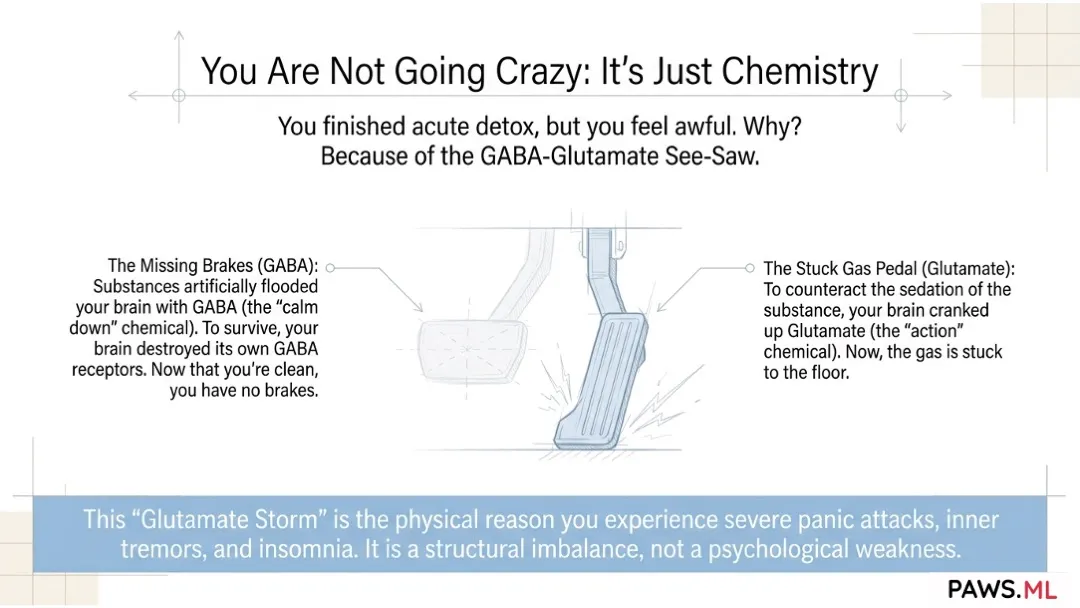
1. The gaba-glutamate see-saw (the anxiety storm)
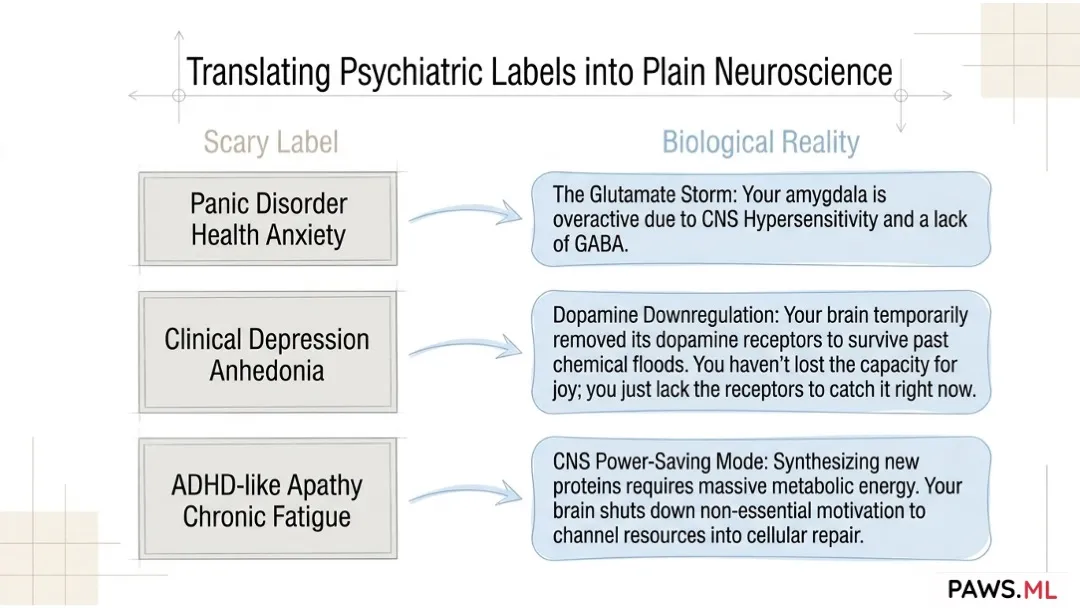
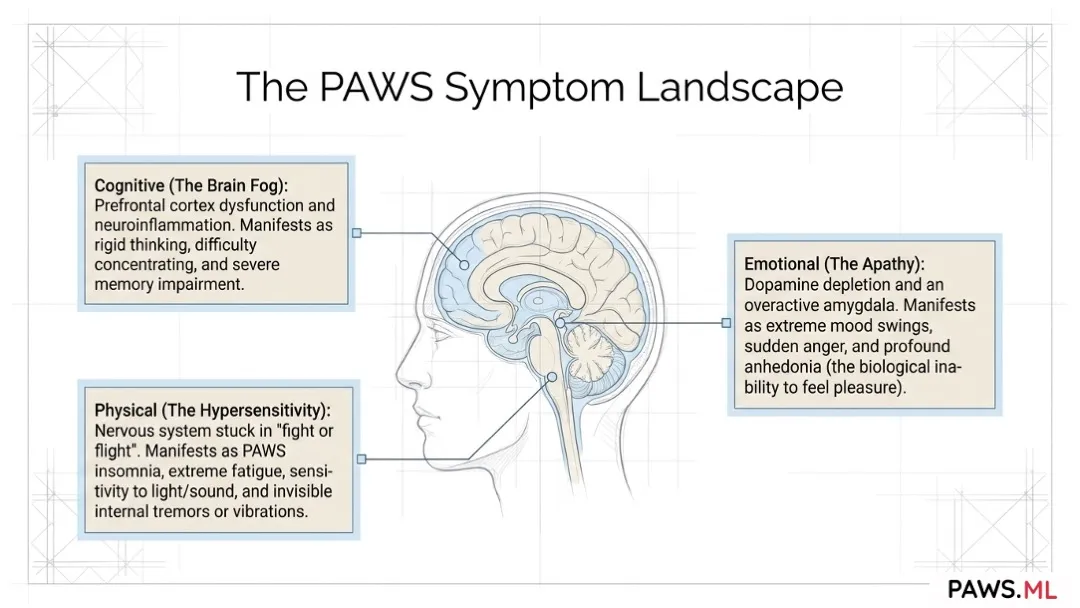
If you are recovering from alcohol or sedatives, your brain was artificially flooded with GABA (the “calm down” chemical) for a long time. To survive this constant sedation, your brain adapted: it destroyed many of its own GABA receptors and cranked up the production of Glutamate (the “action and stress” chemical). Now that the substance is gone, you have no brakes (GABA) and a stuck gas pedal (Glutamate). This glutamate storm is the physical reason you feel inner tremors, racing heartbeats, and random panic attacks.
2. Dopamine depletion and anhedonia
Substances force your brain to release unnatural, massive floods of dopamine (the reward and motivation molecule). To protect itself from this flood, the brain downregulated (removed) its dopamine receptors. Now that you are sober, a normal joyful event—like a good meal or a beautiful sunset—doesn’t release enough dopamine to activate your depleted receptors. This creates a state of anhedonia: a biological inability to feel pleasure or motivation.
The non-linear path: Understanding “waves and windows”
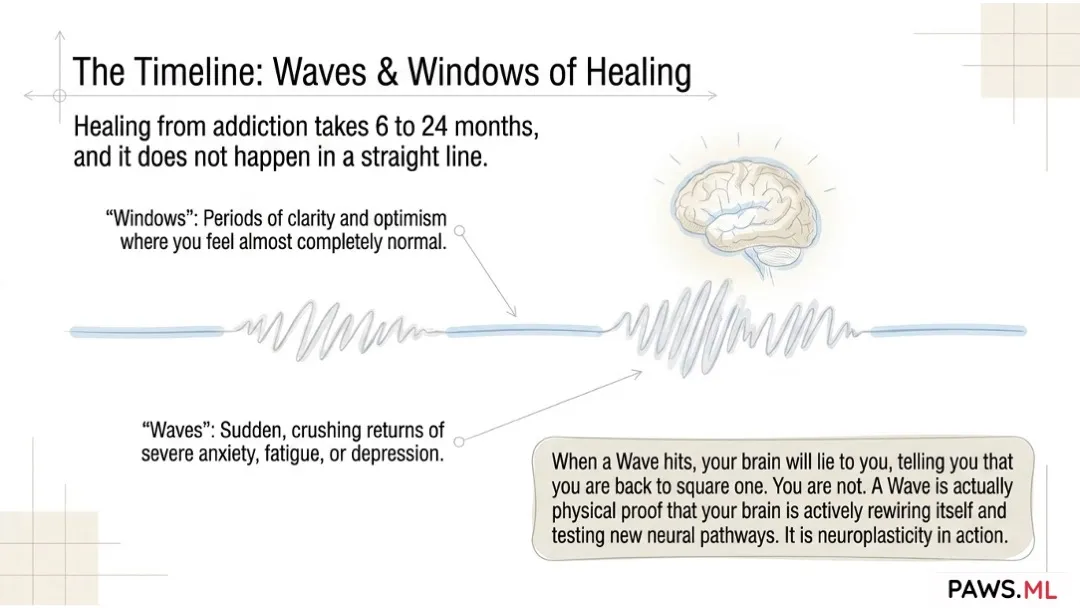
One of the most frustrating aspects of PAWS recovery is that it doesn’t heal in a straight line. If you expect to feel 1% better every single day, you will be disappointed.
Neuroplasticity (the brain’s ability to rewire itself) happens in cycles known as “Waves and Windows.”
- Windows: You might have three days or even a week where the brain fog lifts, your anxiety drops, and you feel almost completely normal.
- Waves: Suddenly, for no apparent reason, the severe anxiety, insomnia, and depression come crashing back.
When a “Wave” hits, your brain will lie to you, telling you that you are back to square one. You are not. A wave is actually physical proof that your brain is actively testing new neural pathways. It is the messy, uncomfortable process of healing.
PAWS recovery timeline: What to expect
While everyone’s journey is unique, neuroscience gives us a general roadmap for post-acute withdrawal recovery:
- Months 1 to 3 (The Peak): This is usually the most intense phase of PAWS. The brain fog is thickest, and the emotional swings (Waves) are frequent.
- Months 4 to 6 (The Wall): Physical energy might return, but dopamine depletion often causes a deep sense of apathy or depression.
- Months 6 to 12 (The Clearing): The “Windows” of feeling good become much longer. Short-term memory improves, and panic attacks become rare.
- 1 to 2 Years (Structural Healing): MRI studies show that after 12 to 24 months of sustained abstinence, the volume of gray and white matter in the brain significantly recovers. Executive functions (logic, emotional control) fully return.
Why generic recovery timelines don’t work for you
Reading generalized timelines or doom-scrolling on Reddit forums (like r/stopdrinking or r/benzorecovery) can provide comfort, but it can also trigger severe health anxiety.
Why? Because your recovery is a highly complex, unique equation. It depends on:
- Your Substance History: Recovering from stimulants requires entirely different neuro-support than recovering from GABAergics.
- Your Current Medications: Are you taking SSRIs, blood pressure meds, or prescription sleep aids? (Blindly taking “natural” supplements you read about online can cause dangerous, sometimes life-threatening drug interactions).
- Your Shifting Symptoms: The supplement that helped calm your anxiety in Month 2 might plunge you into deeper lethargy in Month 6.
You shouldn’t have to guess how to heal your brain, nor should you risk making things worse through trial and error.
That’s exactly why we built PAWS.ML — a continuous, AI-driven companion designed specifically for safe neuro-recovery:
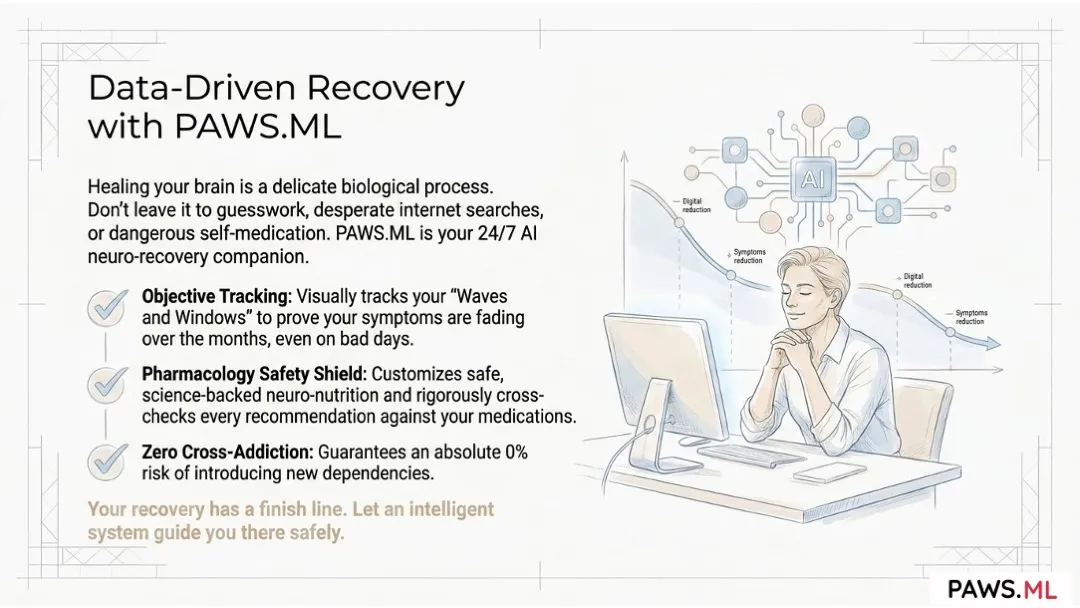
- 📉 Symptom & Wave Tracker: Monitors your daily cognitive and physical symptoms, helping you predict incoming “Waves” and objectively proving your progress.
- 🛡️ Pharmacology Agent: Rigorously cross-checks every recommendation against your current medications to prevent any dangerous interactions.
- 💊 Safe Neuro-Nutrition Agent: Recommends precise, science-backed amino acids and cofactors with one absolute, non-negotiable rule: 0% risk of forming a new addiction.
- 💬 Main AI Coordinator: Talks to you with empathy, remembers your entire journey, and adjusts your recovery protocol in real-time as your brain changes.
Healing your brain is a delicate biological process. Don’t leave it to guesswork.
👉 Get your personalized, safe PAWS recovery protocol with PAWS.ML)
Core principles for a safe PAWS recovery
While your AI companion builds your tailored protocol, adhere to these fundamental rules to protect your healing brain:
1. Avoid the cross-addiction trap
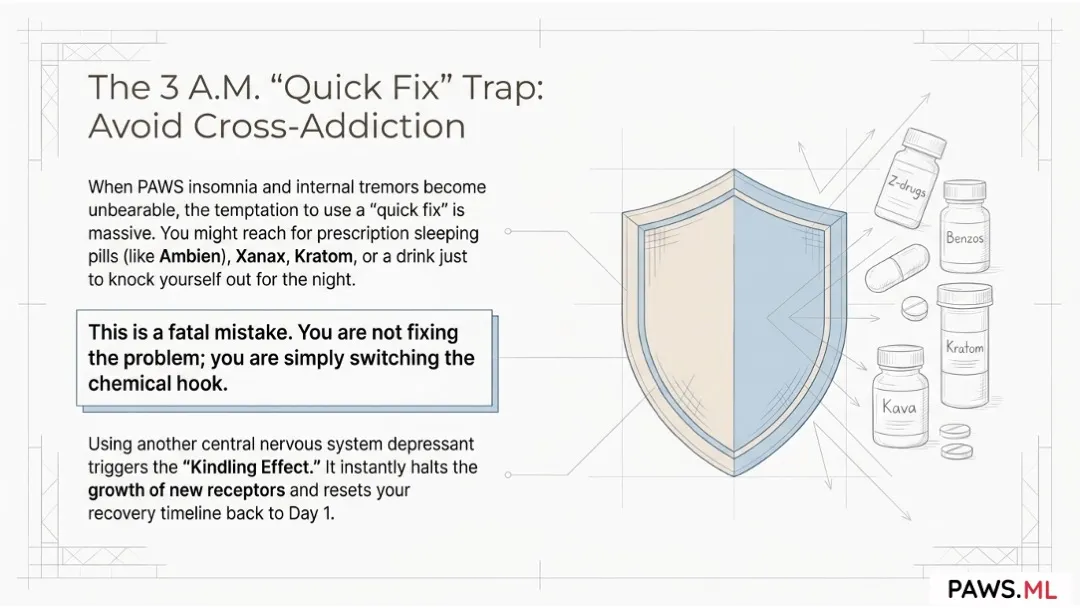
When the insomnia or anxiety becomes unbearable, the temptation to use a “quick fix” is massive. Taking a prescription sleeping pill (like Ambien or Xanax) just to get through the night, or drinking alcohol to calm a tremor, is known as cross-addiction. You are not fixing the problem; you are simply switching the chemical hook. This will immediately halt the growth of new receptors and reset your recovery timeline to Day 1.
2. Prioritize glymphatic cleansing (sleep)
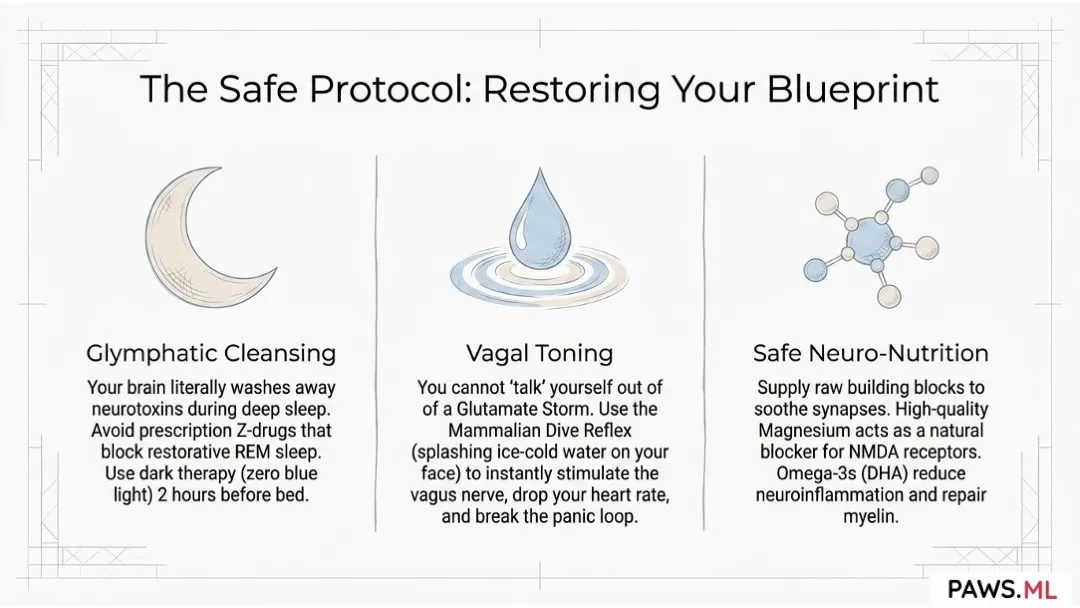
Your brain physically flushes out neurotoxins through the glymphatic system, but this system is only active during deep sleep. Prescription sleep aids disrupt this deep restorative phase. Focus on natural sleep hygiene: absolute darkness, cool room temperatures, and magnesium salt baths before bed.
3. Safe neuro-nutrition (healing the synapses)
Your brain needs raw materials to rebuild. Targeted use of safe supplements—like Magnesium L-Threonate (to protect against glutamate storms), Omega-3s (to reduce neuroinflammation), and Vitamin B1—can significantly smooth out the edges of a PAWS wave. (Always ensure these are cross-checked for safety with your specific health profile).
Red flags: When to seek immediate medical help
The brain’s neuroplasticity is incredibly powerful, and PAWS, while agonizing, is a temporary state. You will recover.
⚠️ Medical Safety Warning: While at-home strategies and AI monitoring are excellent for long-term PAWS management, they do not replace emergency medical care. If your symptoms escalate to:
- Severe seizures or convulsions;
- Delirium, hallucinations, or a complete disconnect from reality;
- Total inability to keep food or water down;
- Active, persistent suicidal ideation;
Do not wait. Call 911, your local emergency number, or go to the nearest Emergency Room immediately. Acute crises require temporary, professionally monitored medical intervention.
If you are currently experiencing the challenges of Prolonged withdrawal syndrome, return to our main page to explore how our AI recovery assistant can help stabilize your neurochemistry.