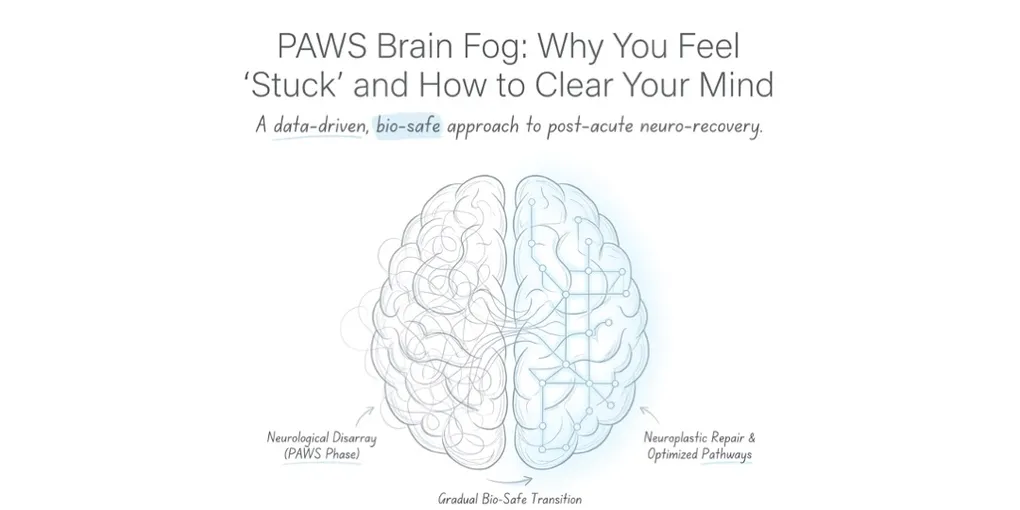
PAWS brain fog: Cognitive symptoms & recovery timeline
PAWS brain fog: Why you feel “stuck” and how to clear your mind
Disclaimer: The information provided in this article is for educational purposes only and is not intended to replace professional medical advice. If you are experiencing severe memory loss, confusion, or a medical emergency, please contact your healthcare provider immediately.
You survived the acute withdrawal phase. You are finally clean and sober. You expected to wake up with a sharp mind, ready to rebuild your life. Instead, you feel like your brain is wrapped in thick, heavy cotton.
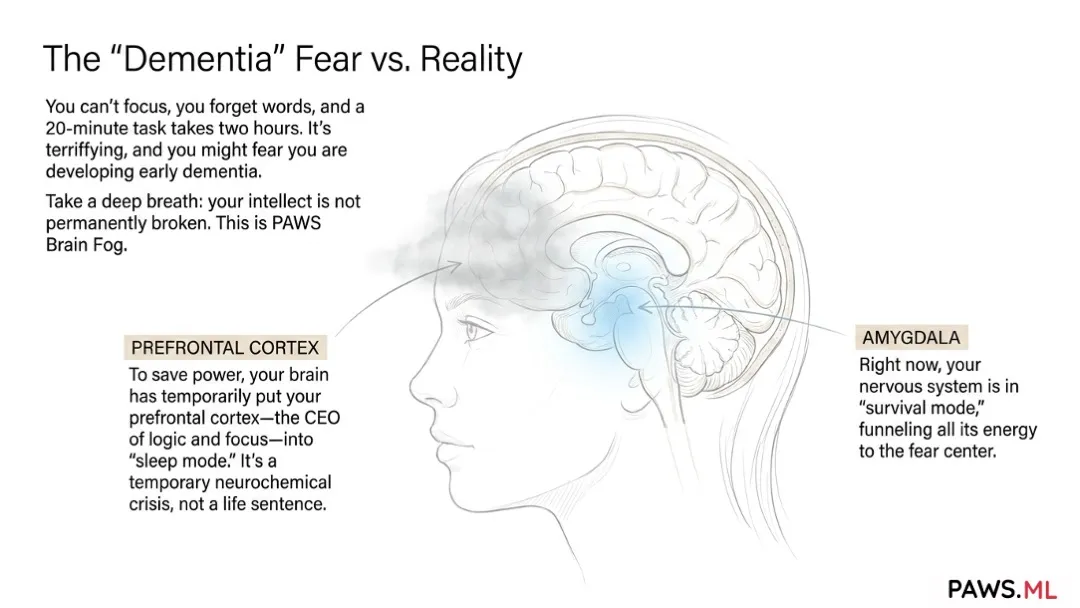
You struggle to remember the right words during a conversation. You walk into a room and forget why you went there. Tasks at work that used to take you 20 minutes now take two hours. This overwhelming cognitive dysfunction is commonly referred to as PAWS brain fog, and it is one of the most frustrating symptoms of Post-Acute Withdrawal Syndrome.
In these moments, a terrifying thought often crosses the minds of people in recovery: “Did I permanently damage my brain? Am I developing early dementia?”
Take a deep breath. You are not developing dementia, and your intellect is not permanently broken. What you are experiencing is a highly documented, temporary neurochemical crisis. Let’s explore the neuroscience behind cognitive symptoms in PAWS, how long they typically last, and how you can safely support your brain’s regeneration.
What exactly is PAWS brain fog?
Brain fog is not a clinical diagnosis; rather, it is a cluster of cognitive symptoms that occur while your central nervous system attempts to heal. Common manifestations include:
- Short-term memory issues: Forgetting recent conversations or misplacing items.
- Executive dysfunction: An inability to plan, organize, or concentrate on complex tasks.
- Mental fatigue: Feeling cognitively exhausted after minimal mental effort.
- Dissociation or Depersonalization: Feeling disconnected from your surroundings or feeling like you are living on “autopilot.”
The neuroscience: Why can’t you focus or remember things?
To clear the fog, you must first understand why it is there. Prolonged substance use (alcohol, cannabis, benzodiazepines, or opioids) physically alters your brain’s architecture.
1. Prefrontal cortex “sleep mode”
Your prefrontal cortex is the front part of your brain responsible for logic, decision-making, and focus. During PAWS, your nervous system is in a state of high alert (survival mode), funneling most of its energy into the amygdala (the fear and emotion center). Because energy is limited, your prefrontal cortex is essentially put into “sleep mode.” You literally do not have the neurochemical power to focus.
2. Neuroinflammation
Substance abuse leaves behind toxic metabolites that cause chronic micro-inflammation in brain tissue. PAWS brain fog is the physical sensation of this neuroinflammation. Your brain is swollen at a cellular level, slowing down the firing speed of your synapses.
3. Dopamine depletion
Dopamine is not just about pleasure; it is the neurotransmitter responsible for mental drive and motivation. Because your brain downregulated (removed) its dopamine receptors during active addiction to protect itself, you currently have a severe dopamine deficit. Without dopamine, your brain lacks the spark required to initiate and sustain cognitive effort.
Why you can’t trust your own perception right now
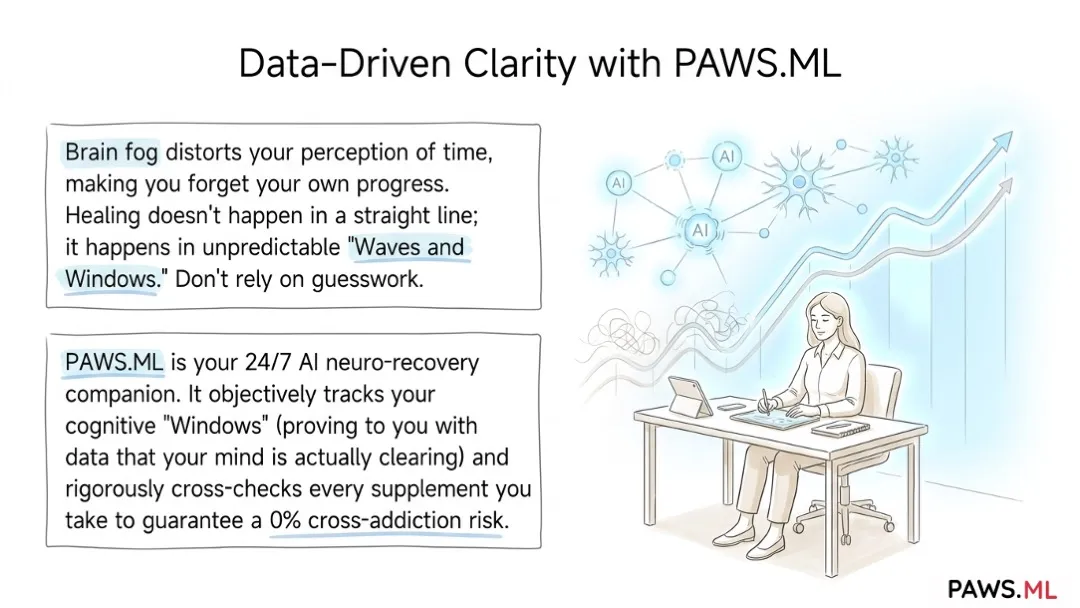
When you are suffering from brain fog, your perception of time and progress becomes severely distorted. You might have had three good days last week, but today the fog is so thick you are convinced you are getting worse.
Furthermore, out of sheer desperation to perform at work or school, many people turn to internet forums (like Reddit) looking for “biohacking” shortcuts. They end up taking aggressive nootropics, herbal stimulants, or unverified supplements. This is incredibly dangerous. When your brain is inflamed, taking the wrong supplement can trigger a massive anxiety attack or dangerously interact with medications your doctor prescribed.
That is why we created PAWS.ML — your personal, AI-driven neuro-recovery companion.
- 📉 Cognitive Progress Tracker: Brain fog makes you forget your own progress. Our AI tracks your symptoms daily, mapping your “Waves and Windows” to objectively prove that your brain is healing over time.
- 🛡️ Pharmacology Safety Agent: Before you try any supplement to clear the fog, our AI cross-checks it against your current prescription medications to prevent dangerous drug interactions.
- 💊 Safe Neuro-Nutrition: Recommends targeted, evidence-based micronutrients with one absolute rule: 0% cross-addiction risk. No aggressive stimulants, only building blocks for synapses.
- 💬 AI Coordinator: An empathic guide that remembers your journey, adapting your recovery protocol as your cognitive symptoms change month by month.
Healing the brain requires precision, not guesswork.
👉 Track your cognitive recovery and get a safe neuro-protocol with PAWS.ML)
How long does brain fog last after quitting? (The timeline)
The timeline for cognitive recovery varies based on your age, the substance used, and the duration of use. However, you must understand that the fog does not lift all at once. It lifts in Windows (days where your mind feels sharp) and Waves (days where the fog rolls back in).
- Months 1 to 3: The fog is usually thickest here. Neuroinflammation is at its peak as the brain cleans up toxins.
- Months 3 to 6: You will start experiencing longer “Windows” of clarity. You might notice you can read a chapter of a book or hold a complex conversation without losing your train of thought.
- Months 6 to 12+: The fog thins out significantly. Short-term memory solidifies.
- 1 to 2 Years: MRI studies of recovering individuals show that the volume of gray matter in the prefrontal cortex significantly restores itself after a year or two of sustained sobriety. Your intellect will fully return.
Evidence-based protocols to clear PAWS brain fog
While neuroplasticity takes time, you can optimize your brain’s healing environment by following these safe protocols:
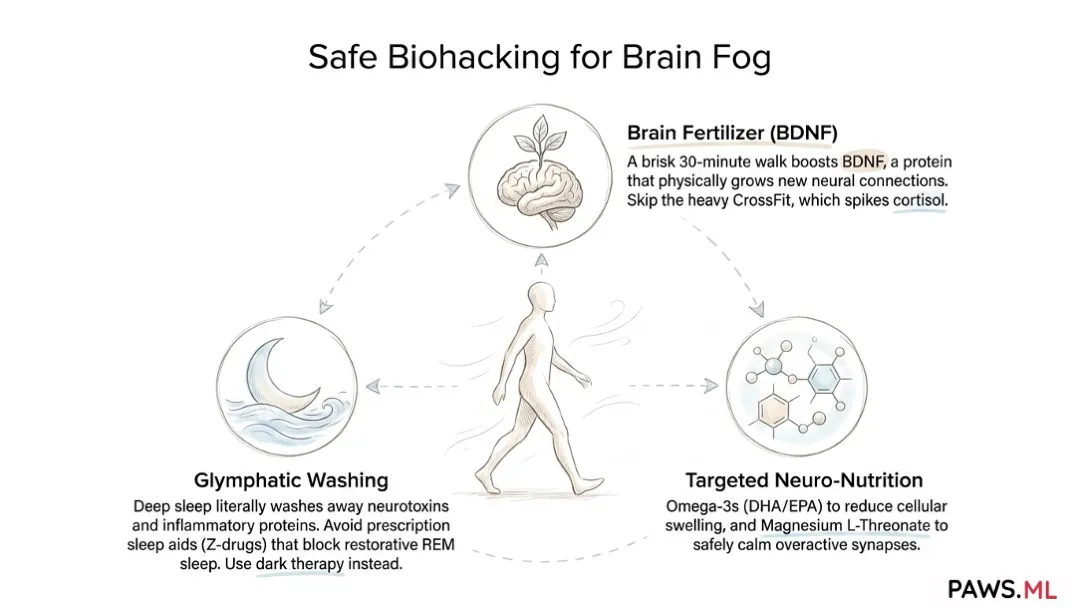
1. Boost BDNF safely (brain fertilizer)
BDNF (Brain-Derived Neurotrophic Factor) is a protein that stimulates the growth of new neural connections. The absolute best way to release BDNF is through moderate aerobic exercise. A brisk 30-minute walk or a light swim forces blood and oxygen into the brain without spiking cortisol (which heavy weightlifting might do during early PAWS).
2. Glymphatic brain-washing (sleep)
Your brain has a physical waste-clearance system called the glymphatic system, which literally washes away neurotoxins and inflammatory proteins. However, this system only turns on during deep sleep. Do not rely on prescription sleep aids (Z-drugs), as they block restorative REM sleep. Practice strict sleep hygiene: complete darkness in the bedroom and zero blue light from screens two hours before sleep.
3. Targeted neuro-nutrition
Provide your brain with the raw materials it needs to repair myelin sheaths and receptors.
- Omega-3 Fatty Acids (DHA/EPA): Scientifically proven to reduce neuroinflammation.
- Magnesium L-Threonate: The only form of magnesium known to effectively cross the blood-brain barrier, helping to calm overactive synapses.
- Vitamin B Complex (Especially B1/Thiamine): Crucial for cellular energy in the brain, especially for those recovering from alcohol dependence.
The biohacking trap: Why stimulants will reset your recovery
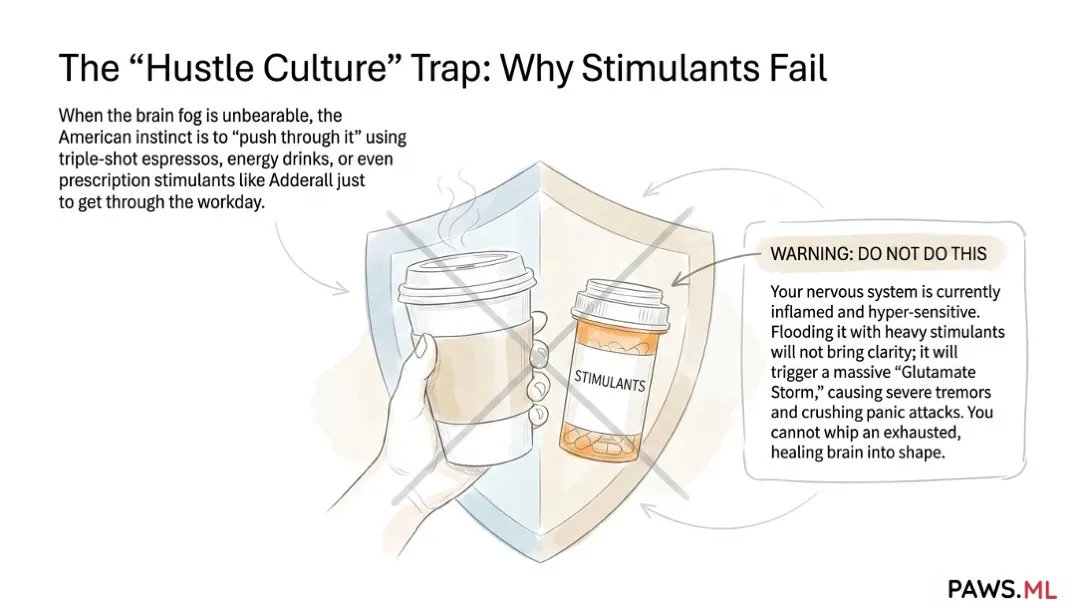
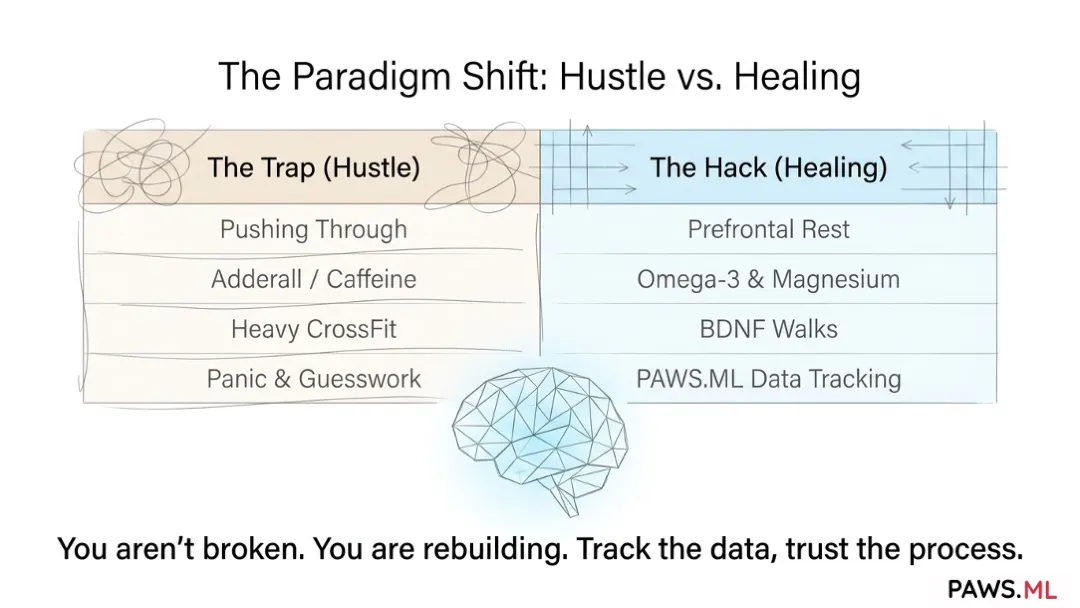
When the brain fog is unbearable, the temptation to “push through it” using heavy stimulants is massive. You might reach for triple-shot espressos, energy drinks, or even prescription stimulants (like Adderall) just to get through a workday.
Do not do this. Your nervous system is currently hyper-sensitive. Flooding an inflamed, healing brain with heavy stimulants will trigger a massive Glutamate Storm. Instead of clearing the fog, you will induce severe tremors, heart palpitations, and crushing panic attacks. Worse, you risk developing a cross-addiction, which will instantly halt your neuroplasticity and reset your recovery timeline back to Day 1. Your brain needs nourishment and rest, not a chemical whip.
Red flags: When to seek medical help
Neuroplasticity is a miracle of human biology, and PAWS brain fog is a temporary condition. With time and safe habits, your sharp mind will return.
⚠️ Medical Safety Warning: However, if your cognitive symptoms escalate beyond simple forgetfulness and fog, you may need immediate medical attention. Seek emergency medical care if you experience:
- Total amnesia (inability to remember what happened 5 minutes ago or inventing false memories);
- Profound disorientation (not knowing where you are or what year it is);
- Paralysis of eye muscles or severe loss of physical coordination (Ataxia).
These are signs of Wernicke-Korsakoff Syndrome (often related to severe alcohol withdrawal and Vitamin B1 deficiency), which is an acute medical emergency requiring intravenous treatment.
For standard PAWS brain fog, patience is your greatest tool. Trust the process, track your progress safely, and let your brain heal.
If you are currently experiencing the challenges of Post-acute withdrawal syndrome (PAWS), return to our main page to explore how our AI recovery assistant can help stabilize your neurochemistry.