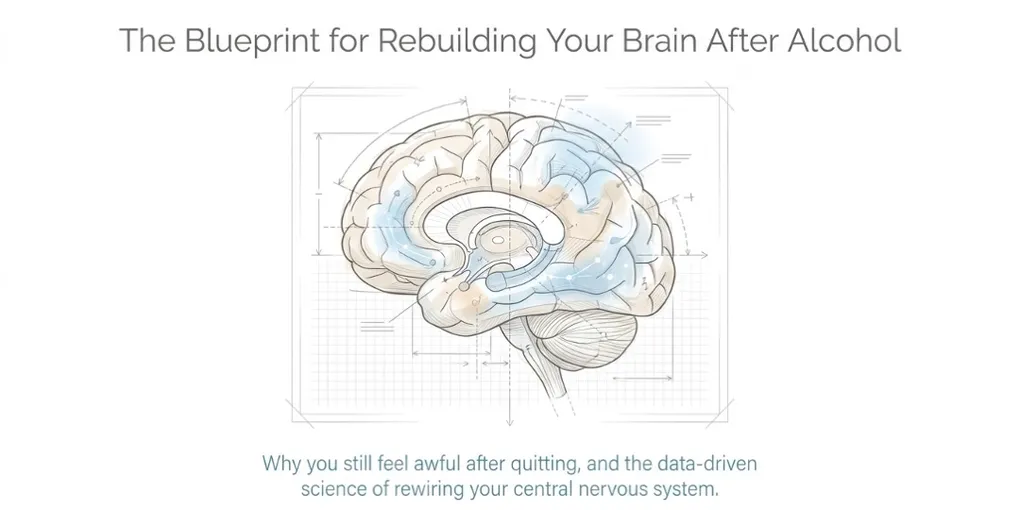
PAWS alcohol symptoms: Timeline, recovery & coping strategies
PAWS alcohol symptoms: Why you still feel awful (and how to recover)
Disclaimer: The information provided in this article is for educational purposes only and is not intended to replace professional medical advice. If you are experiencing severe withdrawal symptoms, suicidal thoughts, or a medical emergency, please contact your healthcare provider or emergency services immediately.
You survived the acute detox. You made it through the sweats, the shakes, and the intense physical cravings. According to most generic recovery timelines, you should be feeling great by now. But months later, you find yourself struggling with crippling anxiety, dense brain fog, and a profound inability to sleep.
You might be asking yourself: “Did I permanently damage my brain? Why do I still feel so awful?”
What you are experiencing is highly documented in addiction medicine. It is called Post-Acute Withdrawal Syndrome (PAWS). While PAWS can occur after quitting various substances, alcohol PAWS has a very specific biological footprint.
In this comprehensive guide, we will dive deep into the neuroscience of why your brain is struggling, provide a complete timeline of PAWS alcohol symptoms, and outline evidence-based, natural protocols to help you cope and heal.
The neuroscience of alcohol PAWS: GABA vs. Glutamate
To understand your symptoms, you must understand what chronic alcohol use did to your central nervous system (CNS).
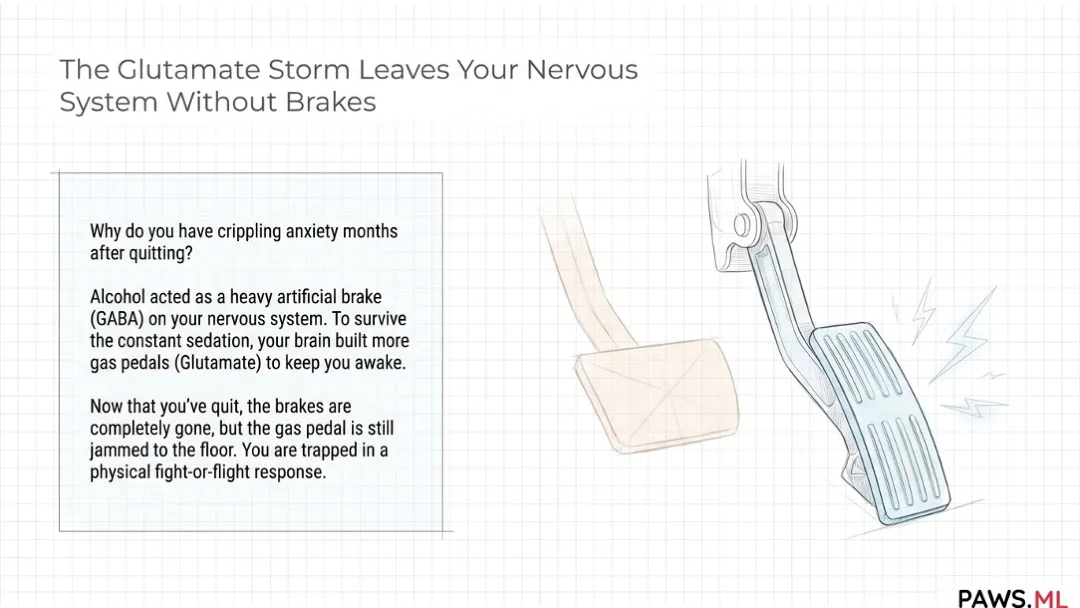
Alcohol acts as a powerful CNS depressant. It artificially enhances GABA (the brain’s primary calming neurotransmitter) and suppresses Glutamate (the brain’s primary excitatory neurotransmitter).
When you drink heavily over a long period, your brain tries to survive this constant sedation by adapting. It removes its own GABA receptors (downregulation) and mass-produces Glutamate receptors (upregulation) to keep your brain awake.
When you stop drinking, the alcohol is gone, but the structural changes remain. You are left with virtually no “brakes” (GABA) and a stuck “gas pedal” (Glutamate). This creates a state of Central Nervous System Hypersensitivity. Your brain is in a constant Glutamate Storm, interpreting normal, everyday stress as life-threatening danger. This chemical imbalance is the root cause of almost all your PAWS symptoms.
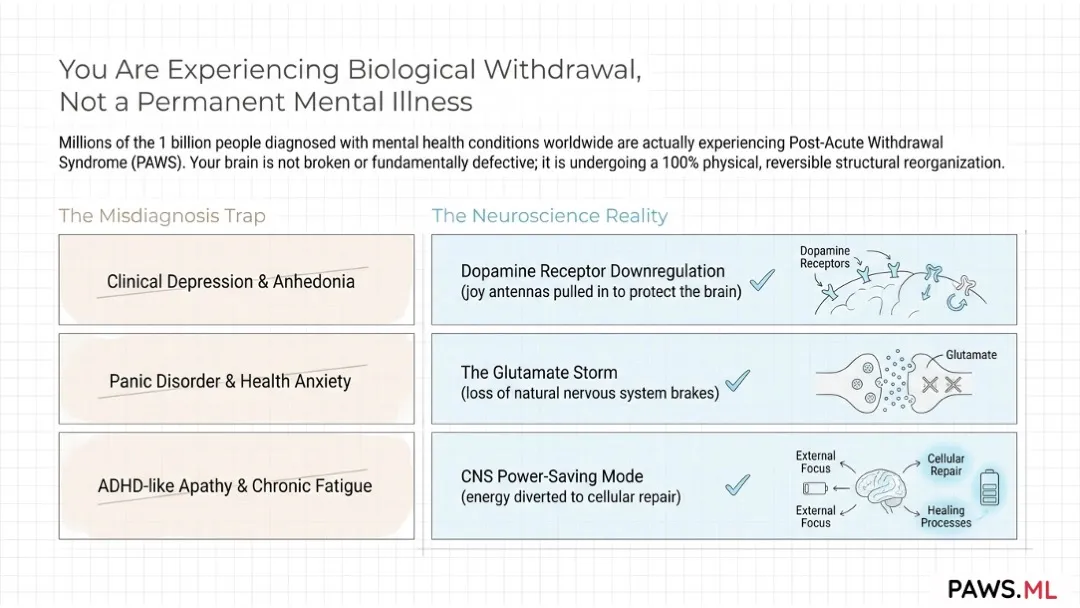
Complete table of PAWS alcohol symptoms
PAWS symptoms can fluctuate wildly. To help you track what you are experiencing, here is a breakdown of the most common post-acute symptoms specifically related to alcohol recovery:
| Category | Common Symptoms | Why It Happens |
|---|---|---|
| Cognitive Symptoms (Brain Fog) | Memory issues, inability to concentrate, rigid thinking, difficulty learning new things. | Prefrontal cortex dysfunction; neuroinflammation caused by alcohol metabolites. |
| Emotional Symptoms | Extreme mood swings, sudden anger, anhedonia (inability to feel pleasure), severe anxiety, depressive episodes. | Dopamine depletion; overactive amygdala (fear center) due to high Glutamate. |
| Physical/Neurological | PAWS insomnia, phantom tremors, extreme fatigue, sensitivity to light/sound, clumsy coordination. | GABA deficiency causing the nervous system to remain stuck in “fight or flight” mode. |
How long does PAWS last after alcohol? (Waves and windows)
One of the most frequently asked questions is: How long does PAWS last?
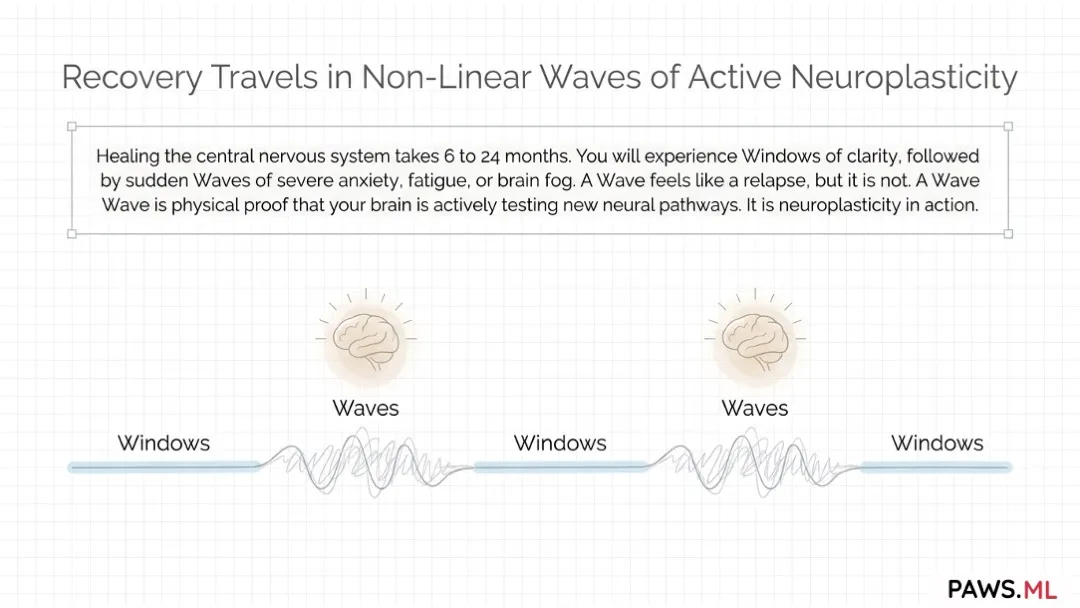
According to the Substance Abuse and Mental Health Services Administration (SAMHSA), post-acute withdrawal from alcohol typically lasts between 6 to 24 months.
However, healing does not happen in a straight line. The alcohol PAWS timeline is characterized by “PAWS waves and windows”:
- Windows: Days or weeks where the brain fog lifts, your sleep improves, and you feel optimistic.
- Waves: Sudden, seemingly unprovoked returns of severe symptoms (anxiety, cravings, fatigue).
When a “Wave” hits, it feels like a relapse into sickness. It is not. A wave is neuroplasticity in action—it is physical proof that your brain is actively rewiring itself and testing new neural pathways.
Why tracking your symptoms is crucial (and hard to do alone)
While understanding the 6-to-24-month timeline is helpful, looking at generic charts on the internet can cause severe health anxiety.
Your personal recovery timeline is highly individualized. It depends on your drinking history, your age, your liver function, and—crucially—your current medications. Taking blood pressure medication, antidepressants, or OTC sleep aids can mask or exacerbate PAWS symptoms.
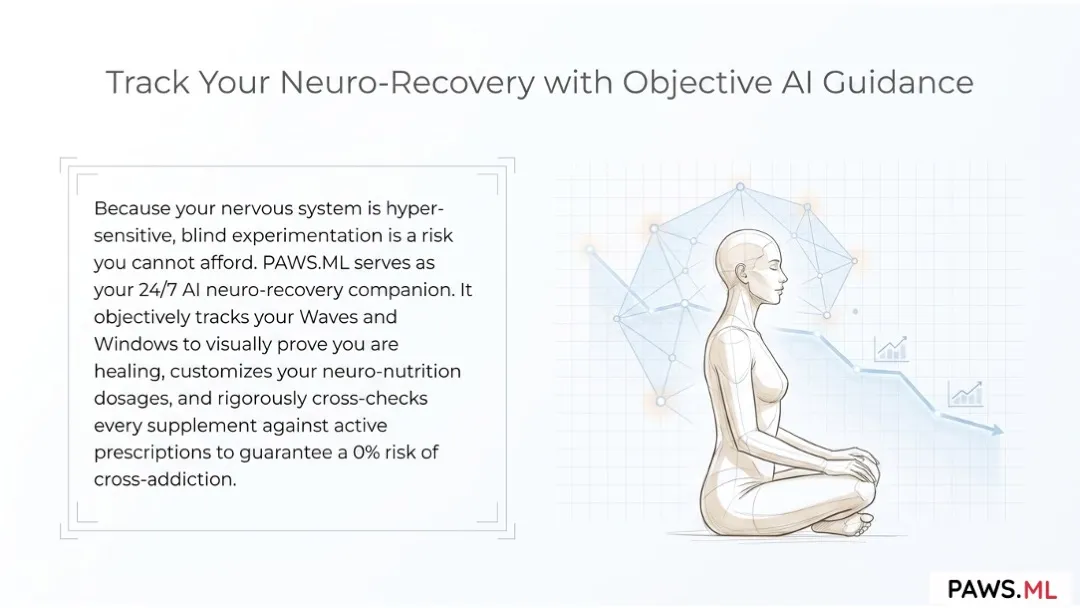
Relying on blind trial-and-error to fix your brain chemistry is dangerous. That is why we built PAWS.ML — a continuous, AI-driven neuro-recovery companion.
- 📉 PAWS Symptom Tracker: It maps your daily cognitive and emotional data, visualizing your unique “Waves and Windows” so you can predict hard days and prove to yourself that you are healing.
- 🛡️ Pharmacology Safety Agent: Strictly cross-checks any supplement or coping strategy against your current prescription medications to prevent dangerous drug interactions.
- 💊 Safe Neuro-Nutrition Agent: Recommends targeted protocols (like specific forms of Magnesium or B-vitamins) with a strict 0% cross-addiction risk policy.
- 💬 AI Coordinator: Remembers your unique history, adapts to your changing timeline, and provides evidence-based reassurance when a Wave hits.
Don’t navigate this neurochemical storm in the dark. Let an intelligent system build your personalized roadmap.
👉 Start tracking your symptoms and get a safe recovery protocol with PAWS.ML)
Evidence-based protocols: Coping with PAWS alcohol symptoms
While your brain takes time to rebuild its receptors, you can use these evidence-based protocols to manage the discomfort safely.
Protocol 1: PAWS anxiety relief (vagus nerve hacking)
Because your brain is flooded with Glutamate, you cannot “talk” yourself out of a panic attack. You must use physiology to calm the nervous system.
- Cold Exposure (Mammalian Dive Reflex): Splashing ice-cold water on your face or applying an ice pack to your neck instantly stimulates the Vagus Nerve, forcing your heart rate to drop and breaking the panic loop.
- Box Breathing: Inhale for 4s, hold for 4s, exhale for 4s, hold for 4s. This regulates the autonomic nervous system.
Protocol 2: Safe supplements for PAWS (neuro-nutrition)
Alcohol severely depletes the body of specific, critical micronutrients. Note: Always check with your doctor or the PAWS.ML pharmacology agent before starting supplements, especially if you take SSRIs or heart medications.
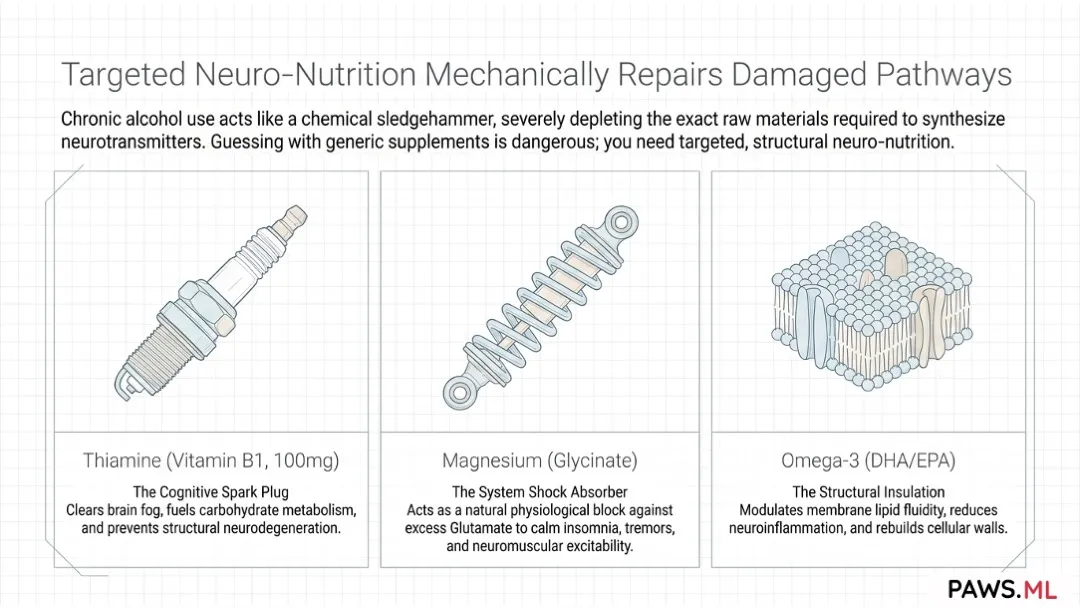
- Vitamin B1 (Thiamine): Alcoholics are notoriously deficient in B1. A severe deficiency can lead to permanent brain damage (Wernicke-Korsakoff syndrome). Supplementing B1 is critical for clearing brain fog.
- Magnesium (Glycinate or L-Threonate): Magnesium acts as a natural blocker for NMDA receptors, essentially shielding your brain from the toxic effects of excess Glutamate. It promotes deep sleep and muscle relaxation.
- Omega-3 Fatty Acids (DHA/EPA): Crucial for reducing neuroinflammation and repairing myelin sheaths around damaged neurons.
Protocol 3: PAWS insomnia and sleep hygiene
Your brain relies on the glymphatic system to literally wash away neurotoxins, and this system only turns on during deep sleep.
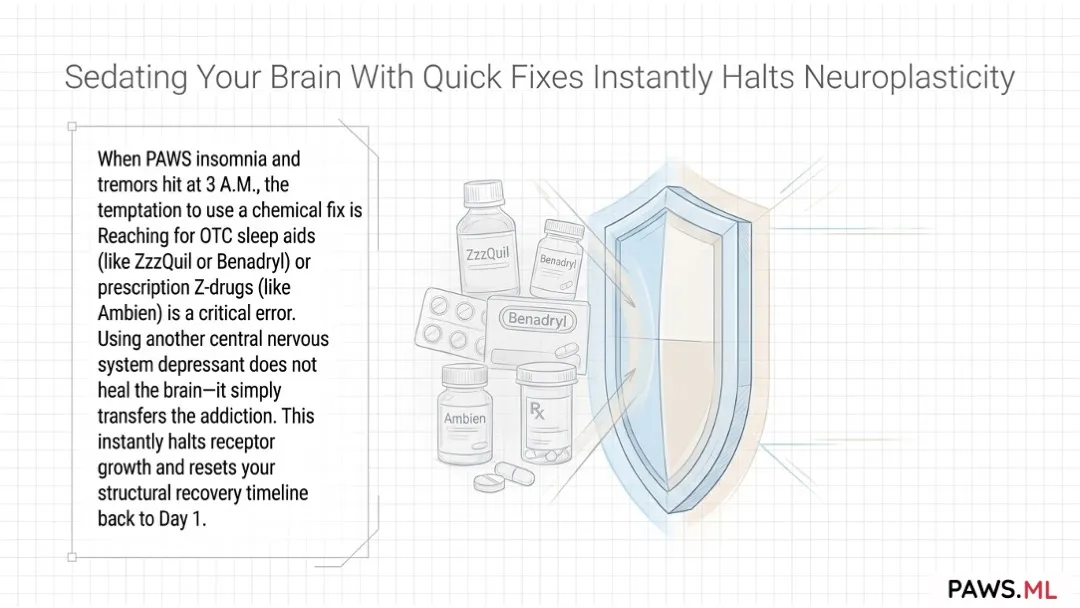
- Avoid prescription “Z-drugs” (like Ambien), which can block restorative REM sleep and create dependency.
- Implement Dark Therapy: Zero blue light (phones/TVs) at least 2 hours before bed to naturally stimulate melatonin production.
The cross-addiction trap in early recovery
When dealing with PAWS alcohol symptoms, the physical and emotional exhaustion can become overwhelming. In these moments, your brain will lie to you, suggesting that a quick chemical fix—like a benzodiazepine, Kratom, cannabis, or a strong OTC sleep aid—will “just take the edge off.”
This is the trap of cross-addiction. Because your GABA receptors are depleted, substituting alcohol with another central nervous system depressant does not heal the brain. It simply transfers the addiction. Doing this instantly halts neuroplasticity, prevents receptor growth, and resets your PAWS timeline back to Day 1. Stick to natural, non-addictive coping mechanisms.
Summary & when to seek clinical help
Healing from alcohol dependence is a marathon. The symptoms of PAWS are deeply uncomfortable, but they are temporary. By understanding the biology of your brain, tracking your “Waves and Windows,” and utilizing safe neuro-nutrition, you can significantly ease the transition into long-term sobriety.
⚠️ Red Flags: While lifestyle protocols and AI tracking are excellent for PAWS, they do not replace acute medical care. If your symptoms worsen into:
- Visual or auditory hallucinations;
- Severe physical seizures;
- Total amnesia or extreme confusion (delirium);
- Active suicidal ideation;
Seek emergency medical assistance immediately. These could be signs of acute neurological complications that require medical intervention.
If you are currently experiencing the challenges of Post-acute withdrawal syndrome (PAWS), return to our main page to explore how our AI recovery assistant can help stabilize your neurochemistry.