Night sweats & vivid dreams 1 month after quitting weed
Still waking up drenched and terrified? The hidden reality of quitting weed
Disclaimer: The information in this article is for educational purposes only and does not substitute for professional medical advice. If your night sweats are accompanied by daytime fevers, severe weight loss, or hallucinations, seek medical care immediately.
Society, pop culture, and even some medical professionals have likely told you the same lie for years: “Marijuana is just a plant. It’s not physically addictive. You can just stop.”
So, you decided to quit. You threw away your stash, pushed through the initial irritability, and made it to the one-month mark. You expected to feel clear-headed and energized.
Instead, your nights have turned into a literal nightmare. You are waking up drenched in sweat after quitting THC, shivering in the dark, your heart pounding out of your chest. And the dreams—they aren’t just dreams. They are hyper-realistic, terrifying cinematic experiences that leave you exhausted before the day even begins.
You find yourself dreading bedtime. You might be searching the internet in the middle of the night, wondering: “Why am I experiencing night sweats 1 month after quitting weed? Am I losing my mind?”
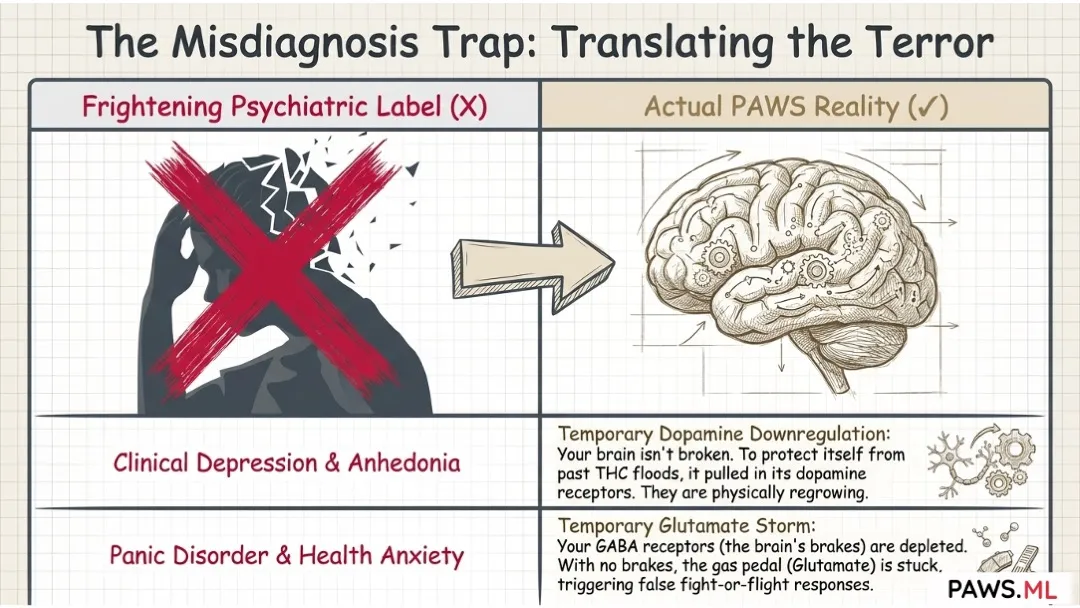
Take a deep breath. You are not losing your mind, and you are not sick. What you are experiencing is a highly documented, physiological reality of Weed PAWS (Post-Acute Withdrawal Syndrome). Let’s break down the neuroscience of why your sleep has become a horror movie, why it’s happening now, and how to survive the nights ahead.
The medical gaslighting: Why it doesn’t just take “two weeks”
If you complain about these symptoms to someone who doesn’t understand cannabinoid science, they might gaslight you, saying, “Weed withdrawal only lasts a few days.”
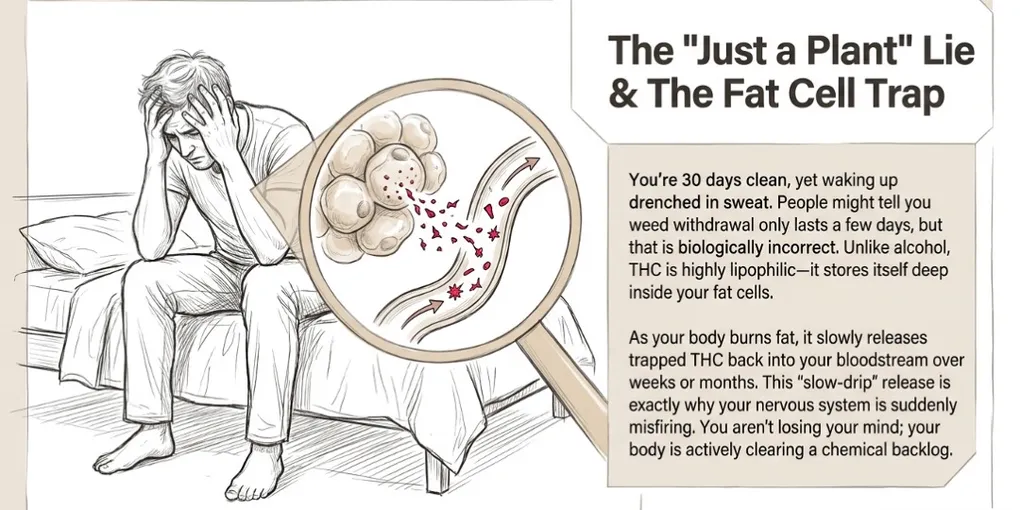
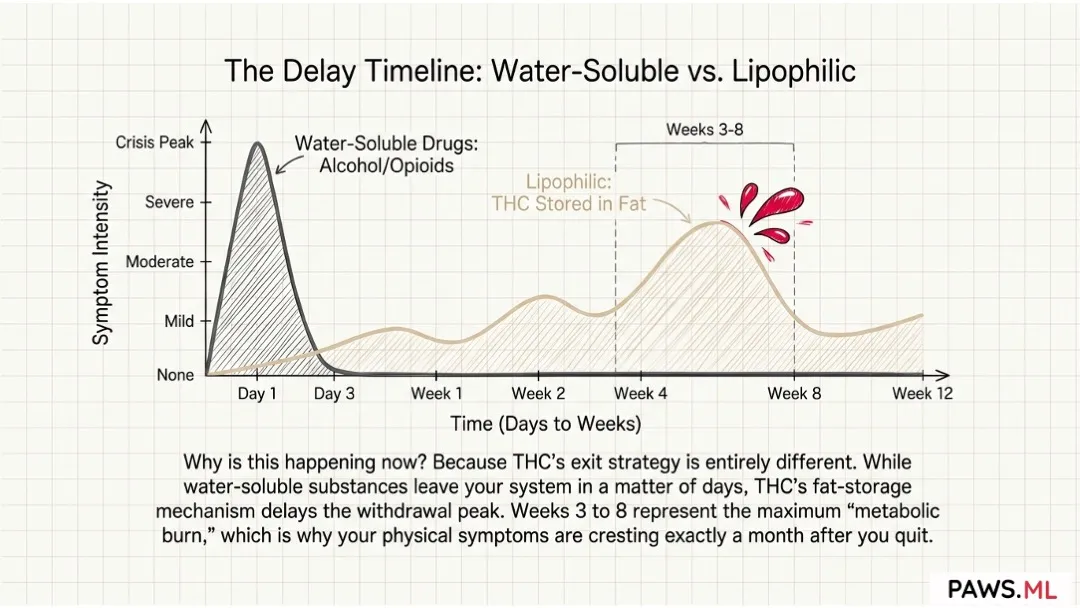
This is biologically incorrect. Unlike alcohol or opioids, which are water-soluble and leave the bloodstream in a matter of days, THC is highly lipophilic. This means THC stores itself deep inside your fat cells.
When you stop smoking, your body slowly burns that fat, releasing trapped THC back into your bloodstream over a period of weeks or even months. This slow-drip release is exactly why you can suddenly get hit with intense withdrawal symptoms and night sweats 1 month after quitting weed. Your body is still actively fighting to clear the chemical backlog.
The neuroscience: Why your sleep has become a horror movie
To understand how to fix your sleep, you have to understand what cannabis was actually doing to your brain while you were using it.
1. The REM rebound effect (vivid dreams)
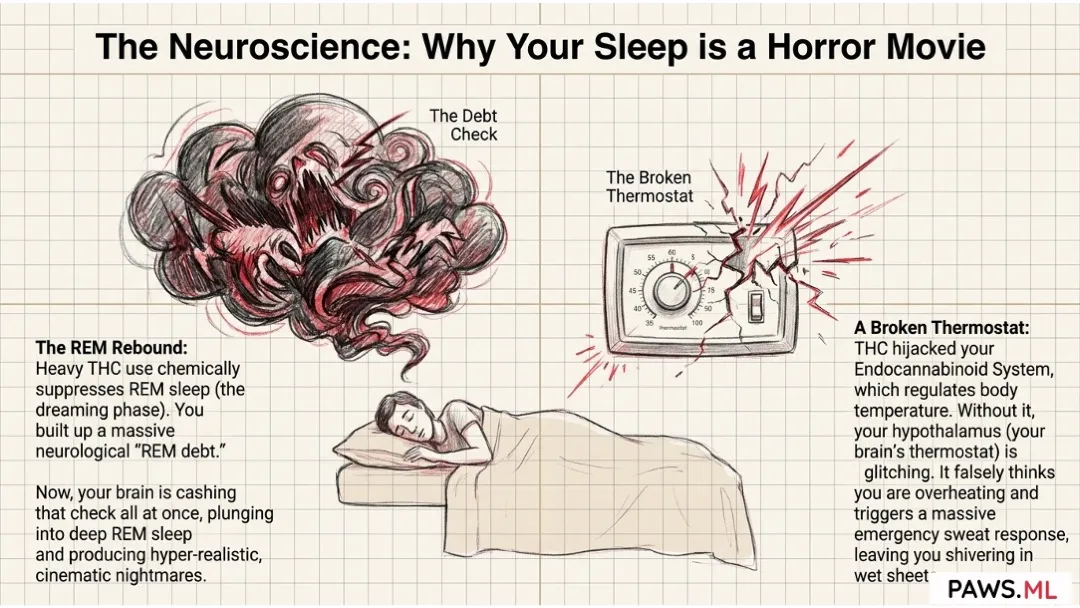
Sleep is divided into cycles, the most crucial for your mental health being REM (Rapid Eye Movement) sleep. This is the phase where you dream and process emotions. Heavy cannabis use chemically suppresses REM sleep. For years, you were effectively sedated, but you weren’t truly sleeping. You built up a massive, neurological “REM debt.”
Now that the THC is leaving your brain, the dam has broken. Your brain is desperately trying to catch up on years of missed dreaming. This creates a phenomenon known as REM Rebound marijuana withdrawal. Your brain plunges into REM sleep faster, stays there longer, and produces vivid dreams after quitting weed that are intensely emotional, bizarre, and often terrifying.
2. A broken thermostat (night sweats)
So, why do I sweat at night after quitting THC? Your body’s Endocannabinoid System (ECS) is responsible for maintaining homeostasis (balance), which includes regulating your body temperature. For years, THC hijacked this system. Without it, your hypothalamus (your brain’s internal thermostat) is completely broken. During the night, your brain misinterprets your body temperature, falsely believing you are overheating. It triggers a massive sweat response to cool you down, leaving you shivering in soaking wet sheets.
The melatonin trap: Why internet sleep hacks backfire
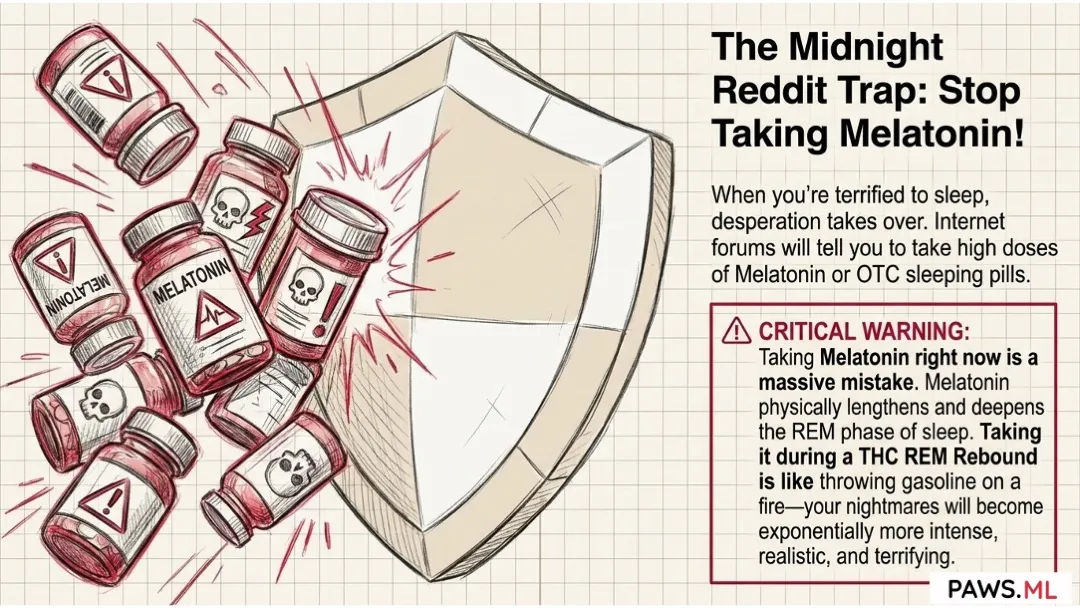
When you are terrified of going to sleep and waking up soaked in sweat, you will try anything. If you browse Reddit forums like r/leaves or r/WeedPAWS, you will almost certainly see people recommending high doses of Melatonin to help you sleep.
For a brain going through a THC REM Rebound, taking Melatonin is a massive mistake.
Melatonin physically lengthens and deepens the REM phase of sleep. If you take it right now, you are throwing gasoline on a fire. Your weed PAWS vivid dreams will become exponentially more intense, realistic, and terrifying. Furthermore, turning to prescription sleeping pills (Z-drugs) carries a deadly risk of cross-addiction.
Your healing endocannabinoid system requires a highly tailored, scientifically safe approach. That is why we built PAWS.ML — your AI-driven neuro-recovery navigator:
- 📉 Sleep & Symptom Tracker: Track the intensity of your night sweats and nightmares. Our AI visualizes your recovery trend, proving to you objectively that your symptoms are fading over time, saving you from 3 A.M. panic attacks.
- 🛡️ Pharmacology Safety Agent: Before you try any supplement, our AI checks it. It will block dangerous recommendations (like Melatonin during an REM Rebound) and prevent hazardous drug interactions with any prescriptions you currently take.
- 💊 Safe Neuro-Nutrition: Recommends safe, non-addictive minerals (like targeted Magnesium) to relax your muscles and nervous system, with an absolute guarantee: 0% cross-addiction risk.
- 💬 AI Coordinator: An empathetic digital companion that validates your struggle with Weed PAWS and adapts your sleep protocol as your endocannabinoid system naturally recovers.
Don’t make your nightmares worse with bad internet advice. Let a secure, intelligent AI agent guide your sleep recovery.
👉 Track your sleep healing and get a safe protocol with PAWS.ML)
The recovery timeline: When will you sleep normally again?
When you are changing your sheets at 4 A.M., the only question on your mind is: how long do night sweats last after quitting weed?
While the timeline depends on your body fat percentage and how heavily you consumed concentrates or high-THC strains, the clinical roadmap usually looks like this:
- Weeks 1 to 2: Pure insomnia. You simply cannot fall asleep. There are no dreams because you aren’t sleeping deeply enough.
- Weeks 3 to 8 (The Peak): As THC leaves the fat stores, the REM Rebound hits its peak. This is the primary window for extreme night sweats and cinematic nightmares.
- Months 2 to 6 (The Stabilization): The night sweats stop entirely. Your internal thermostat resets. The nightmares transition from “terrifying” to just “weird and colorful.” Eventually, your deep sleep and REM cycles balance out, and restorative sleep returns.
4 safe protocols to survive weed PAWS nights
While you wait for your endocannabinoid system to repair itself, use these safe, non-addictive protocols to make your nights manageable:
1. Environmental cooling (hack your thermostat)
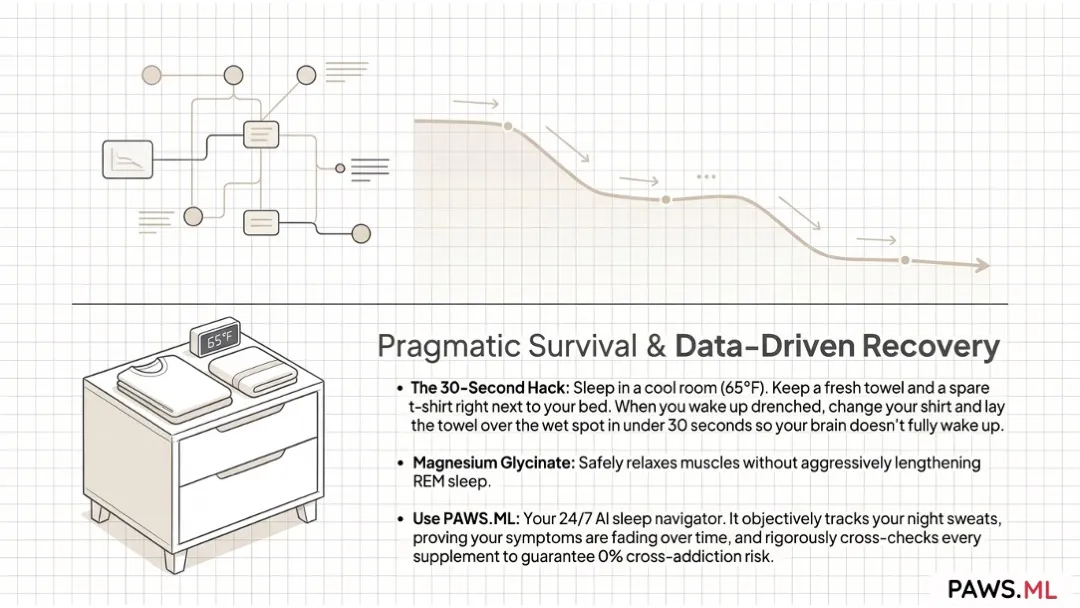
Since your brain cannot regulate your body temperature, you must control your environment. Sleep in a very cool room (around 65°F / 18°C). Wear moisture-wicking bamboo or cotton sleepwear. Pro-Tip: Keep a fresh towel and a spare t-shirt right next to your bed. When you wake up drenched, you can change your shirt and lay the towel over the wet spot in under 30 seconds, allowing you to get back to sleep without fully waking up your brain.
2. Magnesium glycinate
Instead of melatonin, use Magnesium Glycinate. This specific form of magnesium safely crosses the blood-brain barrier to relax your muscles and calm your central nervous system without aggressively lengthening your REM sleep phase. (Always have PAWS.ML or a doctor check for medication interactions).
3. Managing “sleep dread”
Because of the nightmares, many recovering users develop “sleep dread”—a severe anxiety about going to bed. This anxiety spikes cortisol, which makes the sweating worse. Build a strict wind-down routine: read a physical book, practice deep breathing, and avoid looking at your phone in bed. Remind yourself out loud: “My dreams cannot hurt me. They are just a sign of my brain healing.”
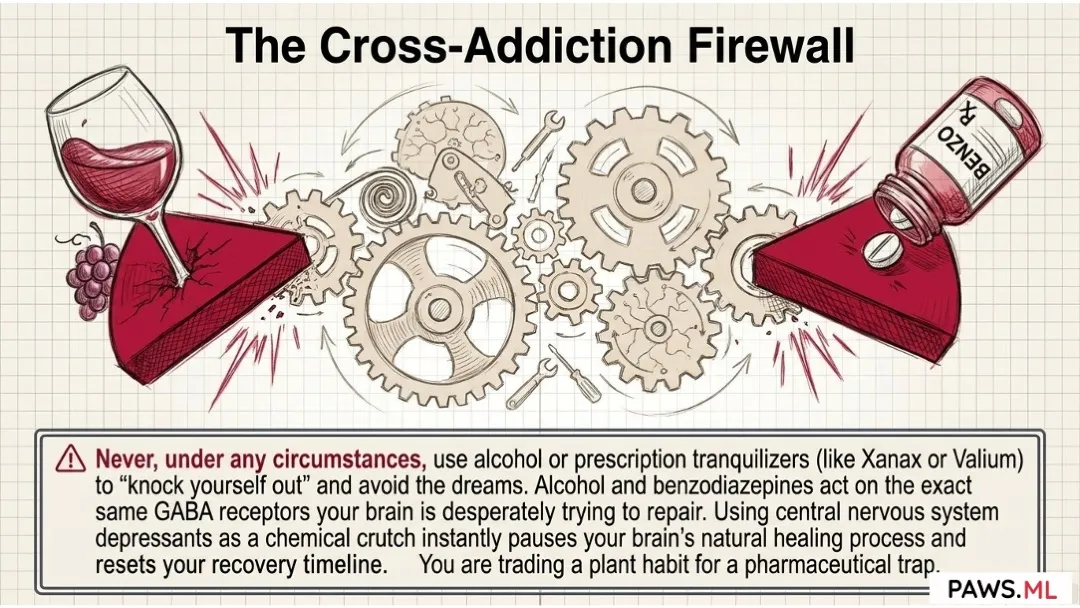
4. The cross-addiction trap
Never, under any circumstances, use alcohol or prescription tranquilizers (like Xanax or Valium) to “knock yourself out” and avoid the dreams. Using central nervous system depressants to sleep creates a dangerous cross-addiction. It will instantly pause your brain’s healing process and reset your recovery timeline.
Conclusion & when to seek medical help
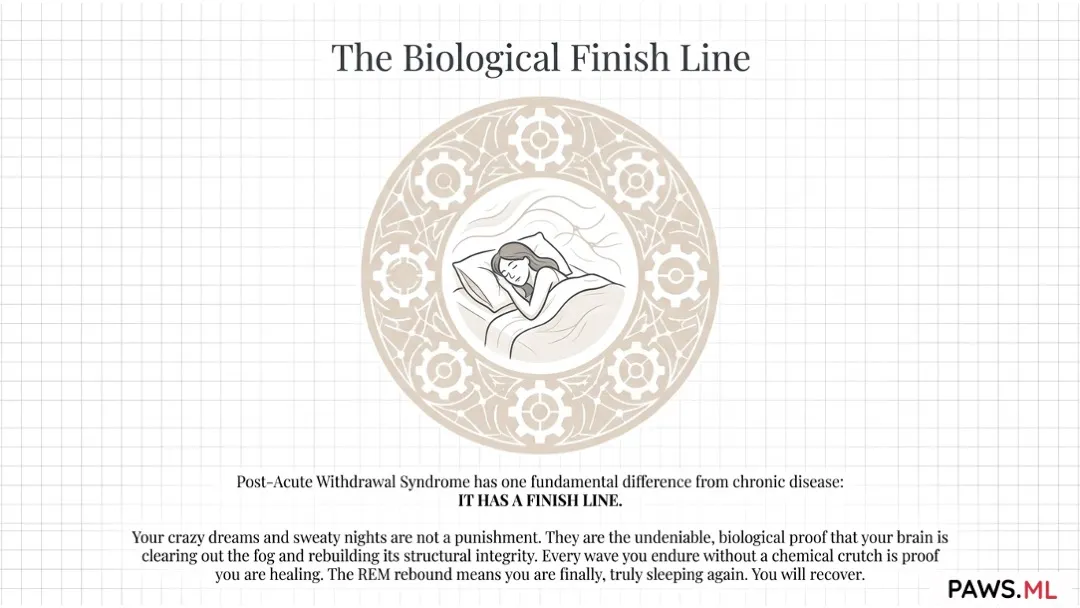
Your crazy dreams and sweaty nights are not a punishment. They are the undeniable, biological proof that your brain is clearing out the fog and restoring its natural ability to function. The REM rebound means you are finally truly sleeping again.
⚠️ Medical Red Flags: While night sweats are a standard symptom of Weed PAWS, they can occasionally mask other medical issues. Seek professional medical care if your night sweats are accompanied by:
- High daytime fevers;
- Unexplained, rapid weight loss;
- Hallucinations or delusions while you are awake.
For standard withdrawal symptoms, patience and safe hygiene are your best tools. Keep a dry towel by the bed, track your symptoms objectively, and trust the healing process.
If you are currently experiencing the challenges of Post-withdrawal syndrome, return to our main page to explore how our AI recovery assistant can help stabilize your neurochemistry.