Kratom withdrawal restless legs (RLS): Timeline & safe relief
Still kicking? Restless legs weeks after quitting kratom explained
Disclaimer: The information in this article is for educational purposes only and does not substitute for professional medical advice. If you have been unable to sleep for more than 72 hours, which can lead to sleep-deprivation psychosis, please seek emergency medical care immediately.
You threw out the green powder 3 or 4 weeks ago. You pushed through the grueling acute phase—the flu-like symptoms, the cold sweats, and the diarrhea. You thought you were finally free. But now, every single night, just as you are about to drift off to sleep, the torture begins.
A deep, agonizing, creeping sensation builds up in your calves and thighs (and sometimes your arms). It feels like electricity coursing through your bones, or like insects crawling under your skin. You toss, you turn, you punch your mattress, and you are forced to get up and pace the room. You are exhausted to your core, yet your legs refuse to stop moving.
Sitting in the dark, crying from pure exhaustion, you frantically search Google: “When does kratom withdrawal restless legs stop? Why is this happening a month later?”
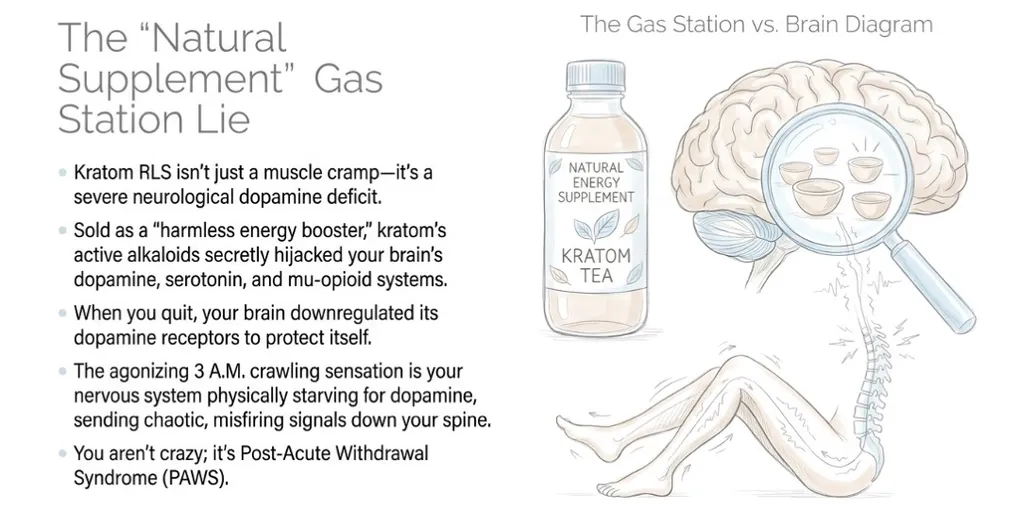
Please know this: You are not crazy, and you are not broken. Kratom is often marketed as a “harmless, natural energy booster,” but the reality is much darker. What you are experiencing is a severe, neurobiological symptom of Kratom Post-Acute Withdrawal Syndrome (PAWS).
Let’s break down exactly what this green powder did to your brain, why your legs are going crazy, and how to safely stop the kicking so you can finally get some sleep.
The “natural supplement” lie: What kratom actually did to your brain
To fix the problem, you have to understand the damage. Kratom is sold at gas stations and vape shops, deceiving millions into thinking it is just a botanical supplement. In reality, it is a highly complex, “dirty” drug that alters multiple systems in your brain simultaneously.
1. Mu-opioid receptors (the painkiller effect)
Kratom’s active alkaloids (mitragynine and 7-hydroxymitragynine) bind to your brain’s mu-opioid receptors—the exact same receptors targeted by prescription painkillers and heroin. For months or years, your brain relied on Kratom to block pain signals. Now that the Kratom is gone, your pain receptors are raw, exposed, and hyper-sensitive.
2. Serotonin & dopamine (the antidepressant effect)
Unlike traditional opioids, Kratom also heavily manipulated your serotonin and dopamine levels. When you quit, your central nervous system was left without its chemical “painkiller” and its chemical “happy pill” at the same time. This profound deficit is the root cause of your agonizing nights.
The science of kratom RLS: Why your legs won’t stop moving
Restless Leg Syndrome (RLS) is not a muscle problem; it is a neurological problem.
RLS 1 month after quitting kratom happens primarily because of Dopamine Depletion. In the field of neurology, idiopathic RLS is heavily linked to a lack of dopamine in the basal ganglia—the part of the brain that controls smooth, purposeful muscle movements.
Because Kratom hijacked your dopamine system, your brain downregulated (removed) its own dopamine receptors. Now, your brain is sending chaotic, misfiring signals to your legs. Your legs are moving involuntarily because your nervous system is literally starved of dopamine and screaming for relief.
The gabapentin trap: Why internet advice is dangerous for RLS
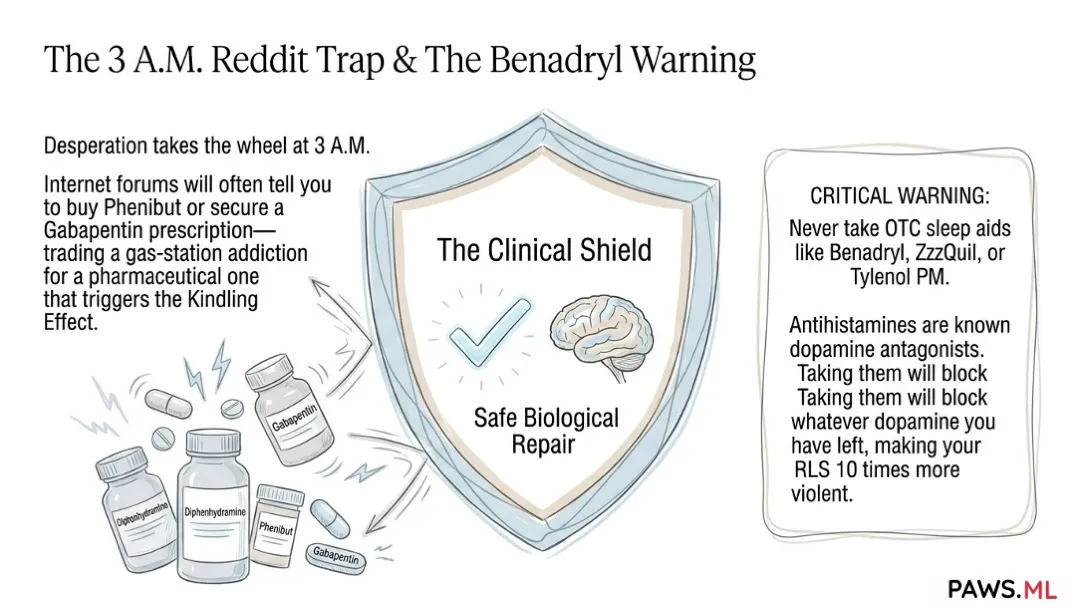
When you haven’t slept for a week due to bone-deep aches in your legs, desperation takes the wheel. If you go to Reddit forums like r/quittingkratom, you will see hundreds of people advising you to get a prescription for Gabapentin, Pregabalin, or to buy Phenibut online to stop the RLS.
This is a dangerous trap.
Taking heavy prescription nerve-pain medications or unregulated substances like Phenibut to treat Kratom symptoms is a textbook example of cross-addiction. While Gabapentin for kratom withdrawal might temporarily stop the kicking, you are simply transferring your addiction to a much stronger pharmaceutical drug. When you eventually have to taper off the Gabapentin, the withdrawals can be significantly more dangerous than Kratom itself.
Your fragile, healing nervous system needs safety, not another chemical hook. That is why we built PAWS.ML — your personal, AI-driven neuro-recovery navigator:
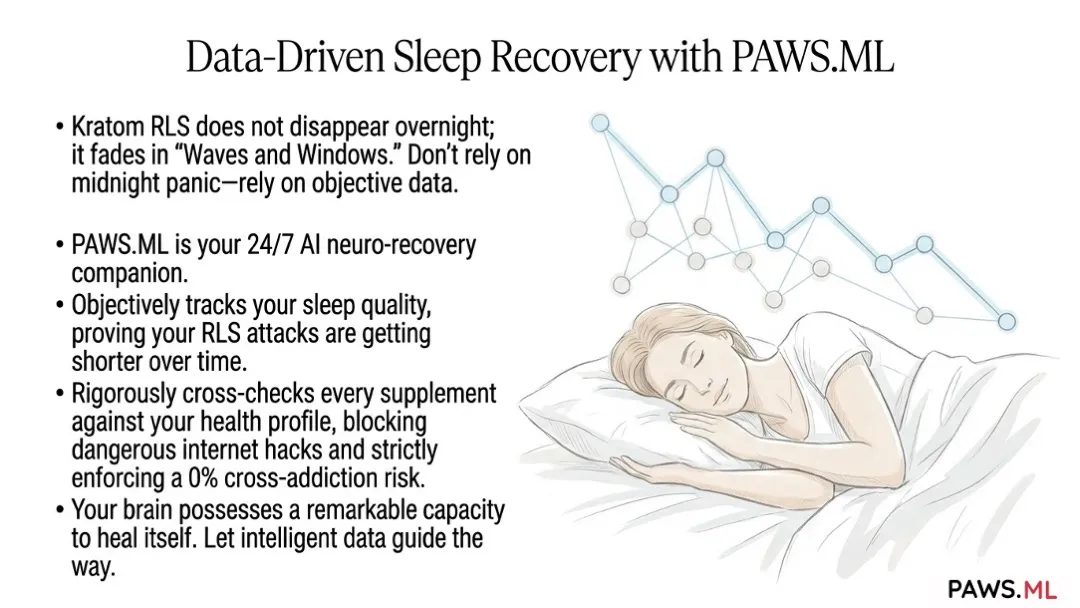
- 📉 Symptom & Sleep Tracker: RLS does not disappear overnight; it fades in “Waves and Windows.” Our AI tracks your sleep quality, proving to you objectively that your RLS attacks are getting shorter and less intense, saving you from midnight panic.
- 🛡️ Pharmacology Safety Agent: Before you try any supplement you read about online, our AI rigorously cross-checks it. We will block dangerous “internet hacks” and prevent severe drug interactions with any medications you are currently taking.
- 💊 Safe Neuro-Nutrition: Recommends targeted, evidence-based micronutrients that naturally soothe the dopamine system with an absolute, non-negotiable rule: 0% cross-addiction risk.
- 💬 AI Coordinator: An empathetic digital companion that validates your struggle with the Kratom PAWS timeline, reminding you that your brain is actively repairing itself.
Don’t trade a gas-station addiction for a pharmaceutical one. Let a secure, intelligent AI agent guide your true healing.
👉 Track your RLS and get a safe, non-addictive protocol with PAWS.ML)
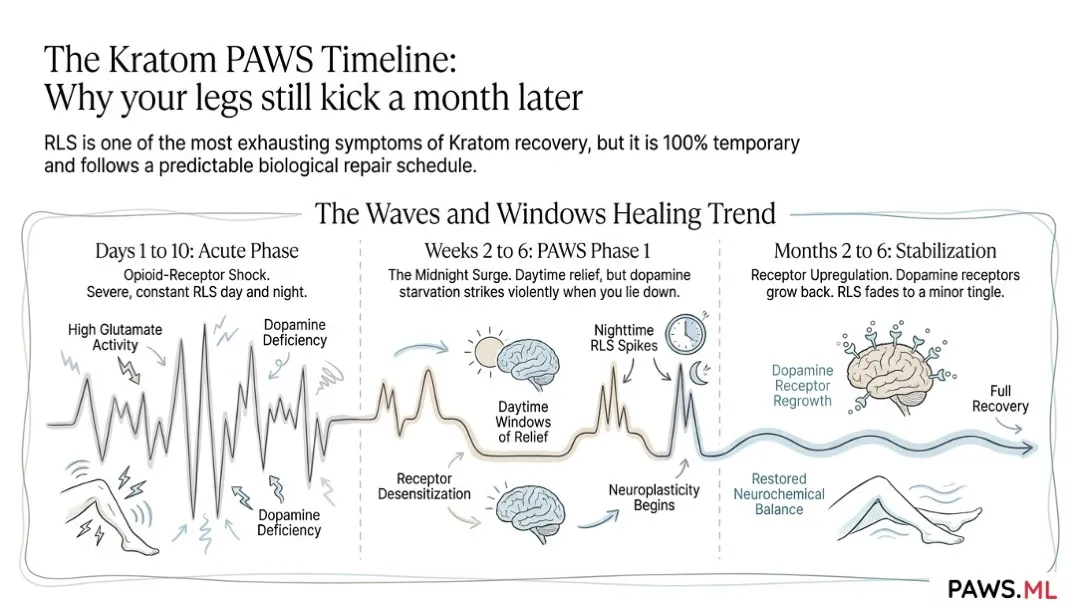
How long does RLS last after quitting kratom? (The timeline)
When you are pacing the hallway at 3 A.M., the only thing you want to know is: how long does RLS last kratom withdrawal?
While it depends on how many grams per day you consumed (GPD) and for how long, the Kratom PAWS timeline for RLS generally follows this path:
- Days 1 to 10 (Acute Phase): RLS is severe, constant, and happens both day and night. Your body is in a state of opioid-receptor shock.
- Weeks 2 to 6 (PAWS Phase 1): The daytime RLS fades, but it comes back with a vengeance the moment you lie down at night. You are entering the “Waves” phase, where some nights you sleep 4 hours, and other nights you sleep zero.
- Months 2 to 6 (Stabilization): The RLS fades into the background. Your dopamine receptors upregulate (grow back). You might only feel a slight “tingle” in your legs on days when you are extremely stressed or drank too much caffeine.
4 safe, non-addictive protocols to stop kratom RLS
While you wait for your dopamine receptors to heal, use these 4 non-addictive protocols to survive the nights:
1. The benadryl warning (the antihistamine trap)
CRITICAL INSIGHT: When you can’t sleep, your first instinct is to take an over-the-counter sleep aid like Benadryl, ZzzQuil, or Tylenol PM (Diphenhydramine). Do not do this. Antihistamines are known dopamine antagonists. Taking them during Kratom withdrawal will make your RLS 10 times more violent and agonizing. Avoid all OTC allergy and sleep medicines while your legs are healing.
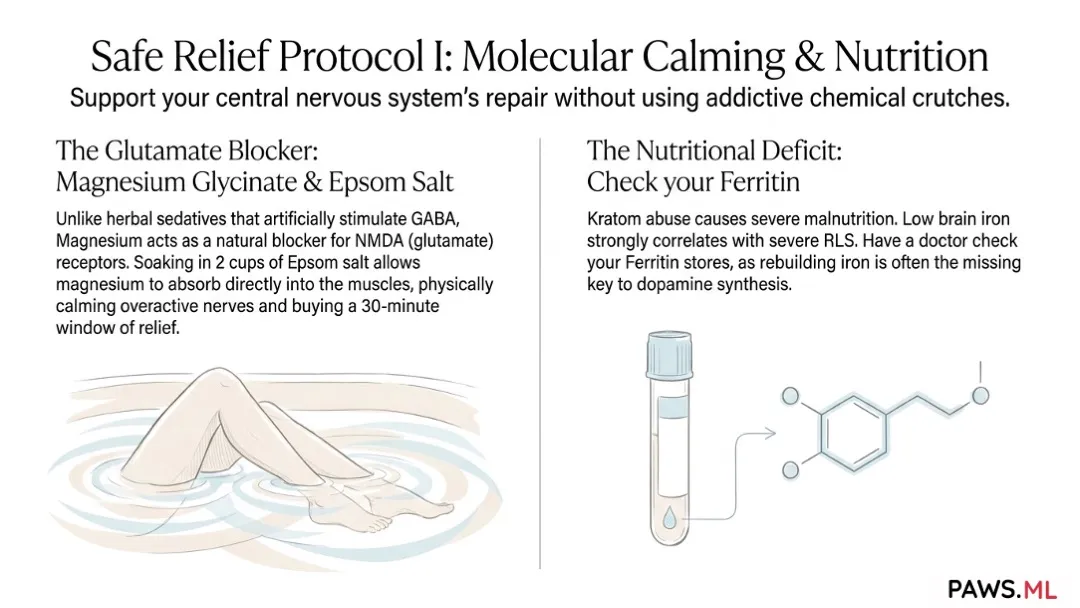
2. Magnesium glycinate & epsom salt baths
Your overactive nerves need to be physically calmed. Soaking in a hot bath with 2 cups of Epsom Salt (Magnesium Sulfate) allows magnesium to absorb directly into your muscles, providing 30-60 minutes of deep relief—often just enough time to fall asleep. Supplementing orally with Magnesium Glycinate safely supports the central nervous system without causing the stomach upset associated with other forms of magnesium.
3. Check your ferritin (iron) levels
In the medical field, severe RLS is strongly correlated with low iron levels in the brain. Kratom abuse often leads to severe malnutrition and gut issues, drastically lowering your iron stores. Have your doctor check your Ferritin levels (not just standard iron). (Always have PAWS.ML or your doctor check before starting iron supplements, as excess iron can be toxic).
4. Heat/cold therapy (sensory overload)
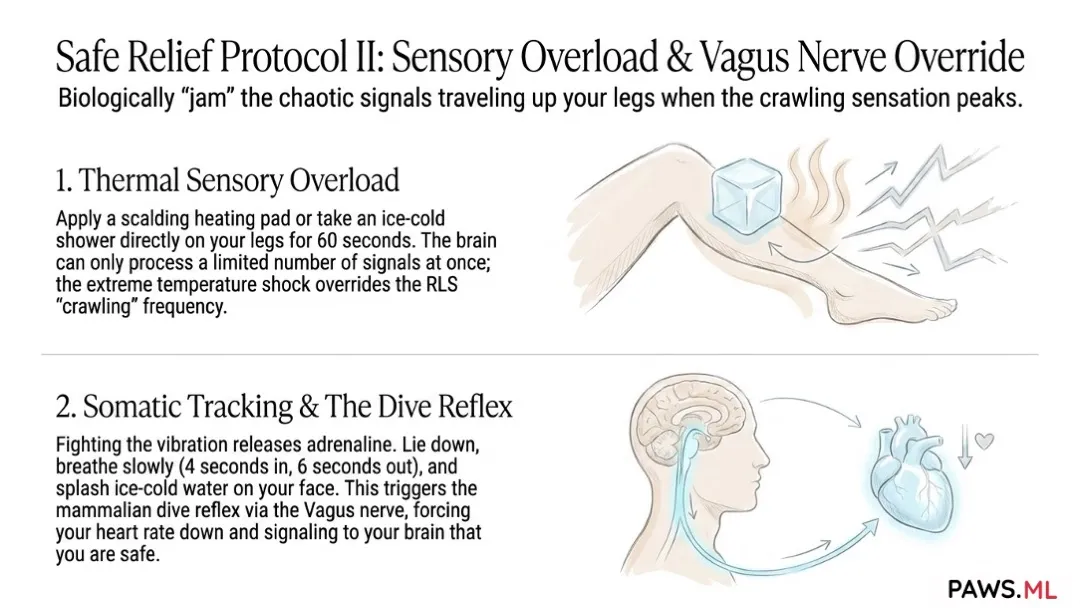
When the crawling sensation in your legs makes you want to scream, you can “hack” your nervous system using sensory overload. Take an ice-cold shower for 60 seconds, focusing the water on your legs, or apply a scalding hot heating pad to your calves. The brain can only process so many signals at once; the extreme temperature shock overrides the RLS “crawling” signal, buying you a window of relief to try and sleep.
Conclusion & when to seek medical help
Kratom RLS is one of the most psychologically and physically exhausting symptoms in the addiction recovery world. But you must remember: it is 100% temporary. Your dopamine system will recover, and you will sleep deeply and peacefully again.
⚠️ Medical Red Flags: While RLS itself is not life-threatening, the sleep deprivation it causes can be. Seek immediate medical attention if:
- You have had zero hours of sleep for more than 72 hours.
- You begin experiencing auditory or visual hallucinations (seeing or hearing things that are not there).
- You experience active thoughts of self-harm due to exhaustion.
In cases of extreme, prolonged sleep deprivation, a doctor may need to prescribe temporary, non-addictive medications (like Clonidine) in a controlled environment to prevent psychosis. For standard PAWS RLS, lean on safe neuro-nutrition, track your waves, and stay strong. Freedom is closer than you think.
If you are currently experiencing the challenges of Protracted abstinence, return to our main page to explore how our AI recovery assistant can help stabilize your neurochemistry.