Did i permanently damage my brain? How to upregulate dopamine receptors after quitting
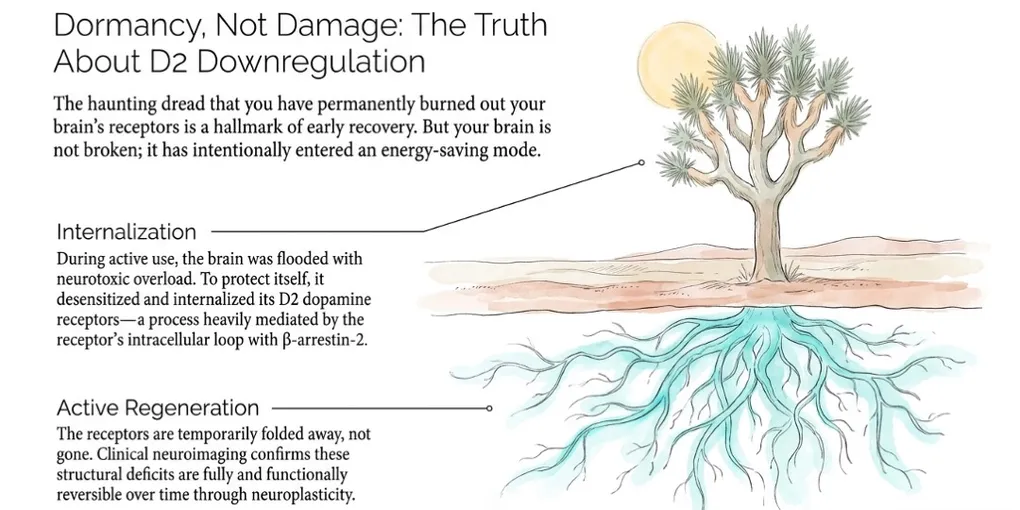
There is a haunting fear that plagues many individuals in early recovery: the dread that you have permanently “burned out” your brain’s receptors and will never sincerely laugh, feel motivated, or experience genuine joy again. You’ve stopped using substances, but you feel absolutely nothing. This profound emotional flatness can make sobriety feel like a life sentence rather than a liberation. But what if your brain isn’t broken, but rather just temporarily exhausted?
Anhedonia & brain fog months after quitting: The PAWS symptoms
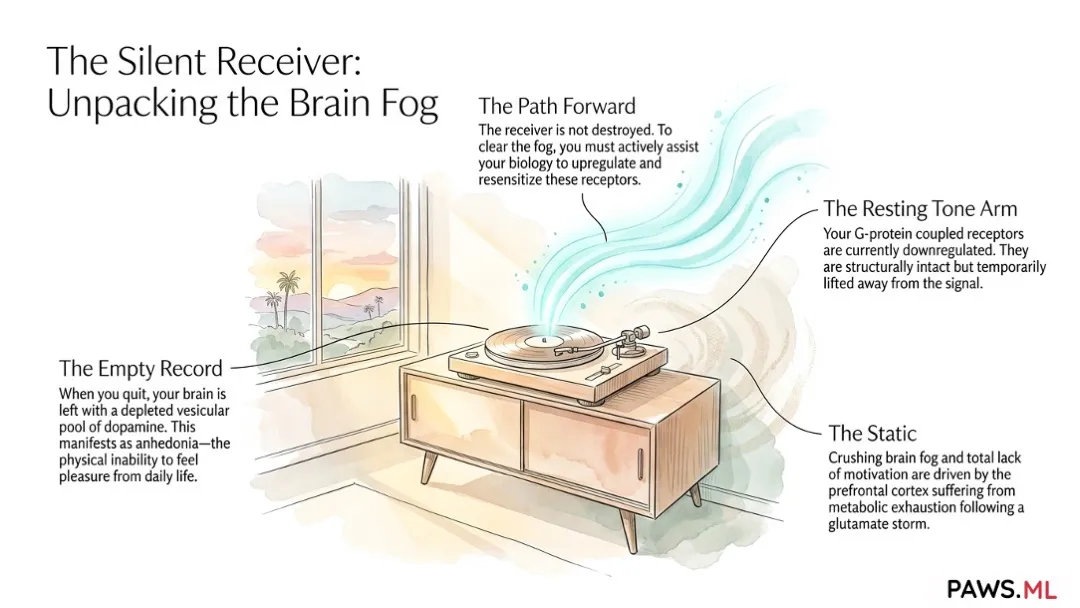
The clinical picture of this neurological deficit manifests in a distinct cluster of symptoms commonly experienced after acute withdrawal:
Anhedonia: A complete inability to feel pleasure from natural, everyday stimuli.
Brain Fog: Severe cognitive impairment, memory loss, and “decision fatigue” that makes even basic tasks feel insurmountable.
Lack of Motivation: A heavy, crushing apathy driven by a misfiring reward system.
It’s not permanent brain damage, it’s PAWS (post-acute withdrawal syndrome)
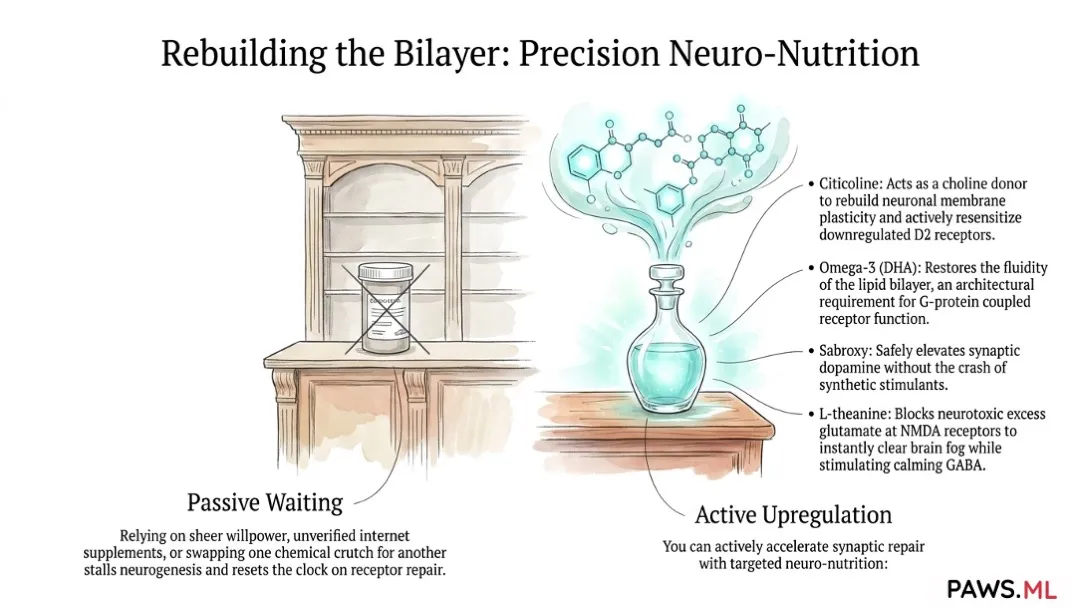
You are not suffering from irreversible brain damage; you are experiencing Post-Acute Withdrawal Syndrome (PAWS). During active addiction, your brain was flooded with unnaturally high levels of dopamine. To protect itself from this neurotoxic overload, the brain initiated a process called downregulation. It actively desensitized and internalized its D2 dopamine receptors—a process heavily mediated by the interaction of the receptor’s intracellular loop with β-arrestin-2.
When you quit, the brain is left in a state of chemical deficiency with a depleted vesicular pool of dopamine. Furthermore, your prefrontal cortex—the executive command center responsible for planning and willpower—is experiencing metabolic exhaustion following periods of glutamate excitotoxicity. In simple terms: your brain is not permanently damaged; it has essentially put itself into a protective “energy-saving mode” to heal. Clinical neuroimaging shows that these structural deficits are functionally reversible over time through neuroplasticity.
How to upregulate dopamine receptors and clear the “brain fog”
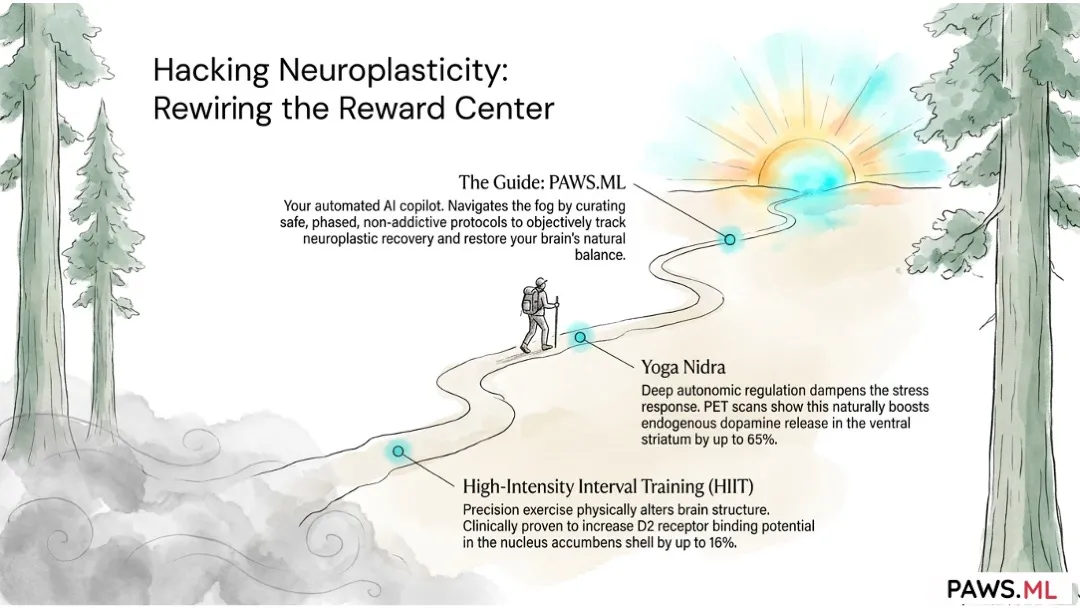
You do not have to passively wait months or years for the “brain fog” to lift. You have the power to actively accelerate this rewiring process. PAWS ML is your dedicated AI recovery agent designed to map out a scientifically validated dopamine restoration protocol, replacing the need for expensive neurohacker consultations. Our AI creates a highly personalized roadmap to safely upregulate your receptors using evidence-based interventions:
Citicoline, sabroxy & omega-3 for dopamine recovery
Targeted Nutraceutical Support: PAWS ML identifies specific supplements tailored to repair your neural pathways. For instance, Citicoline acts as a choline donor to rebuild neuronal membrane plasticity and resensitize D2 receptors. Omega-3 fatty acids (DHA) ensure the fluidity of the lipid bilayer, which is critical for G-protein coupled receptor function and suppressing neuroinflammation. To safely elevate synaptic dopamine, Sabroxy (an extract of Oroxylum indicum) functions as a natural dopamine reuptake inhibitor (DRI) without the side effects of synthetic stimulants. Finally, L-theanine blocks neurotoxic excess glutamate at NMDA receptors, lifting the “brain fog” and stimulating GABA for a calm, focused mind.
HIIT and yoga nidra for natural dopamine repair
Behavioral Activation: The AI prescribes targeted lifestyle interventions that physically alter brain structure. High-Intensity Interval Training (HIIT) is clinically proven to significantly increase D2 receptor binding potential in the brain’s reward center (the nucleus accumbens shell) by up to 16%, drastically reducing impulsivity. Additionally, specific meditative practices (like Yoga Nidra) dampen the stress response and have been shown in PET scans to naturally boost endogenous dopamine release in the ventral striatum by up to 65%.
With PAWS ML, you aren’t just surviving sobriety—you are actively hacking your neurobiology to reclaim your joy and restore your brain’s natural balance.
FAQ: Healing your brain and dopamine receptors after addiction
Did I permanently damage my brain from drugs or alcohol? No, it is highly unlikely that you permanently damaged your brain. The feelings of emotional numbness, memory issues, and apathy you are experiencing are symptoms of Post-Acute Withdrawal Syndrome (PAWS). Your brain has intentionally downregulated (reduced) its dopamine receptors to protect itself from neurotoxic overload. Through a process called neuroplasticity, these structural deficits are functionally reversible over time.
How long does brain fog last after quitting addictions? Brain fog can last anywhere from a few weeks to several months after quitting, depending on the substance and the duration of your addiction. This cognitive impairment happens because your prefrontal cortex is experiencing metabolic exhaustion and your dopamine levels are depleted. You can actively accelerate the clearing of brain fog using targeted nutraceuticals (like L-theanine and Citicoline) and behavioral interventions.
How do I naturally upregulate my dopamine receptors? You can safely upregulate (repair and resensitize) your dopamine D2 receptors by combining Behavioral Activation and targeted supplements. High-Intensity Interval Training (HIIT) and deep meditative practices like Yoga Nidra have been clinically proven to boost dopamine receptor density. Additionally, using specific neuro-nutrients like Sabroxy, Omega-3 (DHA), and Citicoline—as recommended by AI agents like PAWS ML—can help rebuild neuronal pathways and restore your ability to feel pleasure.
If you are currently experiencing the challenges of Persistent post-use symptoms, return to our main page to explore how our AI recovery assistant can help stabilize your neurochemistry.