Pink cloud crash: Sudden depression after 1 month sober
Pink cloud crash: Why sudden depression hits after 1 month sober
The sobriety honeymoon is over: Leaving the pink cloud behind
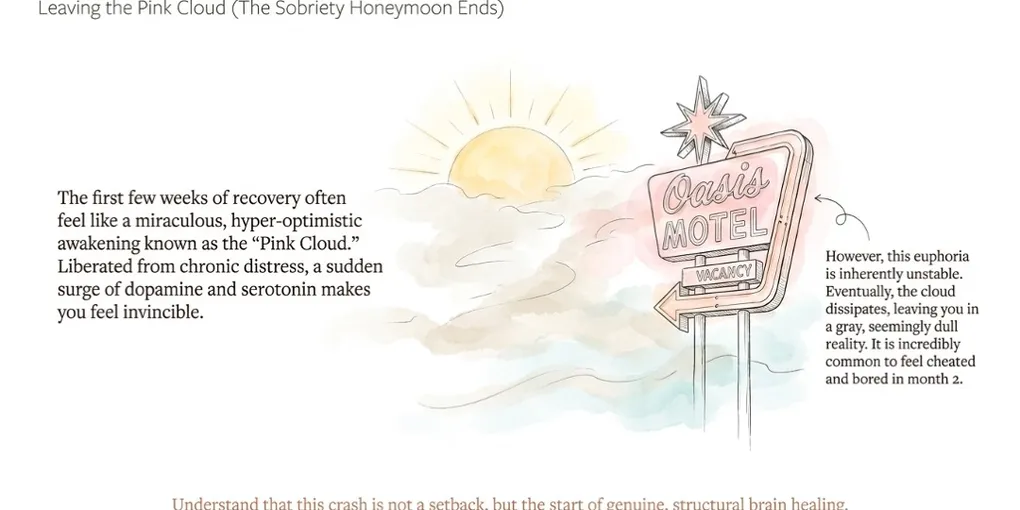
The first few weeks of recovery often feel like a miraculous awakening. You likely experienced a highly optimistic emotional state known within clinical communities as the “Pink Cloud” or the “honeymoon phase” of early sobriety. Because your brain was suddenly liberated from the chronic distress, hypervigilance, and cognitive impairment of active addiction, you may have felt a profound sense of relief and invincibility. During this time, the rapid replenishment of dopamine and serotonin generates a biochemical “natural high,” making you feel like a superhero. However, this hyper-reactive transition state is inherently unstable. Eventually, the sobriety euphoria is gone, the cloud dissipates, and you inevitably wake up to a gray, seemingly dull reality where the initial excitement has vanished.
Anhedonia & boredom in month 2: Why you lost motivation to be sober
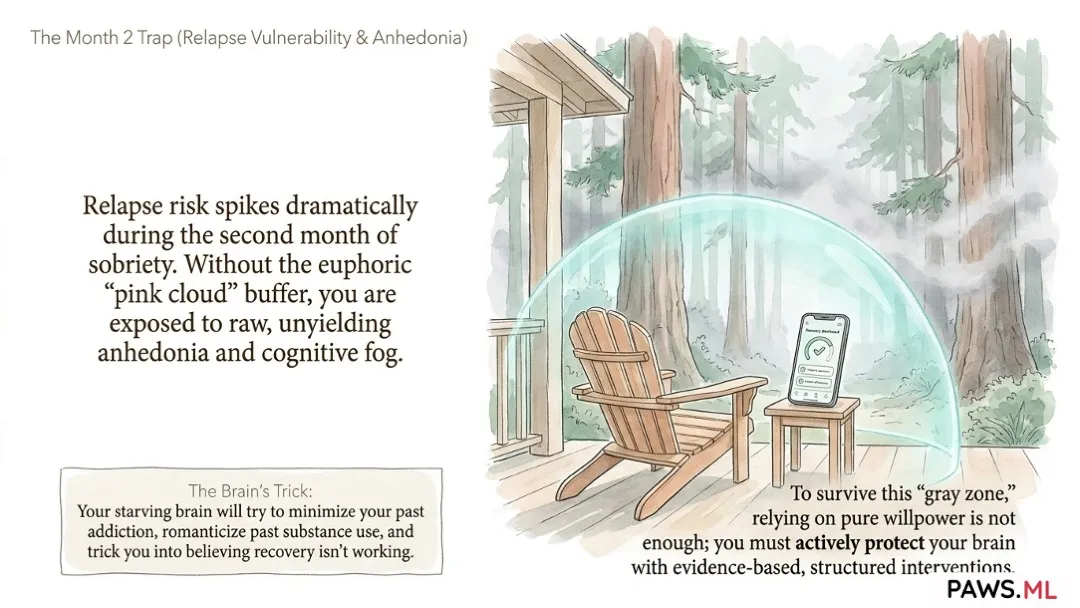
As the emotional high fades, a sudden and severe crash often takes its place. You may start to feel cheated, experiencing a loss of meaning in your recovery journey, accompanied by the dangerous thought: “Why do this if I am just bored?” This is the onset of profound anhedonia—the clinical inability to experience pleasure from natural, everyday rewards. During this crash, it is incredibly common to suffer from lethargy, cognitive fog, persistent anxiety, and severe mood lability. In this gray zone, you may find that you have lost motivation to be sober. Your brain might try to minimize the severity of your addiction, romanticize past substance use, and trick you into believing that the rigorous effort of recovery is no longer worth it.
From pink cloud to PAWS: The science behind the post-30-day crash
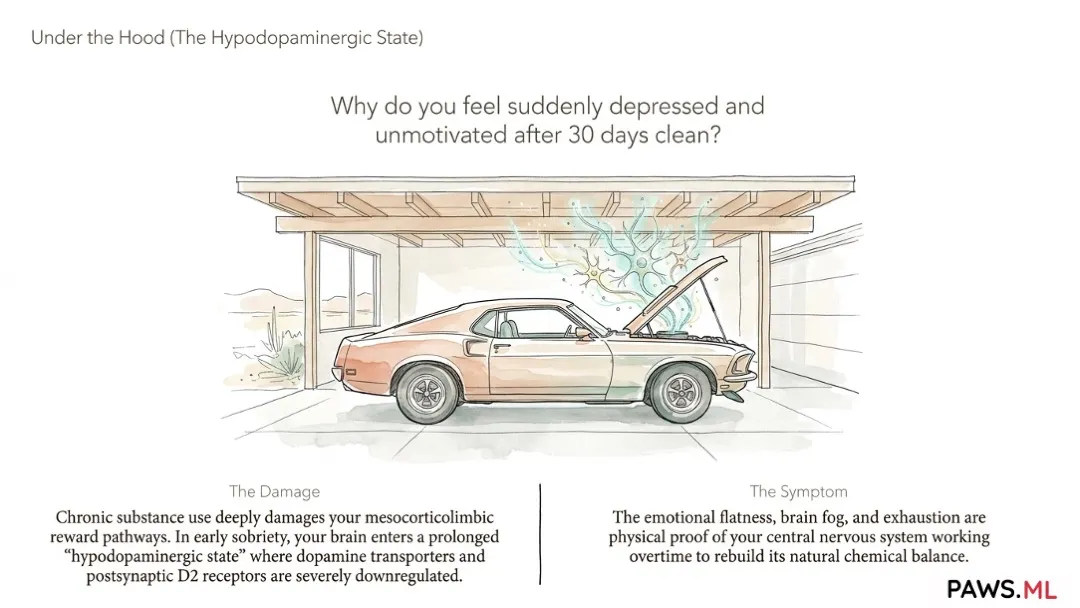
Understanding the pink cloud addiction phenomenon is critical because its disappearance marks a predictable neurological shift into Post-Acute Withdrawal Syndrome (PAWS). While this sudden depression after one month sober feels like a massive step backward, it is actually a definitive sign that genuine, structural brain healing has begun.
Chronic substance abuse severely damages your mesocorticolimbic dopamine system. When you stop using, your brain compensates by entering a prolonged “hypodopaminergic state”. Your dopamine transporters and postsynaptic receptors (particularly the D2 subtype) have been depleted and require substantial time to regenerate and upregulate. The emotional flatness and exhaustion you feel are simply evidence of your central nervous system working overtime to restore its natural physiological homeostasis without the presence of artificial chemicals. Because true neuroplastic recovery is a slow process, PAWS symptoms naturally fluctuate in waves and can persist anywhere from six months to two years.
How to prevent month 2 relapse: Surviving the “gray zone” with AI support
The transition from the Pink Cloud into PAWS creates a highly dangerous window of elevated relapse vulnerability. Without the euphoric buffer, many individuals experience a relapse in the second month simply to escape the anhedonia and negative affect. This is exactly when structured support becomes a biological necessity.
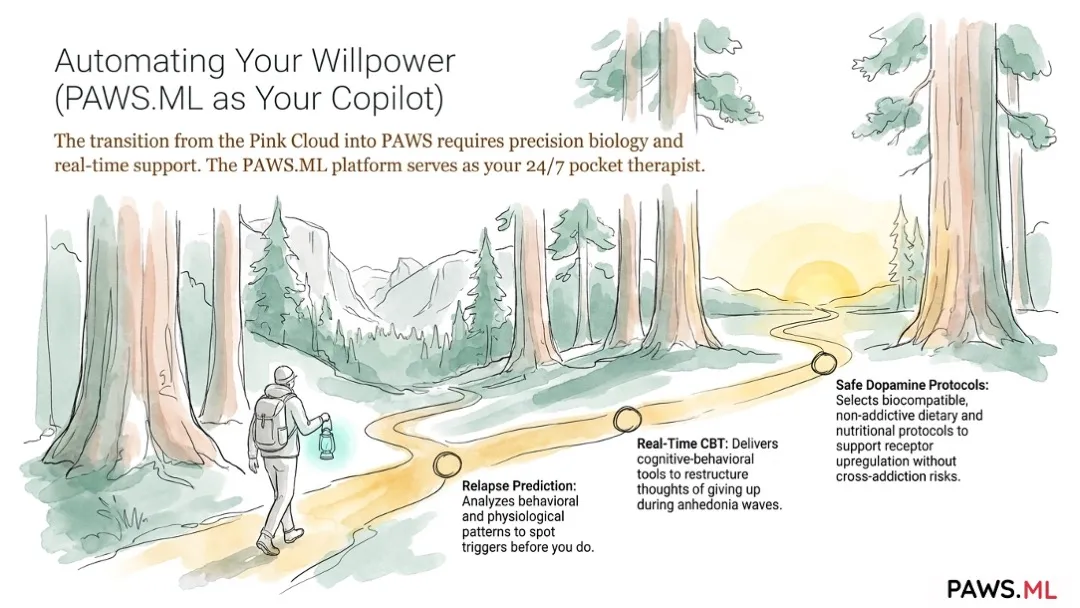
Our PAWS ML AI agent is designed to function as your 24/7 pocket psychotherapist, specifically engineered to guide you through this critical transition. Using advanced AI-driven algorithms, the app recognizes the end of the “pink cloud” crisis by analyzing your behavioral and physiological patterns to predict potential relapse triggers in real-time. PAWS ML provides immediate, evidence-based cognitive-behavioral tools to help you manage emotional dysregulation and restructure the cognitive distortions that tell you to give up.
Furthermore, because neurotransmitter restoration requires proper raw materials, PAWS ML actively helps correct your diet. The agent recommends specific nutritional interventions—such as tyrosine-rich foods and omega-3 fatty acids—that are scientifically proven to accelerate dopamine synthesis and repair receptor sensitivity. By providing on-demand cognitive strategies and biological stabilization, PAWS ML equips you with the exact tools you need to survive the “gray zone,” outlast your cravings, and build sustainable, long-term resilience.
FAQ: Pink cloud syndrome and depression after 1 month sober
Why do I feel suddenly depressed after 1 month sober? Answer: Experiencing sudden depression around the 30-day sober mark usually indicates the end of the “Pink Cloud” phase and the onset of Post-Acute Withdrawal Syndrome (PAWS). As the initial surge of dopamine and euphoria fades, your brain enters a temporary hypodopaminergic state where D2 receptors are downregulated. This emotional crash is a normal biological sign that your central nervous system is actively working to reset its dopamine balance.
What is the “pink cloud crash” in addiction recovery? Answer: The “pink cloud crash” is the dramatic shift from the euphoric, hyper-optimistic high of early sobriety (the Pink Cloud) into a state of emotional flatness, lethargy, and anhedonia. It typically happens at the end of the first month clean. During this crash, your brain can no longer produce artificial dopamine rushes and struggles to process natural pleasure, making everyday life feel dull and gray until neuroplastic healing occurs.
Why is the risk of relapse so high in the second month of sobriety? Answer: Relapse risk spikes during the second month of sobriety because the euphoric “pink cloud” buffer disappears, leaving you exposed to severe anhedonia, boredom, and brain fog. Without proper support, your brain tries to escape this “gray zone” by romanticizing past substance use and tricking you into believing recovery isn’t working. Tools like the PAWS ML AI agent provide CBT interventions and dopamine-supporting dietary protocols right when this vulnerability is highest.
If you are currently experiencing the challenges of Persistent post-use symptoms, return to our main page to explore how our AI recovery assistant can help stabilize your neurochemistry.