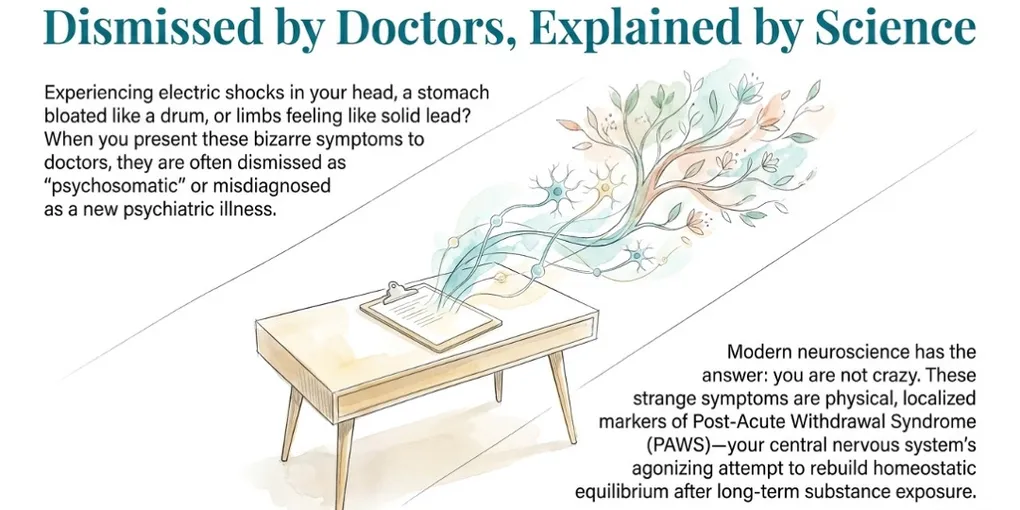
Brain zaps, benzo belly & leaden fatigue: The bizarre PAWS symptoms doctors dismiss (and how AI fixes them)
Experiencing electric shocks in head withdrawal episodes, a stomach bloated to the size of a drum, or a body that feels as though it is filled with solid lead—if you have frantically googled these terms, you are likely already in a state of desperation. These are not mere side effects; they are profound neurological disruptions that can turn recovery into a nightmare.
Bizarre withdrawal symptoms explained: What you need to know
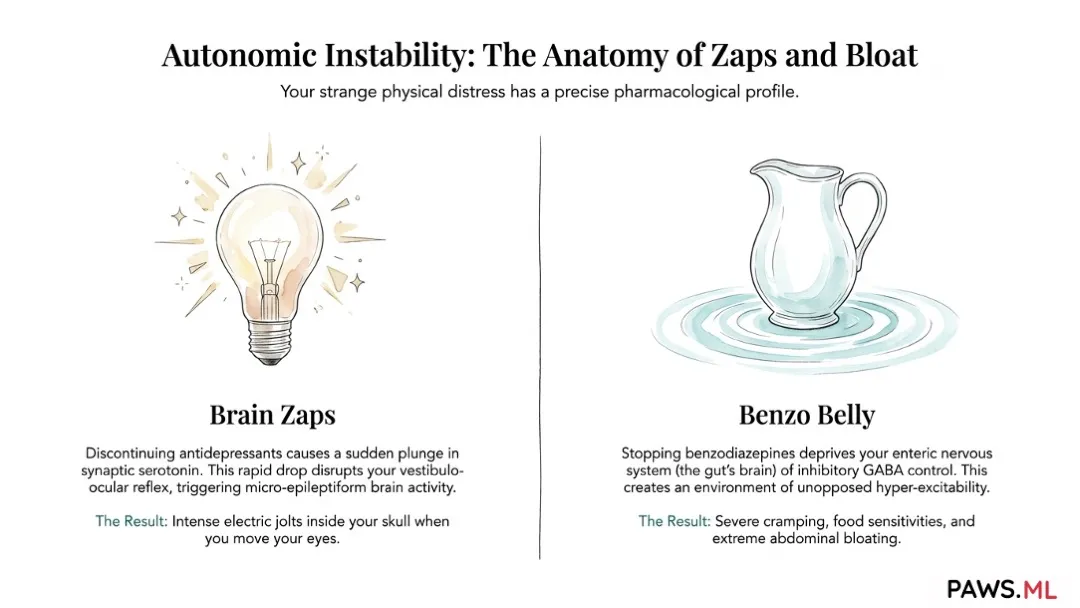
A detailed breakdown reveals the terrifying nature of these unusual withdrawal symptoms, which frequently unite thousands of patients on specialized peer-support forums:
Brain zaps: Antidepressant withdrawal and the vestibulo-ocular reflex
Typically emerging after the discontinuation of SSRI or SNRI antidepressants, these are described as sudden, intense jolts of electricity inside the skull. Often triggered by lateral eye movements or sudden head turns, they can be accompanied by vertigo, disorientation, and brief lapses in consciousness. A common question online is brain zaps how long they last; while they typically resolve in weeks, some individuals endure these disabling sensory discharges for months or even years.
Benzo belly bloating: GABA depletion in the enteric nervous system
Following the cessation of benzodiazepines or other GABAergic drugs, patients often suffer from severe gastrointestinal distress. The hallmark benzo belly bloating can be so extreme that patients appear pregnant, accompanied by severe cramping, alternating constipation and diarrhea, and newly developed food sensitivities.
Leaden fatigue: Dopamine and VMAT2 depletion after stimulants
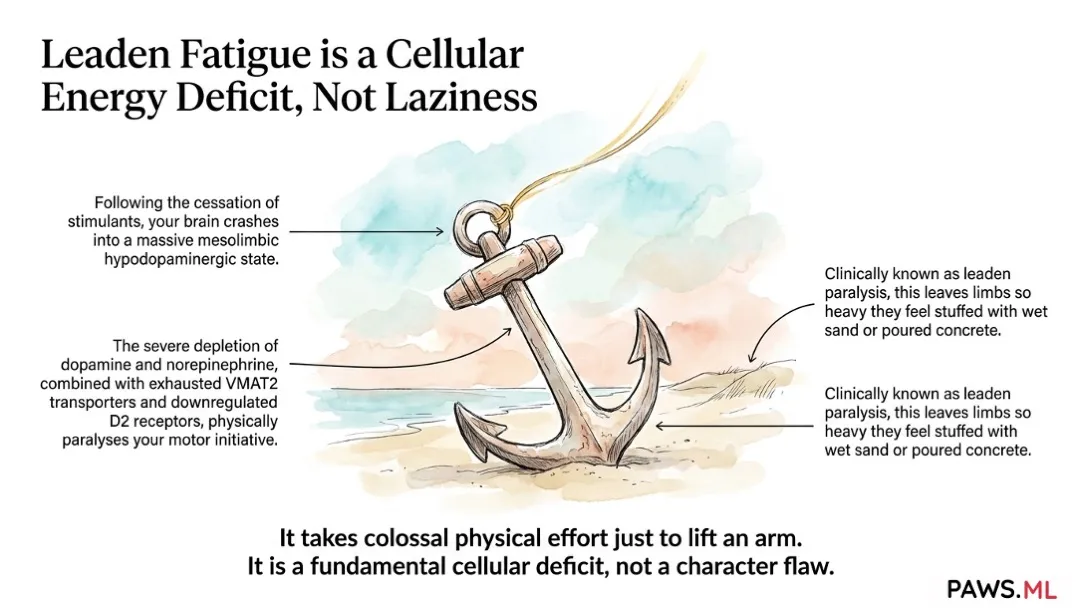
Formally known as leaden paralysis, this is a state of overwhelming physical heaviness and profound adynamia. While often associated with atypical depression, it is a fundamental marker of leaden fatigue after stimulants (such as amphetamines, meth, or cocaine). Performing even the simplest voluntary movement requires colossal physical and mental effort.
Medical gaslighting and PAWS: Why doctors misdiagnose withdrawal
When presented with these complaints, doctors often throw up their hands, minimize the experience, or mistakenly diagnose a new psychiatric illness. However, modern neuroscience already knows the answer: these disparate and bizarre terms are local manifestations of a massive systemic failure known as Post-Acute Withdrawal Syndrome (PAWS). Far from being psychosomatic, PAWS represents the brain’s protracted and agonizing attempt to reestablish neurochemical equilibrium after long-term substance exposure. The continuous presence of a drug forces the nervous system into homeostatic adaptation, leading to profound synaptic deadaptation, severe receptor downregulation, and persistent dysregulation of the hypothalamic-pituitary-adrenal (HPA) stress axis.
Precision recovery: How the PAWS ML AI agent targets receptor deficits
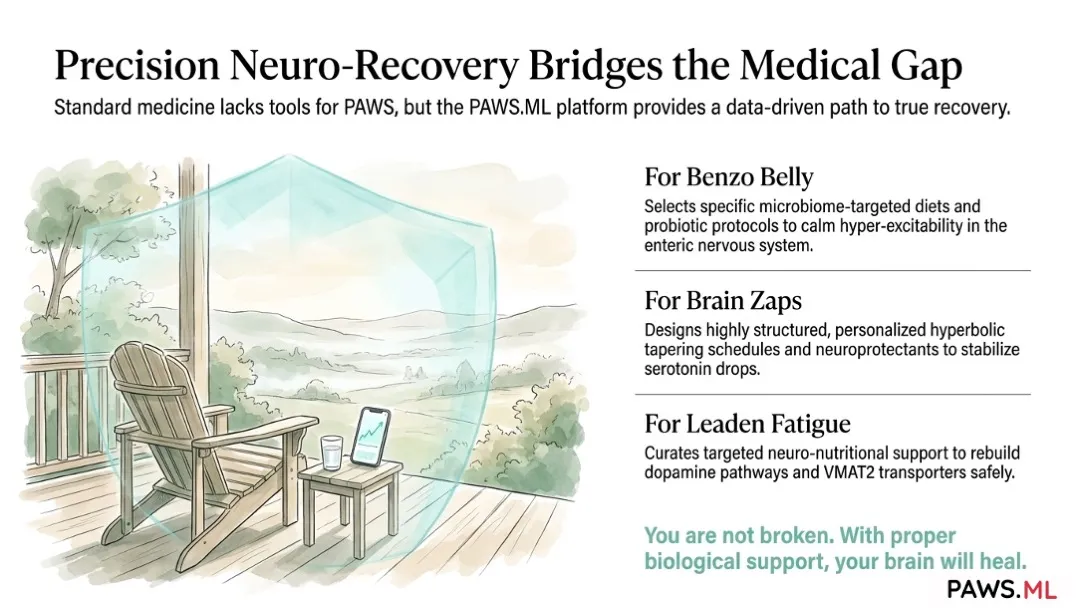
Every substance strikes specific neurobiological targets. Antidepressant withdrawal causes a sudden plunge in synaptic serotonin, disrupting the vestibulo-ocular reflex and triggering the micro-epileptiform activity of brain zaps. Benzodiazepine withdrawal leaves the enteric nervous system (ENS) and peripheral mitochondrial TSPO receptors completely deprived of inhibitory GABA control, sparking the gastrointestinal chaos of benzo belly. Stimulant withdrawal triggers a massive mesolimbic hypodopaminergic state—depleting dopamine and norepinephrine, downregulating D2 receptors, and exhausting VMAT2 transporters, which paralyzes motor initiative.
The PAWS ML AI agent understands these precise pharmacological profiles. By recognizing the exact receptor deficits, the AI agent provides highly specialized, targeted support that remains largely unavailable in standard clinical settings. Depending on the root cause, PAWS ML will select a highly specific microbiome-targeted diet and probiotic protocol to soothe enteric hyper-excitability in benzo belly, or recommend tailored neuroprotectants and hyperbolic tapering schedules to stabilize synaptic networks and mitigate brain zaps. Through precision guidance, PAWS ML bridges the gap between suffering and science, offering a data-driven path to true recovery.
FAQ: Brain zaps, benzo belly, and leaden fatigue
What causes brain zaps when stopping antidepressants? Brain zaps are sudden, electric shock-like sensations in the head, often triggered by moving your eyes. They are caused by a sudden plunge in synaptic serotonin after stopping SSRI or SNRI medications. This rapid drop disrupts the vestibulo-ocular reflex and triggers micro-epileptiform activity in the brain. The PAWS ML AI agent can help mitigate these symptoms by recommending tailored neuroprotectants and highly structured hyperbolic tapering schedules.
How long does benzo belly last and what causes it? “Benzo belly” is characterized by extreme bloating, cramping, and gastrointestinal distress following the cessation of benzodiazepines. It occurs because the gut (Enteric Nervous System) and peripheral mitochondrial TSPO receptors are suddenly deprived of inhibitory GABA control, leading to severe hyper-excitability. While it can take months to heal, specific microbiome-targeted diets and probiotic protocols recommended by AI can significantly soothe the gut.
Why do my limbs feel so heavy after quitting stimulants? This sensation is clinically known as “leaden fatigue” or leaden paralysis. When you quit stimulants (like amphetamines or cocaine), your brain enters a massive mesolimbic hypodopaminergic state. This severe depletion of dopamine and norepinephrine, combined with exhausted VMAT2 transporters, literally paralyzes motor initiative, making even simple movements feel like lifting lead. Precision neuro-nutritional support is required to rebuild these dopamine pathways safely.
If you are currently experiencing the challenges of Protracted abstinence, return to our main page to explore how our AI recovery assistant can help stabilize your neurochemistry.