Biohacking nicotine withdrawal: How to restore dopamine and quit with AI
Introduction
Tobacco smoke doesn’t just harm your lungs. It acts as a powerful toxin that literally “washes out” essential vitamins and minerals from your body, causing it to rust from the inside out (a process doctors call oxidative stress).
The numbers speak for themselves: smokers have a 6.7 times higher risk of developing a severe magnesium deficiency, and a 5 times higher risk of zinc deficiency. Elevated levels of toxic cyanides from tobacco smoke block the absorption of vitamin B12, leading to chronic fatigue and “brain fog.” Furthermore, smokers require a massive dose of vitamin C simply to patch up damaged cells daily and maintain basic immunity. A smoker’s body is like a house constantly fighting a fire, burning through all internal resources.
The neurobiology of quitting smoking: Why nicotine withdrawal happens
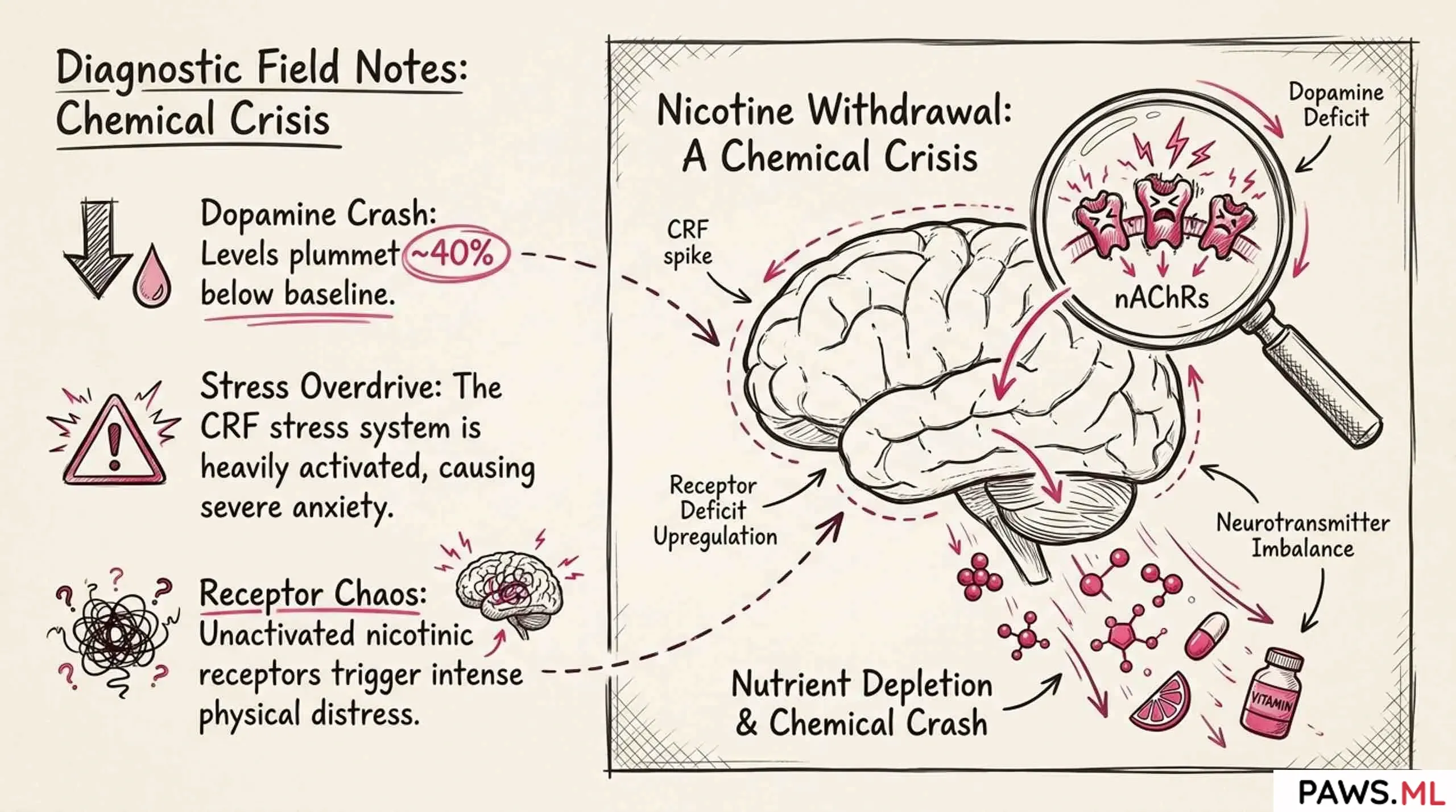
A severe nutrient deficiency overlaps with a massive restructuring of the brain. With regular smoking, nicotine constantly hits the receptors, causing an unnaturally high release of “happiness hormones” — dopamine and serotonin. The brain, attempting to cope with this hyperstimulation, creates more and more receptors to “process” the nicotine (this process is called upregulation). Imagine the brain growing millions of new “mouths” that constantly demand feeding.
As soon as you quit smoking, your blood nicotine level drops by half within just 2 hours. Millions of “hungry” receptors do not receive their usual dose and trigger a chain reaction:
- Dopamine Crash (Bankruptcy): Dopamine levels plummet to 40% below normal. This is not just sadness; it is a genuine biological crisis. This crash is exactly why the world seems gray, nothing brings joy, and the urge to smoke becomes unbearable.
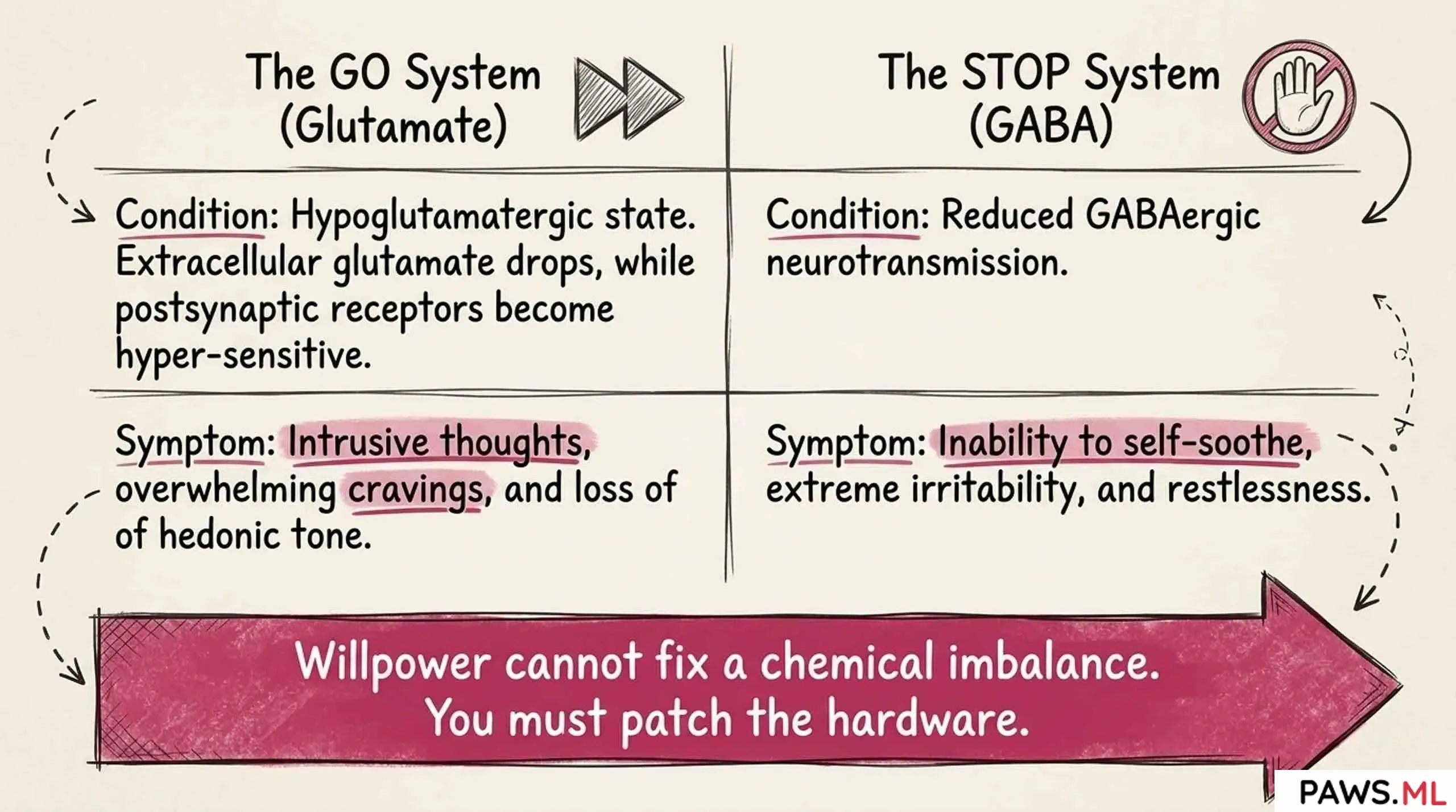
- Glutamate Storm (Engine Overheating): An excess of glutamate—a neurotransmitter responsible for excitation—accumulates in the brain. Without the usual control, brain cells become overexcited. This manifests as off-the-charts, unprovoked anxiety, tremors, and spasms.
- Attack on Remaining Joy: In a panic, the body begins to produce a special enzyme (MAO-A) which, like an aggressive cleaner, starts destroying the already tiny remnants of serotonin and dopamine in the brain.
Clearly, the Withdrawal Syndrome is not a whim or a lack of willpower. It is a deep physiological crisis. And this crisis can and must be treated—by replenishing neurotransmitter deficits and microelements, not just by trying to “tough it out” with gritted teeth.
Best supplements for nicotine withdrawal anxiety and cravings
Quitting smoking is an extreme stress. During this period, you don’t just need “vitamins for energy”; you need serious molecular support.
First and foremost, you must extinguish somatic (bodily) stress using antioxidants. For example, Vitamin C and Vitamin E will help patch damaged cells and protect blood vessels. But the real magic must happen in the central nervous system. So that the brain’s receptors, accustomed to the nicotine “whip,” don’t go crazy from its absence, they need the right amino acids:
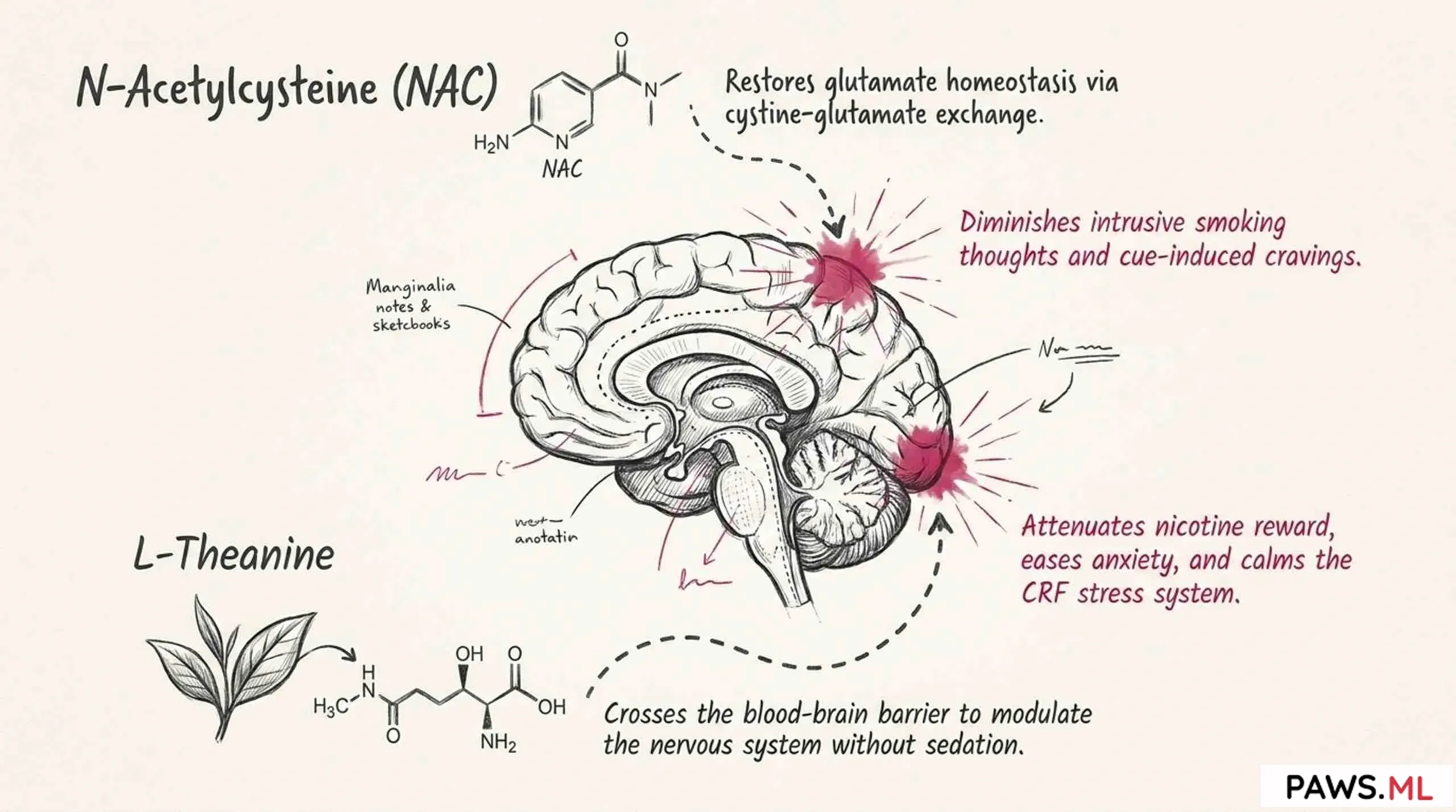
- Calming the “Glutamate Storm”: Magnesium and zinc ions act as a fire extinguisher for an overexcited brain. They reduce anxiety and spasms. The amino acid L-theanine gently relaxes the nervous system, generating calm alpha waves in the brain (like during meditation).
- Restoring Sleep and Peace: The supplement 5-HTP easily crosses into the brain and directly converts into serotonin, helping to relieve bodily tension and regulate sleep.
- Returning Motivation: The amino acid L-tyrosine acts as a direct building block for producing your own dopamine, returning your energy and capacity to enjoy life.
Why multivitamins don’t work for nicotine withdrawal
It might seem like buying an “A to Z” multivitamin bottle solves the problem. But when withdrawing from nicotine, this won’t work for three reasons:
- Empty Formulation: No basic multivitamin contains the specific neuro-amino acids (L-theanine, 5-HTP, L-tyrosine, NAC) in effective, working dosages.
- Strict Brain Face-Control: For magnesium to calm your nerves, it must pass the blood-brain barrier (the brain’s internal filter). Cheap pharmacy magnesium oxide simply won’t be let in. You need specialized forms—for example, magnesium L-threonate or bisglycinate.
- Ignition Keys Needed (Cofactors): For amino acids to turn into happiness hormones, they need Vitamin B6. But not the regular kind—they need the active form (P-5-P), without which the “engine” simply won’t start.
The timeline of dopamine recovery after quitting smoking
The brain’s architecture during nicotine withdrawal changes every single day. Taking the exact same pills for a whole month is a critical mistake. You wouldn’t water a plant that is already flooded, or throw fertilizer into a burning forest, would you?
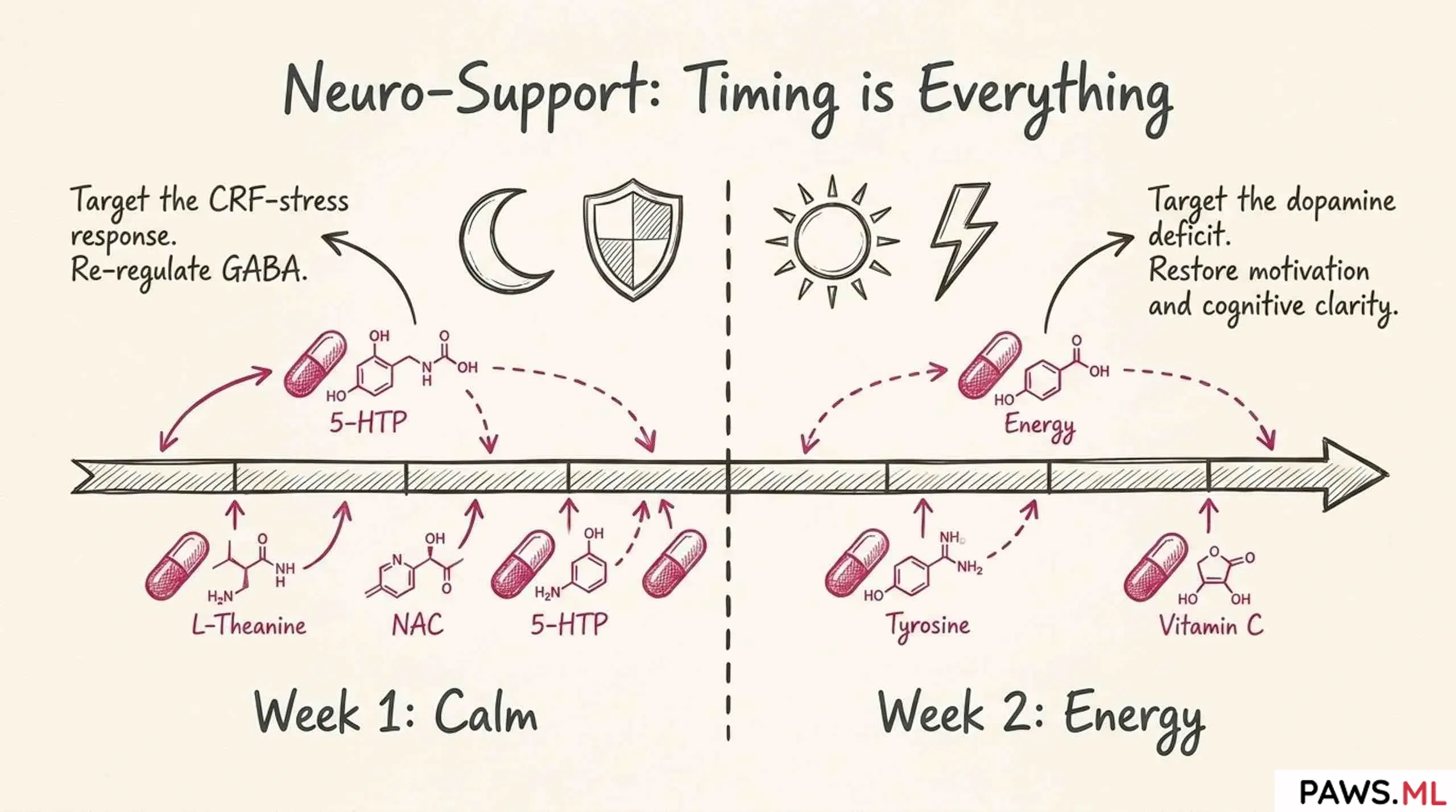
- Phase 1: Acute Crisis & Glutamate Storm (Month 1): Dopamine is severely depleted, cortisol is elevated, and excessive glutamate excitation causes acute anxiety and sleep disturbances. During this initial stabilization phase, heavy dopamine precursors (like L-tyrosine) are avoided to prevent triggering panic attacks under high stress. The protocol focuses on neuro-protection and calming the nervous system: magnesium (bisglycinate or L-threonate), L-theanine, zinc, and 5-HTP with EGCG for sleep architecture and anxiety relief.
- Phase 2: Protracted PAWS & Dopamine Bankruptcy (Months 2 to 3+): As acute physical symptoms recede, the prolonged post-acute withdrawal phase (PAWS) sets in. Receptor down-regulation manifests as deep anhedonia, severe brain fog, apathy, and sudden craving waves. The protocol shifts dynamically: calming agents are adjusted, L-tyrosine enters the stack as a building block for native dopamine synthesis, and N-acetylcysteine (NAC) along with active B-complex cofactors (P-5-P, B9, B12) are introduced to suppress glutamate spikes and support neuroplasticity.
- Phase 3: Wave Stabilization & Synaptic Remodeling (Months 4 to 12+): Neuroplastic recovery progresses in a non-linear “windows and waves” pattern over months. Nutritional and AI tracking protocols continue to adapt to prevent relapse during unexpected stress-induced waves as D2/D3 dopamine receptor density gradually renormalizes.
AI personalized supplements for smoking cessation
The question arises: how can an ordinary person track these subtle phases and switch vitamin bottles at the exact right time? This is exactly where technology comes to the rescue.
AI algorithms (such as the PAWS ML application) act as your personal doctor in your pocket. Using regular check-ins, the AI collects data on your mood, triggers, and stress levels. It calculates with mathematical precision exactly which phase of neurobiological recovery you are in today, and dictates exactly what you need to take right now, and in what dosage.
AI as an “x-ray” of your state (therapy through understanding)
The main enemy of someone quitting smoking is the fear of their own symptoms (anxiety sensitivity). When your heart pounds and you’re short of breath, you think: “I feel terrible, I can’t handle this, I need to smoke right now so I don’t die.”
The AI assistant breaks this fear by acting as a translator from the language of the body to the language of logic. Let’s say on day three you log an attack of panic and irritability in the app. The AI doesn’t write a cliché “hang in there, you can do it.”
It reports: “Right now, your dopamine level has dropped by 40%, and stress hormones are peaking because your receptors lack stimulation. The fact that you are angry is normal bodily physics, not your weakness. This peak will pass in one day. Take L-theanine and magnesium to block the excess glutamate and calm down.”
When you understand that your pain is not a catastrophe, but simply a receptor “reboot” process, the anxiety recedes. You learn that an acute physiological craving lasts only 3–5 minutes. Armed with this knowledge, you stop fighting yourself blindly. The process becomes predictable.
The gamification of health: From suffering to a fascinating quest
Quitting nicotine should no longer be associated with torture. The neurobiological approach turns it into a fascinating biohacking journey—watching your body come back to life.
With modern gadgets (smartwatches) and AI applications, you can see your progress in real-time. Within just 20 minutes, your heart rate normalizes. After 12 hours, your blood is cleared of carbon monoxide. After 48 hours, your taste buds revive, and after 3 months, your brain’s dopamine system is completely restored. Interactive trackers, reward systems, and calculating saved money give you back a sense of total control. You are no longer a victim of addiction; you are an explorer of your own health.
The synergy of biology and technology
The traditional “cold turkey” approach of quitting relies on willpower and works in only 3–5% of cases. But when we combine physiology and AI, the statistics change dramatically.
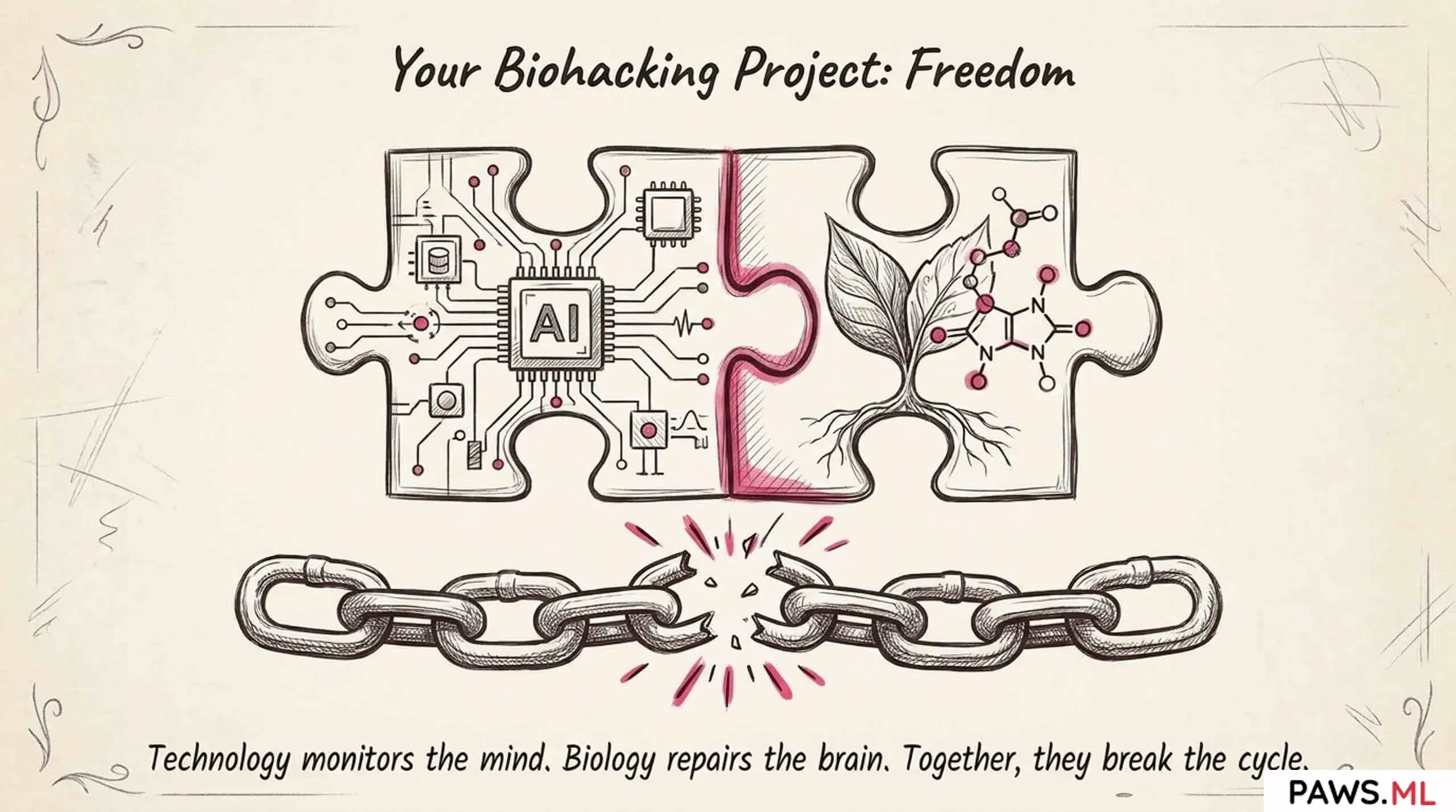
By eliminating the main cause of relapses—the brain’s chemical starvation and the panic-inducing fear of symptoms—this method makes the quitting process exponentially easier. A “molecular shield” of correctly selected supplements extinguishes physical pain, while the AI guide adjusts the course in time and supports the psyche. The vast majority of users who apply this synergy part with cigarettes forever. Their brain restores its natural plasticity and the ability to enjoy life without artificial stimulants.
Stop treating quitting smoking as a deprivation. It’s time to turn it into the most successful upgrade project for your body. Arm yourself with the right supplement protocol, connect the PAWS ML smart neuro-assistant, and reprogram your brain for freedom, health, and inexhaustible energy!
FAQ: Frequently asked questions about the neurobiology of quitting smoking
How long does dopamine take to recover after quitting smoking?
The acute dopamine deficit (dopamine crash) lasts for the first 1-2 weeks. Full renormalization of dopamine and nicotinic receptor density in the brain takes from 1 to 3 months, depending on your smoking history and proper nutraceutical support (e.g., taking L-Tyrosine starting from the second week).
What is the glutamate storm quitting smoking?
It is a state of hyperarousal of the nervous system. Without nicotine, an excess of the excitatory neurotransmitter glutamate accumulates in the brain, causing acute anxiety, insomnia, and muscle spasms. Magnesium ions and the amino acid L-Theanine can help reduce this effect.
Do nootropics help quit smoking?
Yes, targeted amino acids and nootropics (L-Theanine, N-Acetylcysteine, 5-HTP) significantly ease withdrawal symptoms. However, their effectiveness directly depends on timing: what helps in the first days of quitting can be harmful in the third week. This is exactly why it’s recommended to use AI assistants to sequence your recovery phases.
If you are currently experiencing the challenges of Prolonged withdrawal syndrome, return to our main page to explore how our AI recovery assistant can help stabilize your neurochemistry.