Sudden cravings after a year: The "extinction burst" and how AI helps you urge surf
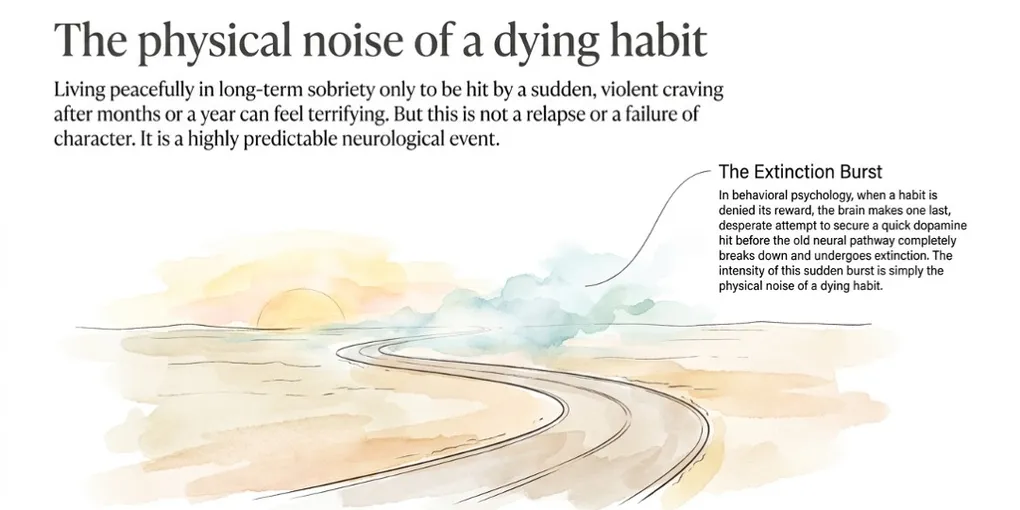
You were living peacefully and feeling in control of your recovery. Months, or perhaps even a year, have passed without a single lapse. Then, seemingly out of nowhere—triggered by the slightest stress at work or a fleeting memory—your brain suddenly screams, “I need a dose right now!”. This overwhelming and sudden urge to use after long abstinence can feel like a massive setback, but it is actually a highly predictable neurological phenomenon.
Late-stage cravings: Why the urge to relapse hits months or a year later
The symptomatology of this late-stage craving is intense and disruptive. It often manifests as obsessive thoughts about the substance, vivid using dreams, and profound irritability. You might find yourself engaged in intense internal bargaining, trying to convince yourself that “just one more time” won’t hurt, or that you can now safely control your consumption. These symptoms are not a sign of weak willpower; they are the hallmarks of a brain undergoing complex structural and chemical rewiring.
The neurobiology of an “extinction burst”: Your brain’s last cry for dopamine
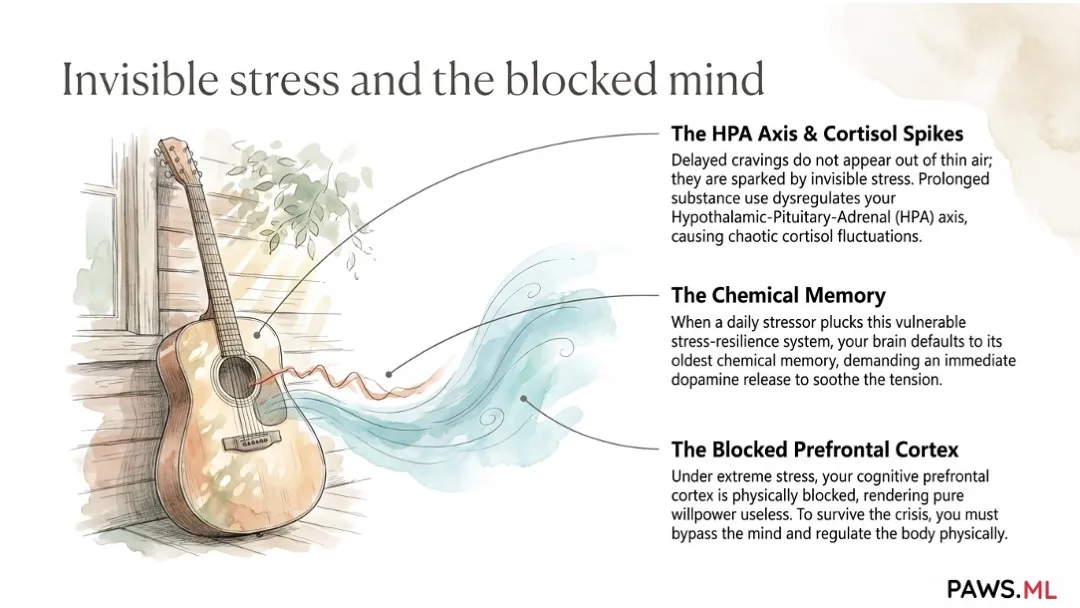
Neurobiology provides a clear explanation for these delayed cravings. Post-Acute Withdrawal Syndrome (PAWS) significantly disrupts the brain’s stress resilience mechanisms, particularly through the dysregulation of the hypothalamic-pituitary-adrenal (HPA) axis and cortisol levels. When your brain is deprived of the substance it once relied on for dopamine, it initiates a phenomenon known as an “extinction burst”. In behavioral psychology, an extinction burst is a sudden, temporary escalation in the frequency and intensity of a previously reinforced behavior when that reinforcement is abruptly removed. Simply put, it is the brain’s desperate, final attempt to secure a quick dopamine hit before the old, maladaptive neural pathways completely break down and undergo extinction. The intensity of this behavioral reaction is directly proportional to the gap between the brain’s expected dopamine reward and reality.
Automating willpower: How the PAWS ML AI agent guides you through “urge surfing”
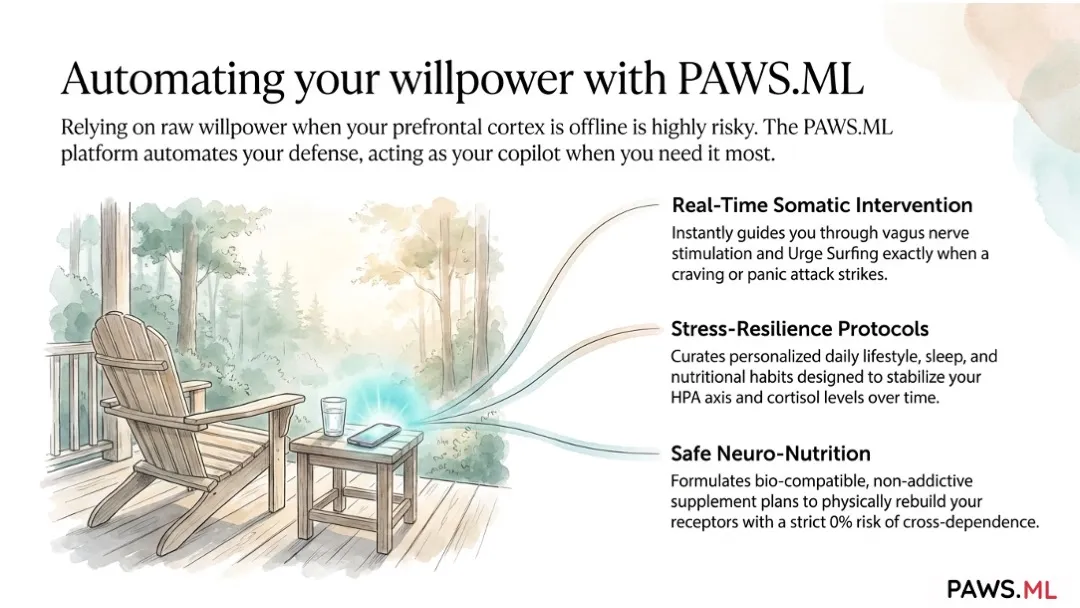
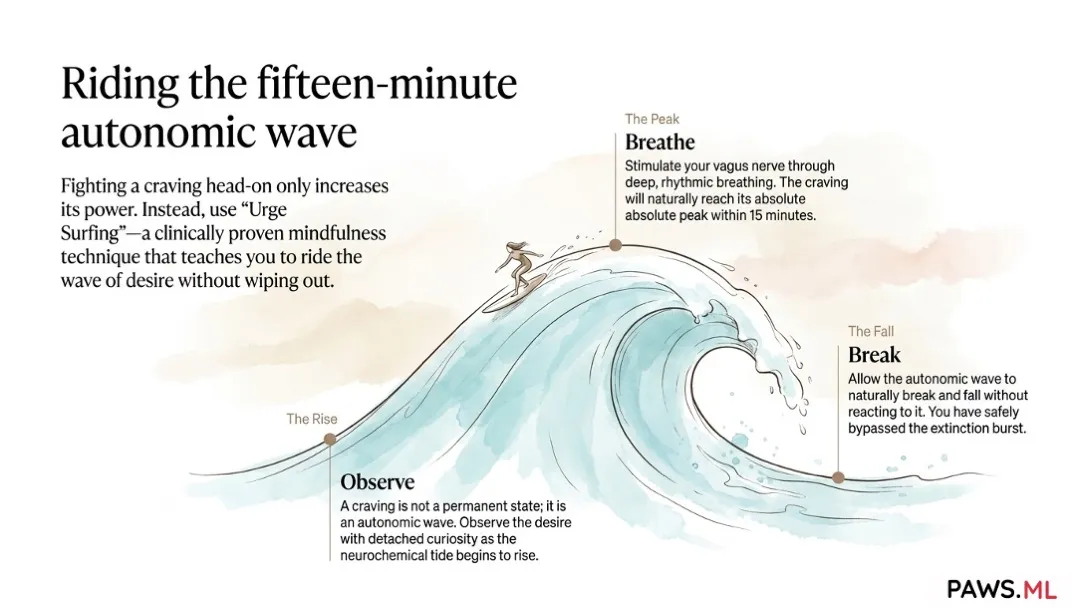
Relying solely on willpower during an extinction burst is dangerous, as stress inherently blocks the cognitive control centers of the prefrontal cortex. However, willpower can be automated. The PAWS ML AI agent is specifically trained to recognize the unique patterns of your psychological triggers. During a craving attack, the agent instantly intervenes by suggesting evidence-based attention-shifting techniques, such as “Urge Surfing”—a mindfulness practice that allows you to ride the wave of the craving without reacting—or vagus nerve stimulation through structured grounding and breathing exercises.
Long-term PAWS recovery: HPA axis regulation and cortisol management
On a long-term basis, the PAWS ML agent helps formulate a personalized “diet” of lifestyle habits, sleep hygiene, and nutritional support that strengthens the stress resilience of the cerebral cortex, ultimately helping you navigate PAWS and secure lasting recovery.
FAQ: Sudden cravings, extinction bursts, and urge surfing
Why do I have sudden cravings after a year of being clean or sober? Sudden, intense cravings after months or even a year of abstinence are common and are often driven by Post-Acute Withdrawal Syndrome (PAWS). When your brain encounters a stressor, the dysregulated HPA axis (which controls cortisol) triggers a neurobiological response. Because the old neural pathways for coping via substance use haven’t completely disappeared, the brain makes a desperate, sudden demand for dopamine, resulting in a fierce craving.
What is an extinction burst in addiction recovery? In behavioral psychology, an “extinction burst” is a sudden, temporary increase in the frequency and intensity of a behavior just before it finally dies out (extinguishes). When your brain realizes it is no longer getting the dopamine reward it used to rely on, it essentially throws a neurological “tantrum.” Recognizing that an intense craving is just an extinction burst—and not a sign of weakness—is a crucial step in maintaining long-term sobriety.
How does an AI agent help with Urge Surfing? Relying purely on willpower during an extinction burst is difficult because stress blocks the prefrontal cortex. The PAWS ML AI agent acts as a real-time intervention tool. When a craving hits, the AI immediately guides you through “Urge Surfing”—a mindfulness technique that teaches you to observe the craving like a wave without acting on it. Alongside vagus nerve stimulation exercises, the AI automates your coping strategy, ensuring you navigate the craving safely until it passes.
If you are currently experiencing the challenges of Protracted abstinence, return to our main page to explore how our AI recovery assistant can help stabilize your neurochemistry.