AI second opinion: How a multi-agent AI council distinguishes PAWS from psychiatric disorders
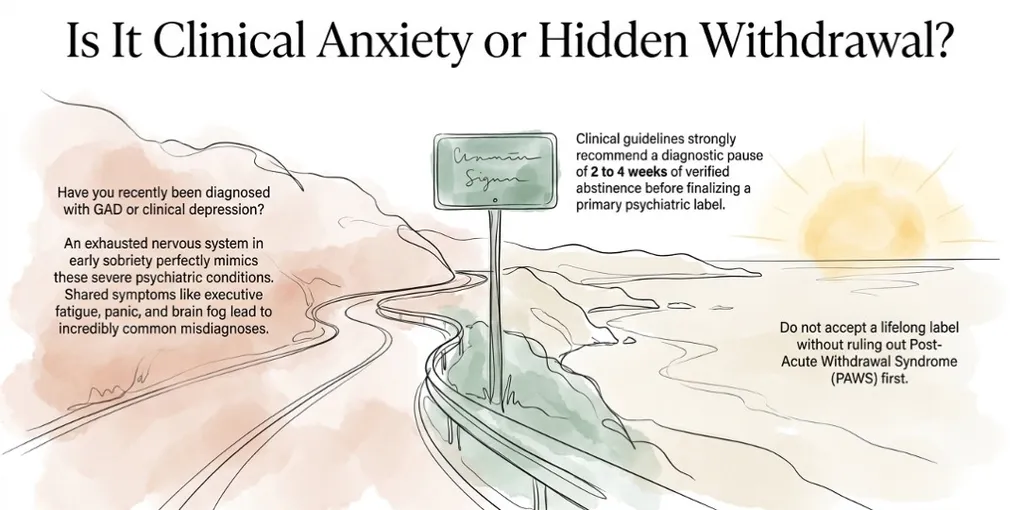
You recently went to a psychiatrist and received a diagnosis of Generalized Anxiety Disorder (GAD) or clinical depression. Yet, your intuition tells you that the real issue is tied to your recent decision to quit substances. You are not alone in this. In clinical practice, determining the difference between depression and withdrawal—or distinguishing a primary anxiety disorder from a substance-induced condition—is a significant diagnostic challenge. In the weeks following the cessation of drugs or alcohol, an exhausted nervous system can perfectly mimic severe psychiatric conditions. For this reason, clinical guidelines strongly recommend a diagnostic pause of 2 to 4 weeks of verified abstinence before officially diagnosing a primary psychiatric disorder.
The misdiagnosis trap: Why psychiatrists confuse PAWS with GAD
You may suddenly experience sharp panic attacks, social phobia, or hypochondria—symptoms you never had before you started using. Issues such as quitting alcohol panic attacks and sudden social isolation are prime examples of this phenomenon. According to the DSM-5, Substance-Induced Anxiety Disorder is characterized by severe anxiety or panic attacks that develop during or soon after substance intoxication or withdrawal. The physical manifestations—such as a racing heart, breathlessness, shakiness, and intense dread—can persist for weeks or even months after drug or alcohol use has stopped. It is critical to recognize anxiety as a withdrawal symptom rather than immediately accepting a lifelong psychiatric label.
Anatomy of a disguise: How GABA depletion mimics severe psychiatry
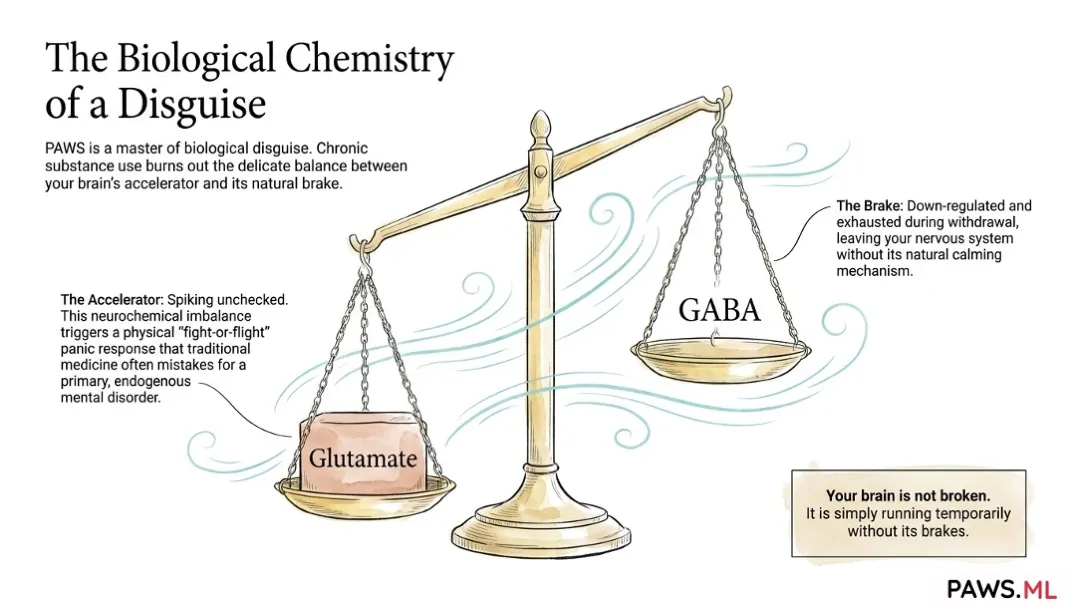
Post-Acute Withdrawal Syndrome (PAWS) is a master of disguise. How exactly does an exhausted nervous system imitate severe psychiatric diagnoses? The answer lies in the profound neuroadaptations that occur in the brain’s stress and reward systems, largely due to a failure in the GABA (gamma-aminobutyric acid) system. Chronic substance use alters the delicate balance between excitatory (glutamate) and inhibitory (GABA) neurotransmission.
During prolonged abstinence, a network in the brain known as the “extended amygdala” enters a state of allostatic overload. This leads to a hyperactive stress response driven by excessive Corticotropin-Releasing Factor (CRF) and noradrenaline. Simultaneously, GABA receptors become deeply desensitized. As a result, the prefrontal cortex loses its ability to properly dampen the brain’s panic signals. This profound neurotransmitter dysregulation perfectly mimics severe anxiety and clinical depression, making PAWS a hidden, biological driver behind your symptoms.
The multi-agent AI council: Deep symptom analysis and algorithmic recovery
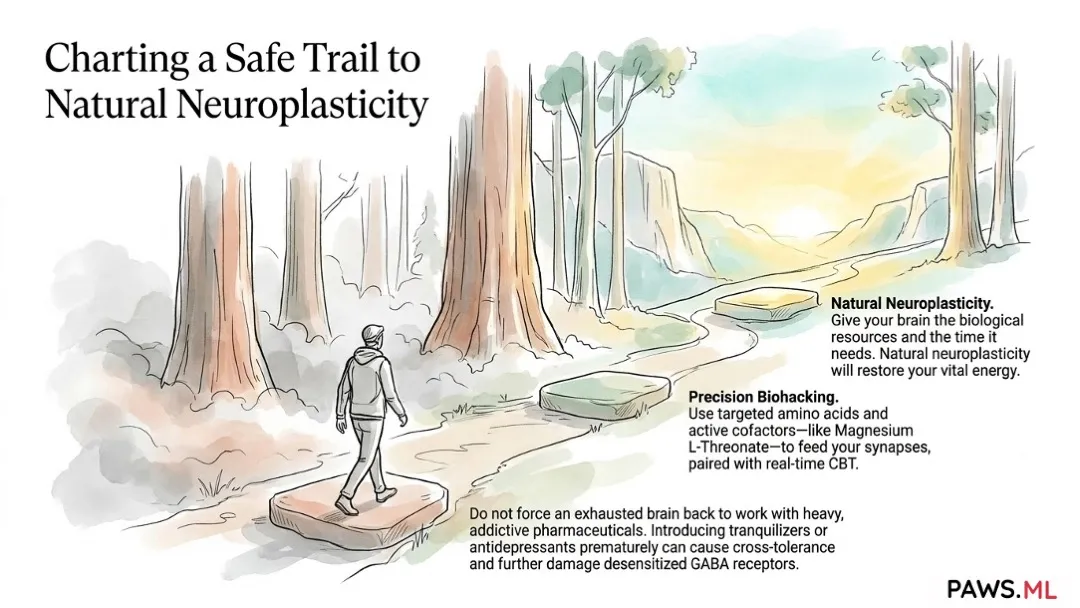
Before resorting to heavy pharmaceuticals, you need to restore your neurotransmitter balance. Jumping to antidepressants after quitting substances without observing a 3 to 4-week abstinence period is generally discouraged by clinical guidelines, as these states often naturally resolve once the brain stabilizes. Furthermore, using heavy tranquilizers like benzodiazepines can cause cross-tolerance, exacerbate GABA receptor desensitization, and dangerously prolong the post-acute withdrawal syndrome.
How PAWS ML AI agents curate your CBT and nutritional support
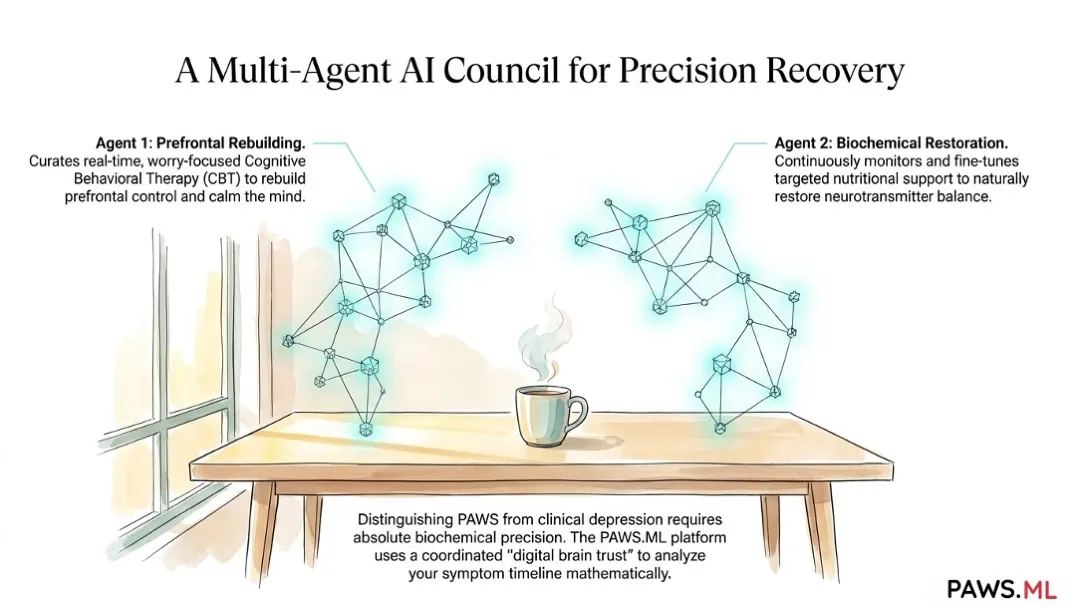
This is where the PAWS ML multi-agent AI council steps in. Instead of masking the problem with heavy medication, PAWS ML utilizes real-time tracking and evidence-based protocols to help you navigate recovery safely. The AI agent recommends targeted nutritional support for the nervous system—focusing on lowering stress hormones like cortisol and actively supporting GABA recovery. This is combined with integrated Cognitive Behavioral Therapy (CBT) methods. CBT, particularly worry-focused exposure, is highly recommended during withdrawal to rebuild prefrontal inhibitory control and rewire damaged limbic circuits. By combining nutritional support with real-time CBT techniques, the PAWS ML agent helps you manage your anxiety effectively, bypassing the need for premature pharmacotherapy and restoring true neurobiological balance.
FAQ: AI analysis of psychiatric diagnoses and PAWS
How can a multi-agent AI council help analyze a psychiatric diagnosis? A multi-agent AI (a digital expert council) analyzes the precise timeline and biochemical correlations of your symptoms with mathematical precision. Human doctors often overlook recent abstinence from stimulants, alcohol, or medications. By cross-referencing your data with clinical guidelines, AI agents can identify whether your anxiety is a primary psychiatric disorder (like GAD) or a temporarily disguised Post-Acute Withdrawal Syndrome (PAWS). Note: The AI provides a highly analytical second opinion, not a medical diagnosis.
Why is AI better at managing PAWS than heavy pharmaceuticals? Clinical guidelines warn against prescribing heavy tranquilizers (like benzodiazepines) or antidepressants during early abstinence, as they can cause cross-tolerance and further damage desensitized GABA receptors. Instead of masking the problem with pills, the PAWS ML AI council curates a highly personalized, natural recovery plan.
How do AI agents orchestrate the recovery plan? Instead of a single algorithm, a constellation of digital experts works simultaneously. One AI agent focuses on providing real-time Cognitive Behavioral Therapy (CBT) to rebuild prefrontal control, while another strictly monitors and adjusts your targeted nutritional support (amino acids and vitamins) to naturally restore neurotransmitter balance and heal your GABA receptors.
If you are currently experiencing the challenges of Protracted abstinence, return to our main page to explore how our AI recovery assistant can help stabilize your neurochemistry.