Digital aftercare tools for therapists & coaches | PAWS.ML
Elevating aftercare: How ai-driven longitudinal tracking enhances post-acute recovery outcomes
Disclaimer: This article is intended for informational and educational purposes for mental health professionals, recovery coaches, and healthcare practitioners. PAWS.ML is a supportive digital tool and is not a substitute for clinical diagnosis or emergency medical care.
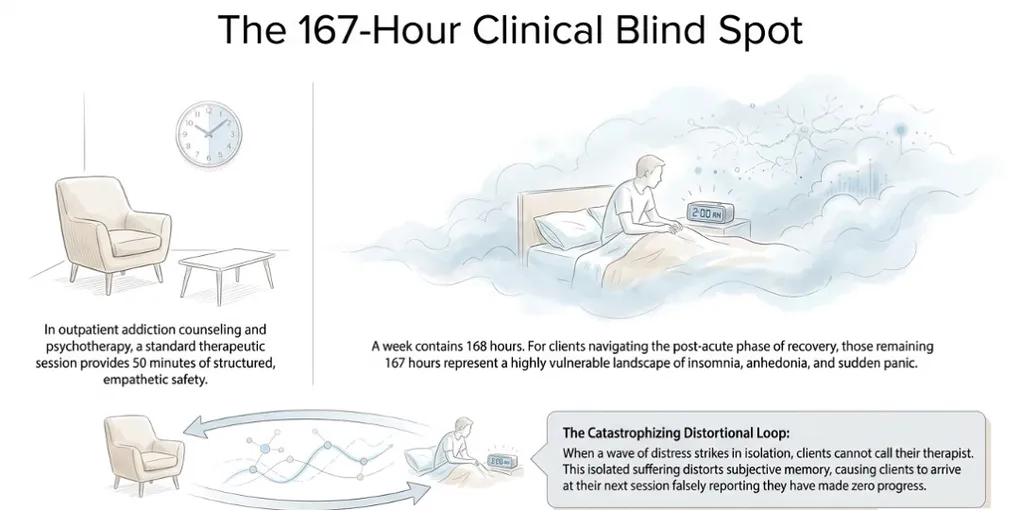
In outpatient addiction counseling, psychotherapy, and recovery coaching, one of the most critical challenges occurs outside the clinic walls. A standard therapeutic session lasts 50 minutes. Yet, a week contains 168 hours.
For clients navigating the post-acute phase of recovery, those remaining 167 hours represent a vulnerable landscape. As the central nervous system undergoes long-term neuroplastic adaptation, clients frequently experience non-linear fluctuations in mood, sleep architecture, executive function, and stress sensitivity—a phenomenon medically recognized as Post-Acute Withdrawal Syndrome (PAWS).
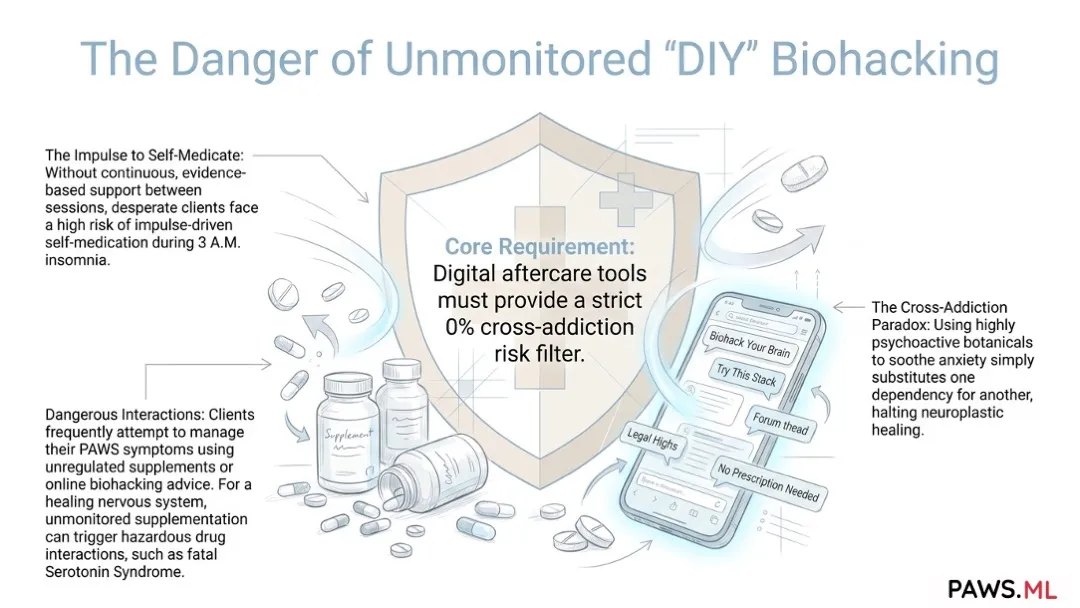
When a wave of insomnia, anhedonia, or panic strikes a client on a Tuesday at 2:00 AM, they cannot call their therapist. Without continuous, evidence-based support in these unmonitored hours, clients face an increased risk of distress, health anxiety, or impulse-driven self-medication.
Integrating longitudinal digital tracking and AI-driven support into your practice bridges this critical aftercare gap—enhancing client engagement, providing objective clinical data, and protecting long-term recovery outcomes.
The clinical utility of between-session monitoring
Practitioners who specialize in neuro-recovery recognize that subjective recall during a weekly therapy session can be heavily distorted by a client’s immediate neurochemical state:
- The Catastrophizing Distortional Loop: A client experiencing a severe PAWS “Wave” on the day of their appointment may report: “I haven’t made any progress at all this month.”
- The Memory Gap: Brain fog and executive dysfunction during early-to-mid recovery often prevent clients from accurately tracking symptom frequency, triggers, or sleep quality over time.
By equipping clients with an autonomous, continuous tracking companion, practitioners gain access to objective, multi-system data.
When clients can view clear, visual trendlines demonstrating that their “Windows” of clarity are expanding over a 90-day period, cognitive distortions dissolve. This data-driven perspective reinforces the therapeutic alliance, validates the client’s lived experience, and provides actionable insights during scheduled sessions.
Key requirements for digital aftercare adjuncts
For mental health professionals and recovery coaches evaluating digital health tools for their clients, strict criteria must be met to preserve clinical integrity and safety:
1. Uncompromising pharmacological safety
Clients in post-acute recovery frequently attempt to manage their symptoms using over-the-counter supplements, herbs, or online “biohacking” advice. For a healing nervous system, unmonitored supplementation can trigger dangerous drug interactions (e.g., serotonin syndrome or GABAergic kindling). Digital tools must feature rigorous pharmacological screening with a strict 0% cross-addiction risk filter.
2. Multi-system biological perspective
Effective aftercare tracking must evaluate recovery holistically. It should not look at anxiety in a vacuum, but analyze how sleep deprivation, dietary factors, prescription medication regimens, and historical substance profiles interact dynamically.
3. Preservation of client autonomy and privacy
Clients must feel that their recovery tool is a supportive companion rather than an intrusive monitor. Total digital privacy and 24/7 availability foster self-efficacy, encouraging clients to take active ownership of their daily neuro-recovery journey.
PAWS.ML: The intelligent adjunct for recovery professionals
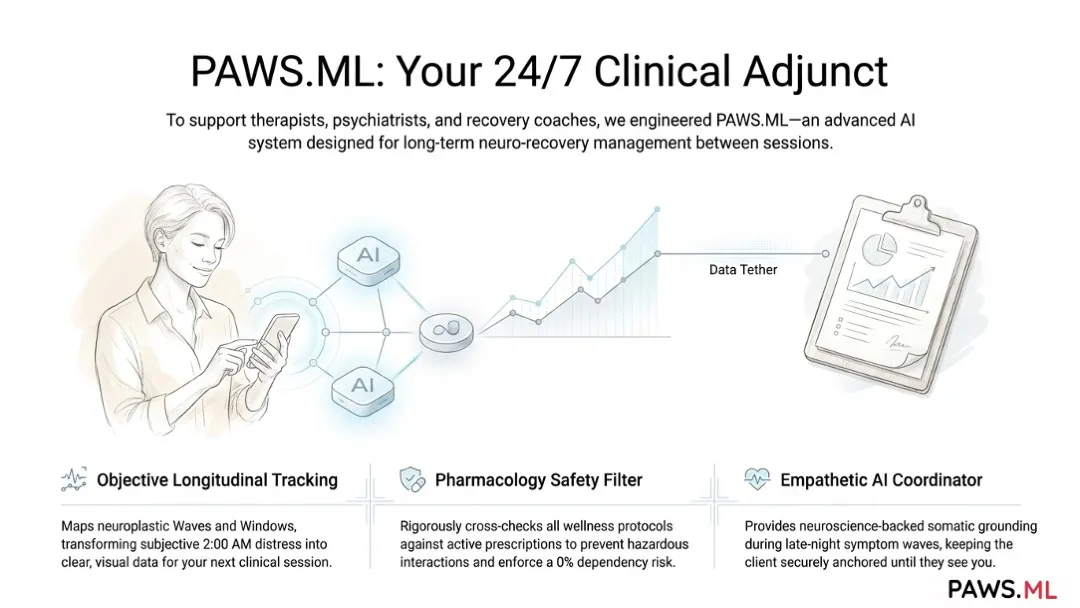
To support therapists, addiction counselors, psychiatrists, and sober coaches in delivering continuous, high-precision aftercare, we engineered PAWS.ML — an advanced, multi-agent AI system specifically designed for long-term neuro-recovery management.
PAWS.ML serves as a 24/7 digital companion that clients use between sessions, functioning through specialized, coordinated AI agents:
- 📊 Longitudinal Symptom & Wave Tracker: Logs daily shifts in sleep, mood, fatigue, and focus, converting subjective distress into clear, visual data that clients can share during therapy.
- 🛡️ Pharmacology Safety Filter: Rigorously cross-checks any supplement or lifestyle protocol against the client’s active prescriptions and health history to prevent hazardous drug interactions or accidental cross-addiction.
- 💊 Safe Neuro-Nutrition Agent: Recommends targeted, evidence-based micronutrients (such as specific forms of magnesium or amino acids) to support natural receptor repair, adhering to a strict 0% dependency policy.
- 💬 Empathetic AI Coordinator: Available 24/7 to provide instant, neuroscience-backed reassurance and somatic grounding techniques during late-night symptom waves, keeping the client anchored until their next clinical appointment.
By recommending PAWS.ML as a digital adjunct, practitioners provide their clients with a round-the-clock safety net—reducing between-session crisis calls, preventing dangerous self-medication, and optimizing overall treatment success.
👉 Discover how PAWS.ML supports clinical aftercare and client recovery)
Strengthening the therapeutic alliance
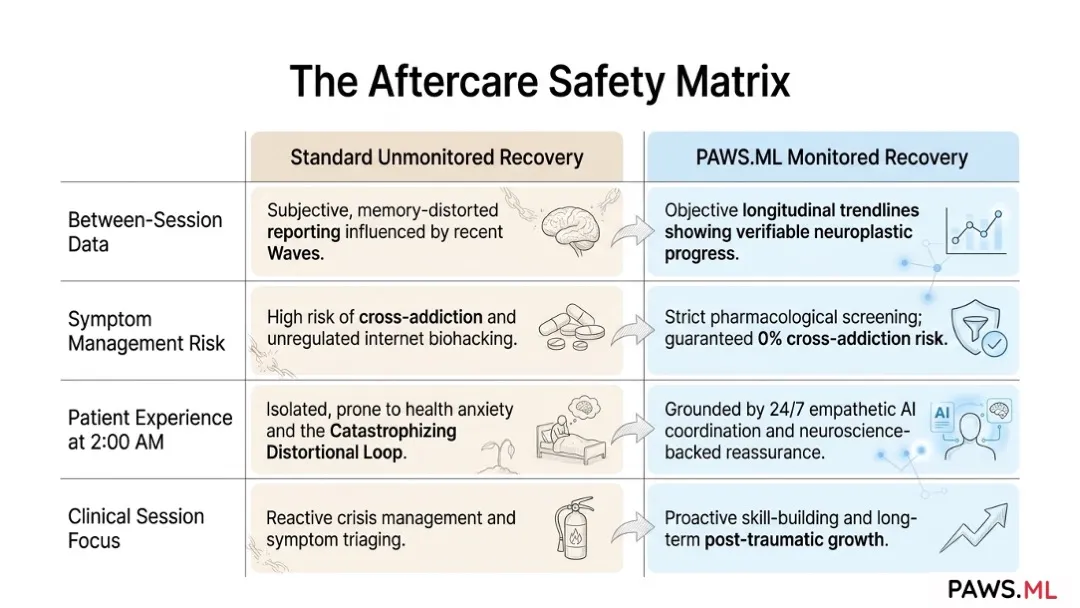
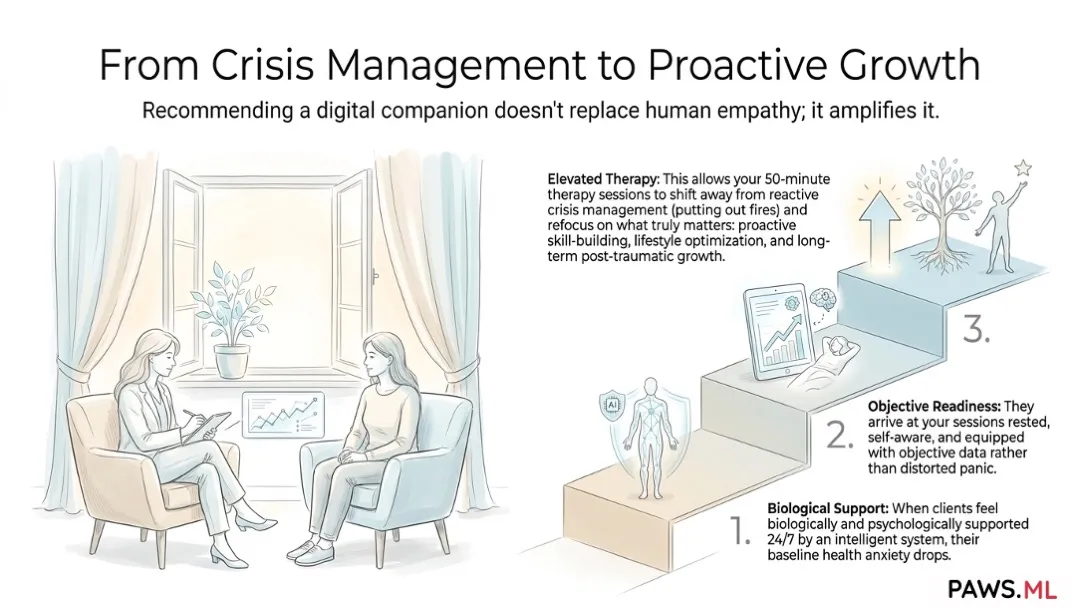
Recommending a specialized digital companion does not replace the human warmth and expertise of a dedicated practitioner; it amplifies it.
When clients feel supported 24/7 by an intelligent, biologically sound system, their baseline health anxiety decreases. They arrive at sessions better rested, more self-aware, and equipped with objective data. This allows therapy to shift away from reactive crisis management toward proactive skill-building, lifestyle optimization, and long-term personal growth.
Providing clients with the tools to understand and track their own neurobiology is the ultimate expression of empowering care.
If you are currently experiencing the challenges of Protracted withdrawal syndrome (PWS), return to our main page to explore how our AI recovery assistant can help stabilize your neurochemistry.